
No products in the cart.
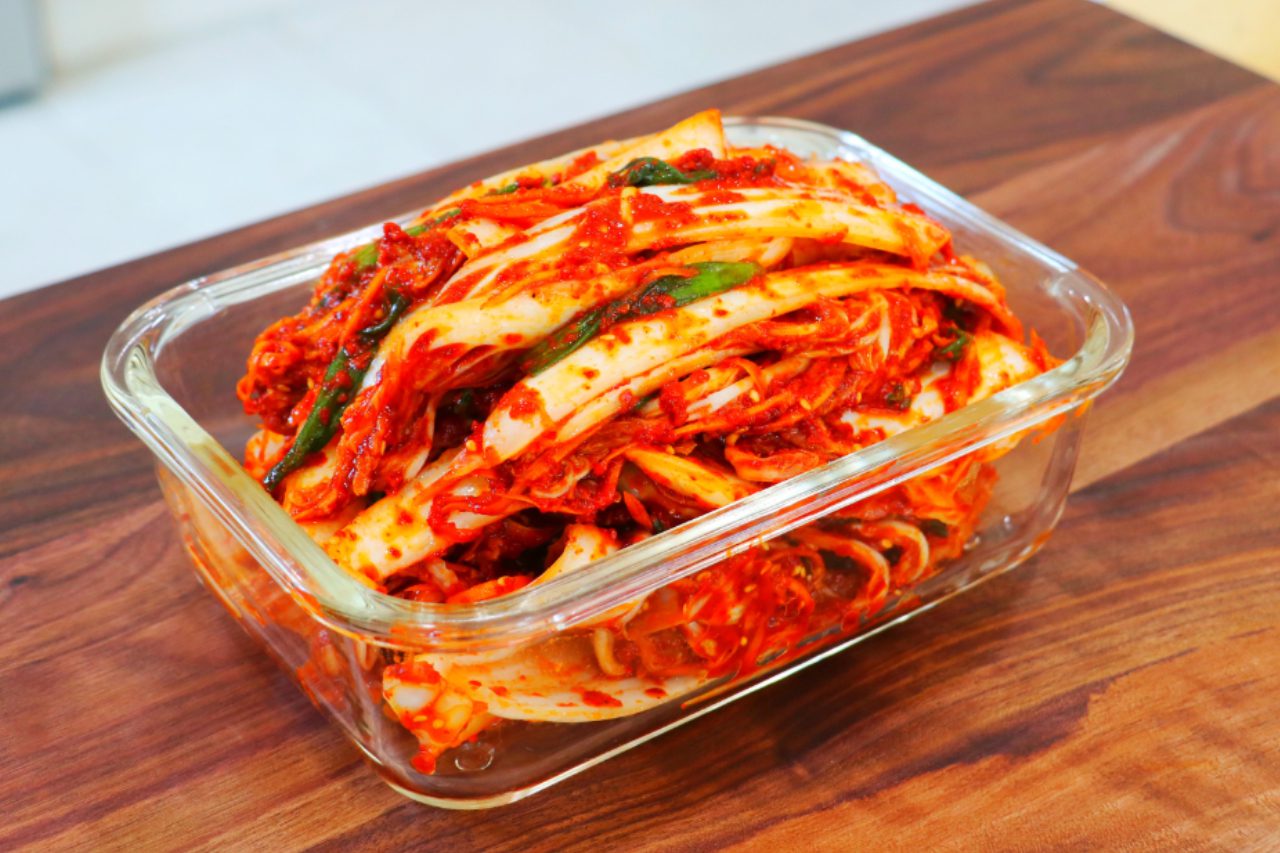
Instant Fresh Kimchi Recipe
I love kimchi so much, and this is how I make it at home when I want that bold, spicy, savory kimchi flavor right away—without waiting for fermentation.
Fresh Kimchi is one of my favorite quick side dishes because it’s so crisp, refreshing, and full of flavor. The Napa cabbage is briefly soaked in salt water until just slightly softened, then tossed with garlic, ginger, gochugaru, fish sauce, Korean green plum extract, carrots, scallions, and toasted sesame seeds.
It tastes spicy, savory, a little sweet, and so refreshing. I love serving it with rice, Korean BBQ, tofu stew, noodles, grilled meats, or honestly anything that needs a bright, flavorful side dish.
If you love kimchi but don’t want to wait days for it to ferment, this fresh version is perfect. You can mix it together and enjoy it right away while the cabbage is still crunchy and juicy.
What Is Fresh Kimchi?
Fresh Kimchi is a quick, unfermented kimchi that is meant to be eaten right after mixing. In Korean, this style is often called geotjeori.
Instead of fermenting for days, the cabbage is lightly salted, rinsed, drained, and tossed with a flavorful seasoning mixture. The texture stays crisp and juicy, almost like a spicy cabbage salad.
Fresh Kimchi vs. Fermented Kimchi
Fresh Kimchi tastes bright, crisp, and refreshing. It is best enjoyed soon after mixing, while the cabbage still has a nice crunch.
Fermented kimchi has a deeper, tangier flavor that develops over time. The cabbage becomes softer, and the flavor becomes more sour and complex.
Both are delicious, but this version is perfect when you want kimchi right away.
What Is Gochugaru?
Gochugaru is Korean red pepper flakes. It has a beautiful red color, a slightly smoky flavor, and a gentle sweetness.
It is different from regular crushed red pepper flakes, which can taste sharper and spicier. For the best kimchi flavor, use Korean gochugaru if possible.
How to Keep Fresh Kimchi Crisp
The key is not to over-soak the cabbage.
Soak the cabbage just until slightly softened, then rinse and drain it well. If the cabbage sits in the salt water too long, it can become too soft and overly salty.
Fresh Kimchi is also best served soon after mixing. As it sits, the cabbage will continue to release moisture and soften.
Can I Use Green Cabbage Instead of Napa Cabbage?
Yes. Napa cabbage is more tender, but green cabbage also works.
Green cabbage is firmer and crunchier, so it may need a little longer in the salt water. Cut it into bite-size pieces so it can soften evenly and absorb the seasoning.
Can I Make Fresh Kimchi Without Fish Sauce?
Yes. Fish sauce adds savory depth, but you can replace it with soy sauce, tamari, or vegetarian fish sauce.
The flavor will be a little different, but it will still be delicious.
What to Serve with Fresh Kimchi
Fresh Kimchi is delicious with steamed rice, Korean BBQ, tofu stew, fried eggs, grilled salmon, noodles, dumplings, fried rice, or roasted vegetables.
It is one of those side dishes that instantly makes a meal more exciting.
Let’s Talk Ingredients
Napa cabbage: Tender, juicy, and perfect for absorbing the seasoning. You can also use green cabbage.
Water and coarse sea salt: Used to briefly soak the cabbage so it softens slightly while staying crunchy.
Garlic: Adds bold, savory flavor.
Ginger: Adds warmth and freshness.
Korean red pepper flakes: Also called gochugaru, they give the kimchi its beautiful red color and signature chili flavor.
Fish sauce: Adds salty, savory umami depth.
Korean green plum extract: Adds gentle sweetness and a light fruity tang. Sugar can be used as a substitute.
Carrot: Adds color, crunch, and natural sweetness.
Scallions: Add freshness and aroma.
Toasted sesame seeds: Add a nutty finish.
Step-by-Step: Let’s Cook
Serves: 8
Prep time: 20 minutes
Rest time: 10 minutes
Step 1: Make the salt water
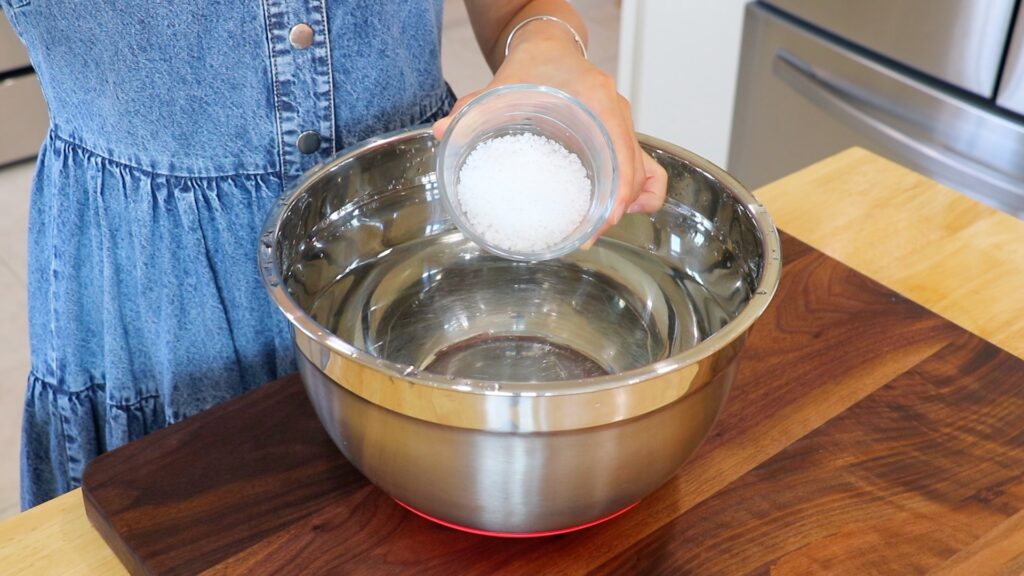
In a bowl, mix the water and coarse sea salt.
Whisk until the salt is dissolved.
Tip: Coarse sea salt is best because it seasons the cabbage more gently and helps keep the texture crisp.
Step 2: Prepare the Napa cabbage
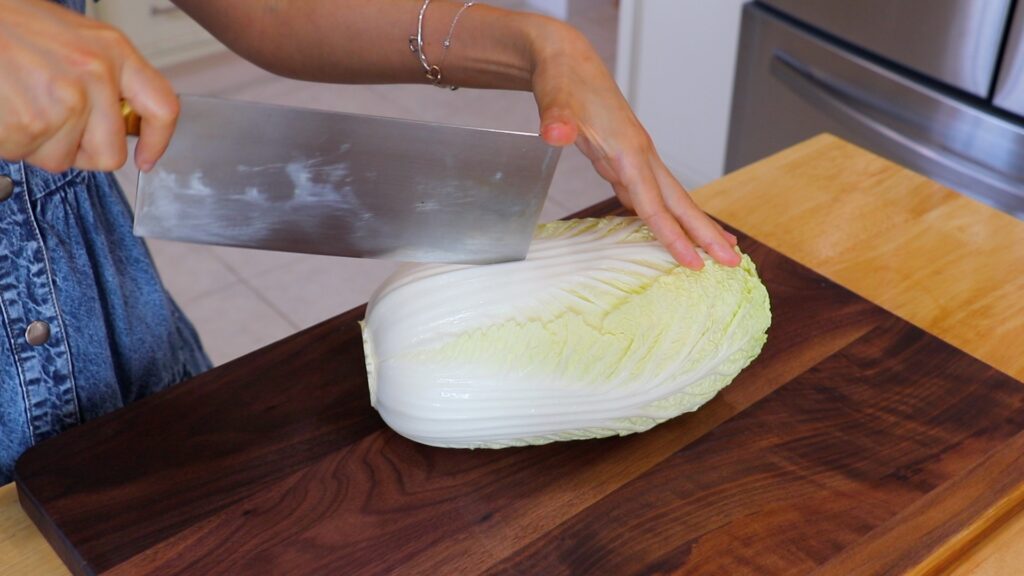
Cut the Napa cabbage in half, then cut it into quarters.
Remove the stem.
Use the small leaves directly, and cut the larger leaves lengthwise into about 1-inch pieces.
Tip: Try to keep the cabbage pieces similar in size so they soften evenly.
Step 3: Soak and rinse the cabbage
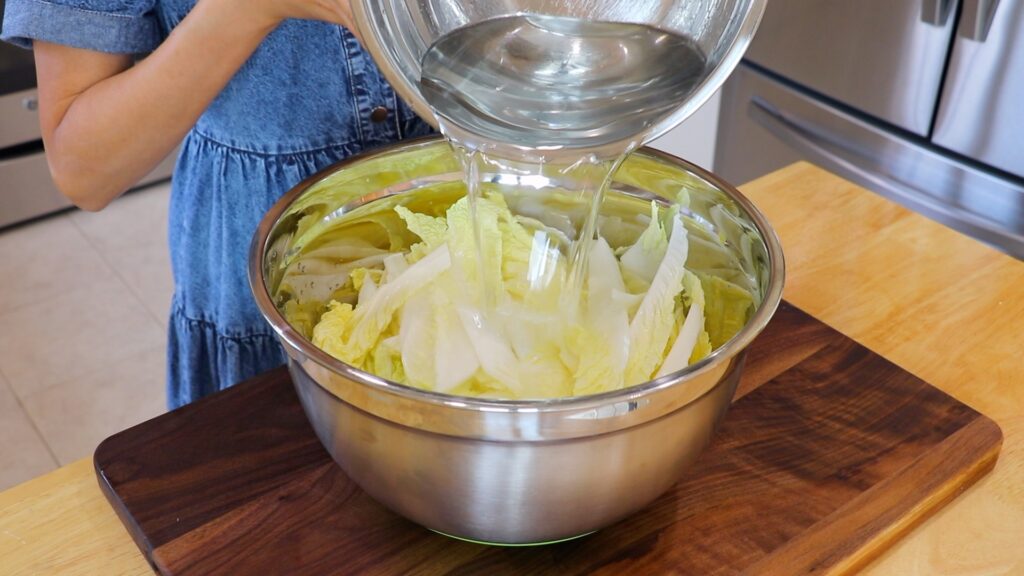
Place the Napa cabbage in a large mixing bowl.
Pour in the salt water and let it rest until slightly softened.
Rinse the cabbage under running water and drain well.
Tip: The cabbage should be slightly softened but still crunchy. Do not soak it too long, or the texture can become too soft.
Step 4: Make the sauce
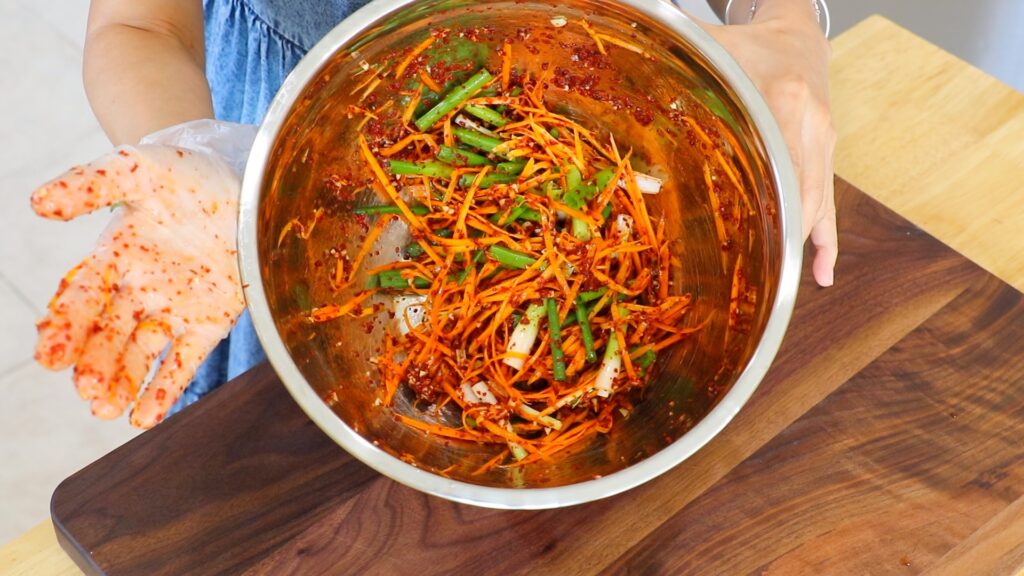
In a mixing bowl, add the garlic, ginger, Korean red pepper flakes, fish sauce, Korean green plum extract, carrots, and scallions.
Mix everything together.
Tip: Gochugaru can vary in spice level, so adjust it to your taste.
Step 5: Toss and serve
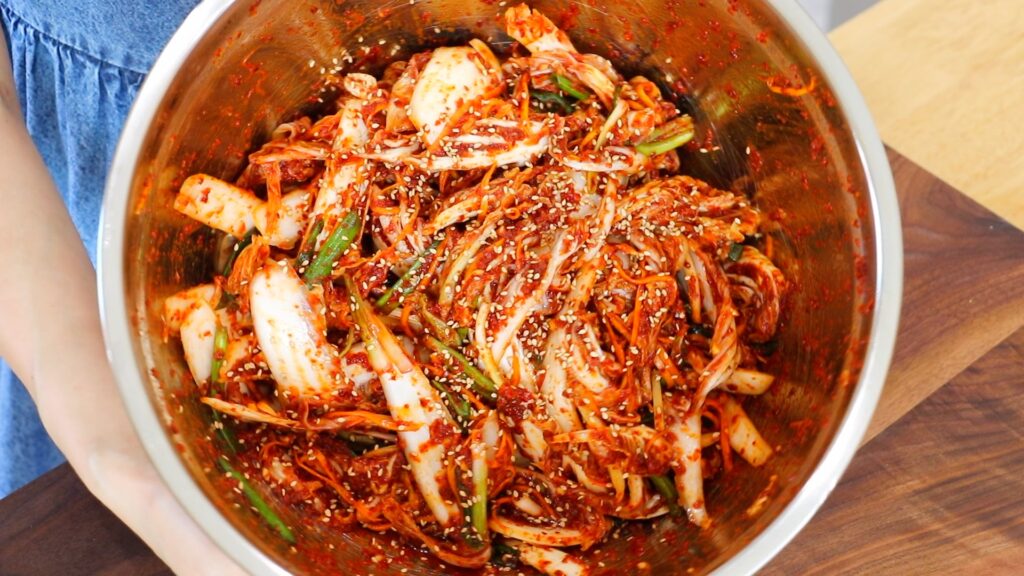
In a large mixing bowl, combine the Napa cabbage and the sauce mixture.
Mix well until every piece is coated.
Sprinkle with toasted sesame seeds and enjoy.
Tip: Fresh Kimchi tastes best right after mixing, when the cabbage is still crisp and juicy.
Variations
Vegetarian: Replace the fish sauce with soy sauce, tamari, or vegetarian fish sauce.
Sweeter: Add a little more Korean green plum extract, sugar, or honey.
Spicier: Add more gochugaru.
Milder: Use less gochugaru and add more carrots or scallions.
Radish: Add julienned Korean radish or daikon for more crunch.
Frequently Asked Questions
Is Fresh Kimchi fermented?
No. This version is made to enjoy right away.
What is Fresh Kimchi called in Korean?
This style is often called geotjeori.
Can I use regular red pepper flakes instead of gochugaru?
Gochugaru is best because it has the right flavor, color, and texture. Regular red pepper flakes are usually sharper and spicier.
Can I make this less spicy?
Yes. Use less gochugaru and adjust to taste.
Can I replace the Korean green plum extract?
Yes. Use a small amount of sugar or honey for gentle sweetness.
How long does Fresh Kimchi last?
It is best enjoyed right away, but you can refrigerate it in an airtight container for 1–2 days. The cabbage will continue to soften as it sits.
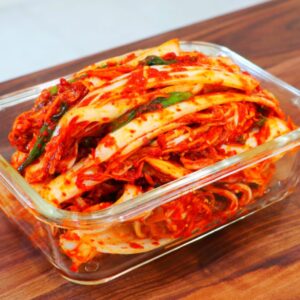
Instant Fresh Kimchi Recipe
Fresh Kimchi is a quick, no-fermentation Korean cabbage side dish made with Napa cabbage, gochugaru, garlic, ginger, fish sauce, scallions, carrots, and sesame seeds.
Ingredients
- 2 pounds Napa cabbage, or replace with green cabbage
- 4 cups water
- 2 tablespoons coarse sea salt
- 4 cloves garlic, minced
- ¼ teaspoon ginger, minced
- 4 tablespoons Korean red pepper flakes, gochugaru
- 3 tablespoons fish sauce
- 1½ tablespoons Korean green plum extract, or replace with sugar
- 1 small carrot, julienned
- 4 stalks scallions, thinly sliced
- 1 teaspoon toasted sesame seeds
Instructions
- To make the salt water: In a bowl, mix the water and coarse sea salt. Whisk until dissolved.
- To prepare the Napa cabbage: Cut the Napa cabbage in half, then cut it into quarters and remove the stem. Use the small leaves directly. Cut the big leaves lengthwise into about 1-inch pieces.
- To soak the Napa cabbage: In a large mixing bowl, place the Napa cabbage inside and pour in the salt water. Rest until the Napa cabbage is slightly softened. Rinse the Napa cabbage under running water and drain well.
- To make the sauce: In a mixing bowl, add the garlic, ginger, Korean red pepper flakes, fish sauce, Korean green plum extract, carrots, and scallions. Mix together.
- To toss and serve: In a mixing bowl, place the Napa cabbage and the sauce mixture. Mix well. Lastly, sprinkle with the toasted sesame seeds. Enjoy.
Video
Notes
Salt choice: Use coarse sea salt for salting the cabbage. Fine salt dissolves too quickly and can make the kimchi overly salty while affecting the texture.
Soaking time: Soak the cabbage for 10–30 minutes, depending on thickness, until slightly softened but still crunchy.
Plum extract substitute: If Korean green plum extract isn’t available, a small amount of sugar or honey works well for gentle sweetness.
Gochugaru heat level: Gochugaru varies in spice. Adjust to taste while keeping enough for classic kimchi color and flavor.
Serve fresh: This fresh kimchi is best enjoyed right after mixing. It can be refrigerated for up to 1–2 days, though the cabbage will continue to soften.
More Korean Recipes You’ll Love

25-Min Honey Butter Fried Chicken Wings
Honey Butter Fried Chicken Wings are one of those dishes that always feel a little special—crispy, golden wings tossed in a buttery, sweet-savory glaze that’s …

25-Min Soy Garlic Fried Chicken Wings
Soy Garlic Fried Chicken Wings are crispy on the outside, juicy on the inside, and coated in a sticky, glossy glaze that makes you want …
3-Min Korean Cucumber Salad Recipe
Korean Cucumber Salad is a quick and refreshing side dish that packs bold flavor with minimal effort. This no-cook recipe features crisp cucumber slices …
30-Min Korean Cubed Radish Kimchi Recipe
Korean Cubed Radish Kimchi is an easy, fast, and flavorful side dish that’s perfect for kimchi beginners. With a crisp texture, spicy kick, and tangy-sweet …

12-Min Kimchi Fried Rice Recipe
Kimchi Fried Rice is a classic Korean comfort dish and one of the easiest, boldest ways to transform leftover rice into something deeply flavorful. With …
I love this recipe. I will try them. Thanks.
I hope you’ll enjoy the kimchi, Kiliti! 😀