
No products in the cart.
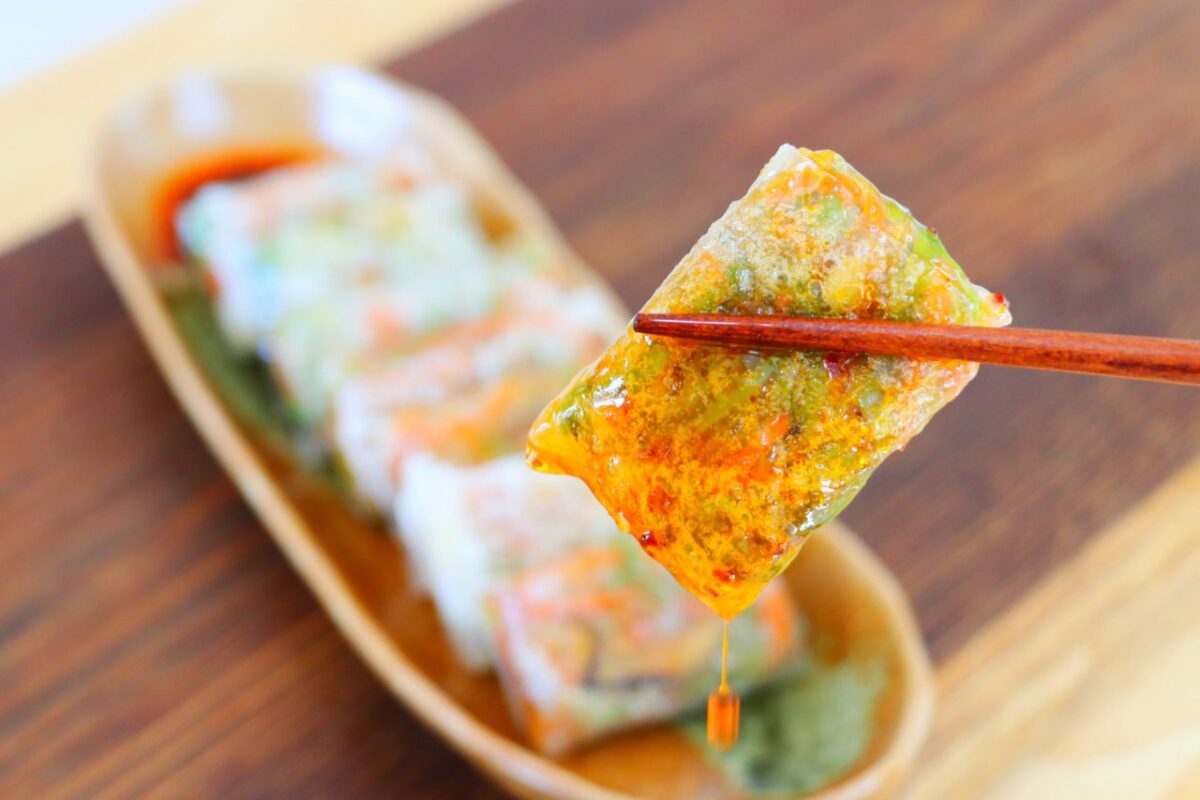
Vegetable Potstickers with Rice Paper
Vegetable Potstickers with Rice Paper are crispy, light, and packed with savory vegetables and chewy glass noodles. The rice paper turns beautifully golden in the pan, creating a delicate crunch while the filling stays flavorful and satisfying inside.
But if you’ve ever cooked with rice paper before, you probably know how tricky it can be. Sometimes it tears, sticks to the pan, turns chewy, or splatters oil everywhere instead of crisping properly.
The good news is that a few simple techniques make all the difference. This recipe shows you how to properly soften the rice paper, control excess moisture, and pan-fry the potstickers so they crisp beautifully without making a mess in the kitchen.
Paired with a punchy dipping sauce, these Rice Paper Vegetable Potstickers are crunchy, flavorful, and seriously hard to stop eating.
What Are Vegetable Potstickers with Rice Paper?
Vegetable Potstickers with Rice Paper are a modern variation of traditional potstickers made with rice paper instead of flour-based dumpling wrappers. They’re commonly pan-fried until crisp and filled with vegetables, noodles, or protein.
Because rice paper softens quickly with water, the wrapping process is simple and beginner-friendly without requiring pleating or sealing techniques.
This version combines glass noodles, snow peas, carrots, and shiitake mushrooms for a filling that’s savory, fresh, and full of texture.
What Makes Rice Paper Potstickers So Crispy?
Rice paper crisps differently from regular dumpling wrappers. Once pan-fried, it becomes thin and delicate with a light, crackly texture.
The biggest key is moisture control. If the wrapper becomes too wet, the potstickers can turn soft or chewy instead of crispy and golden brown.
A properly heated pan, lightly softened rice paper, and cooked filling all help create the best texture.
Why Use Rice Paper Instead of Dumpling Wrappers?
Rice paper creates a lighter texture and crispier finish compared to traditional dumpling wrappers. It’s also naturally gluten-free and cooks very quickly in the pan.
Another advantage is convenience. Rice paper wrappers don’t require flour paste or complicated folding techniques, making them approachable even for beginners.
They’re a great option when you want crispy potstickers that feel lighter but still satisfying.
Why Add Vinegar to the Water?
Adding vinegar to the water helps the rice paper brown more evenly while adding a subtle layer of flavor. It also helps prevent the wrappers from becoming overly gummy after frying.
This small trick makes a surprisingly big difference in both texture and color.
How to Prevent Rice Paper from Splattering?
The biggest cause of splattering is excess moisture. If the rice paper or filling is too wet, water reacts with the hot oil and creates splatter during frying.
Here are a few simple ways to reduce splatter:
- Don’t over-soak the rice paper
- Cool the filling before wrapping
- Gently squeeze excess moisture from vegetables if needed
- Use medium heat instead of very high heat
- Avoid overcrowding the pan
- Add a small pinch of salt to the oil
These small steps help the potstickers crisp beautifully while keeping the cooking process much cleaner.
Why Rice Paper Turns Chewy Instead of Crispy?
Rice paper usually turns chewy when there’s too much moisture or not enough heat.
Common causes include:
- Over-soaking the wrappers
- Filling that’s too wet
- The heat is too low
- Overcrowding the pan
- Not enough oil
Keeping the wrappers lightly softened and pan-frying in a properly heated pan helps create that thin, crispy texture.
Can You Air Fry Rice Paper Potstickers?
Yes. Lightly brush the potstickers with cooking oil and air-fry at 375°F for about 10 to 12 minutes, flipping halfway through.
The texture will be slightly different from pan-frying, but still crispy and delicious.
Let’s Talk Ingredients
Glass noodles
Glass noodles help absorb excess moisture from the vegetables, which keeps the filling from becoming watery. They also add a chewy texture that pairs perfectly with the crispy rice paper.
Snow peas
Snow peas add freshness, sweetness, and a slight crunch that keeps the filling light and vibrant.
Shiitake mushrooms
Shiitake mushrooms bring deep savory flavor and a slightly meaty texture that makes the vegetable filling more satisfying.
Rice paper
Rice paper softens quickly and continues softening after it’s wet. The goal is to make it pliable without soaking it too much.
Vinegar
Adding vinegar to the water helps the rice paper brown more beautifully while adding a subtle brightness to the flavor.
Step-by-Step: Let’s Cook
Serves: 12 pieces
Prep time: 25 minutes
Cook time: 10 minutes
Step 1: Soak the glass noodles
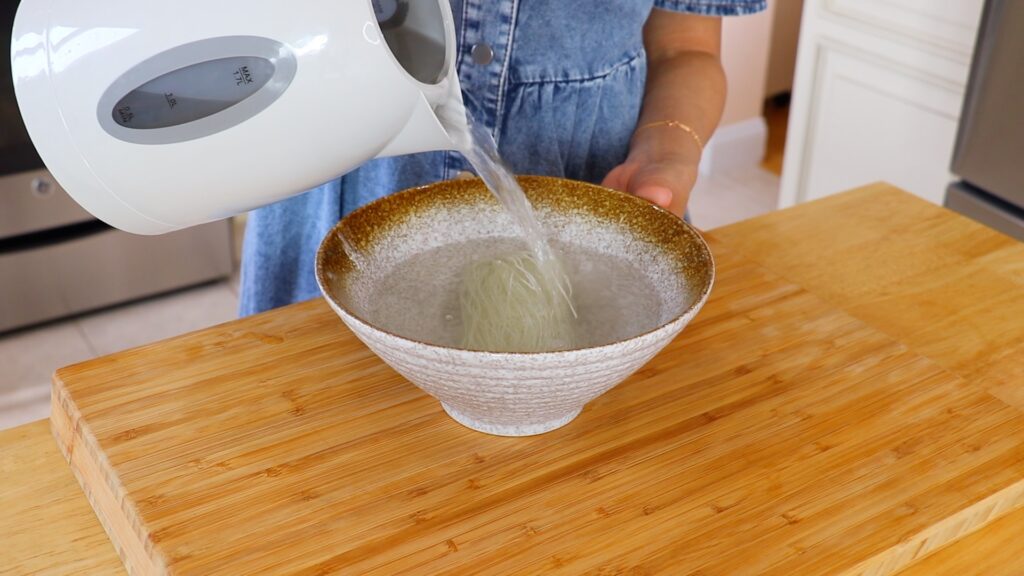
The glass noodles only need a quick soak in hot water until softened. After draining, cut them into shorter pieces so the filling is easier to wrap and eat.
Tip: Glass noodles help absorb moisture from the vegetables, which helps the potstickers crisp better later.
Step 2: Cook the filling
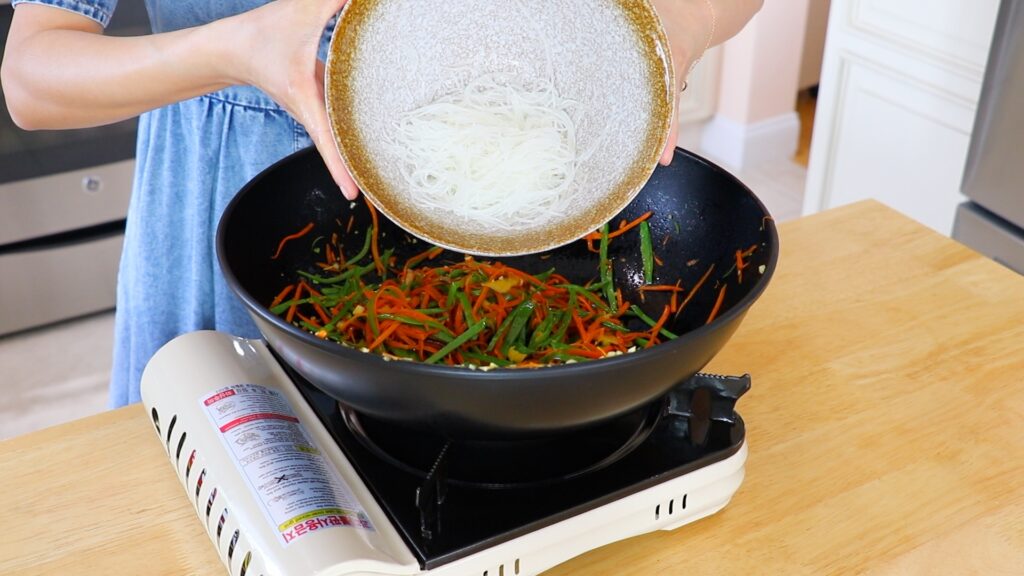
Stir-fry the vegetables until lightly softened and aromatic, then mix in the glass noodles and seasonings.
Tip: Let the filling cool before wrapping. Warm filling creates steam and makes it harder for the rice paper to crisp properly.
Step 3: Make the dipping sauce
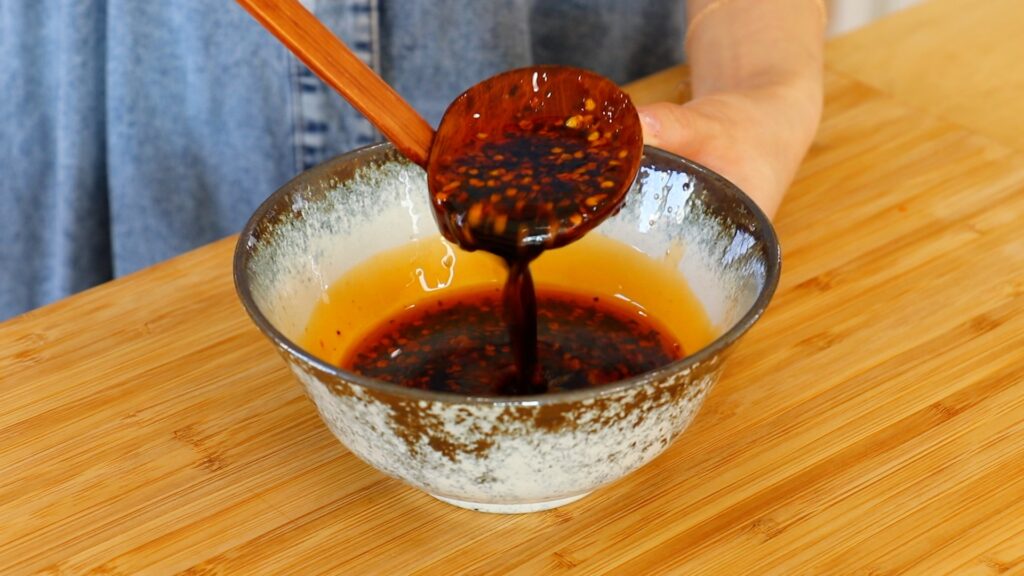
The dipping sauce balances the crispy potstickers with savory, tangy, and spicy flavors.
Tip: You can adjust the chili oil depending on how spicy you want the sauce.
Step 4: Wrap the potstickers
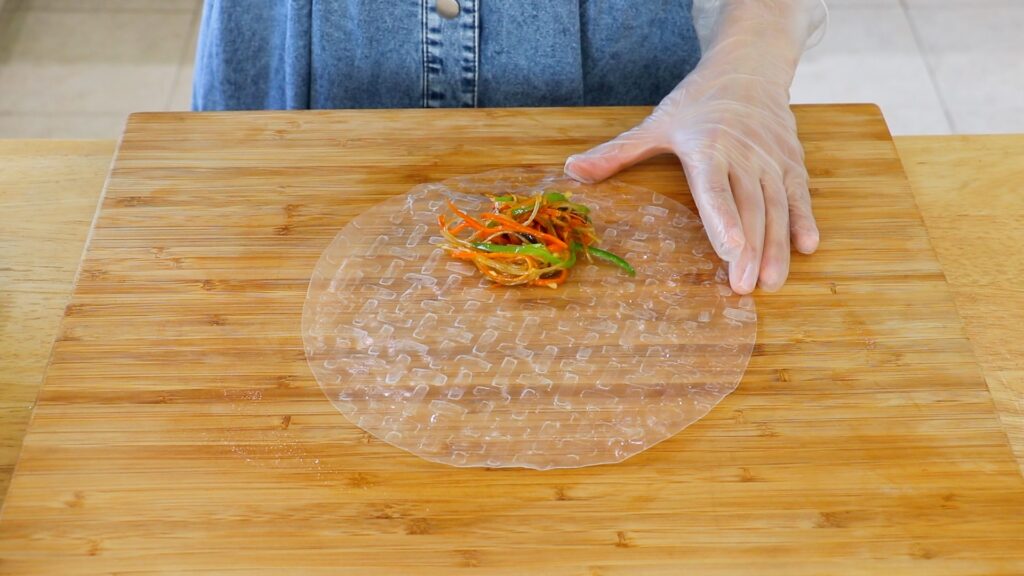
Lightly brush the rice paper with the vinegar water mixture until softened but not overly wet, then fill and roll tightly.
Tip: Rice paper continues softening after wetting, so avoid over-soaking it, or it may tear.
Step 5: Pan-fry until crispy
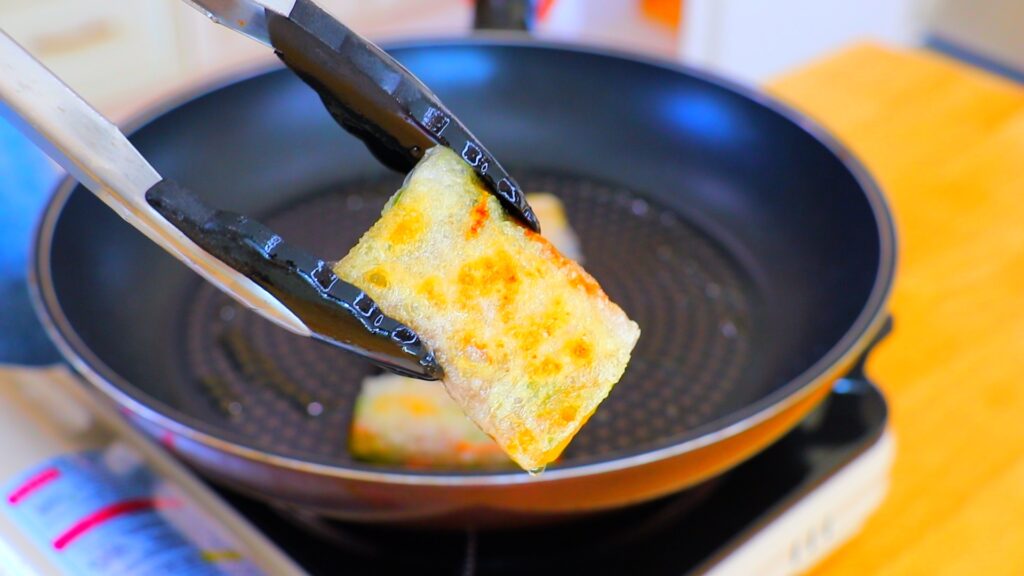
Pan-fry the potstickers over medium heat until golden brown and crispy on both sides.
Tip: Adding a pinch of salt to the oil helps reduce splatter by absorbing small amounts of moisture.
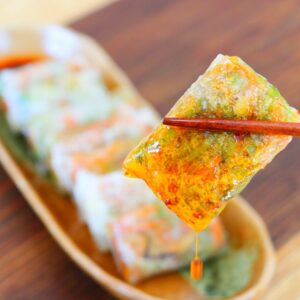
Vegetable Potstickers with Rice Paper
Vegetable Potstickers with Rice Paper are crispy pan-fried rice paper dumplings filled with vegetables and glass noodles, served with a flavorful dipping sauce.
Ingredients
For the filling
- 3 ounces glass noodles
- 2 cups hot water
- 1 tablespoon cooking oil
- 1 small carrot, shredded
- 1 ½ cups snow peas, thinly sliced
- 2 shiitake mushrooms, sliced
- 3 cloves garlic, minced
- 2 tablespoons vegetarian oyster sauce
- Pinch of white pepper
For the potstickers
- 12 sheets rice paper
- 1 cup water
- 2 teaspoons rice vinegar, or white vinegar
- 2 tablespoons cooking oil
- Pinch of salt
For the dipping sauce
- 2 tablespoons soy sauce
- 2 tablespoons Chinkiang vinegar, or other vinegar
- 2 tablespoons chili oil
Instructions
- To soak the glass noodles, in a bowl, add the glass noodles and pour in the hot water. Soak for about 5 minutes until softened, then drain and cut into about 2-inch lengths.
- To cook the filling, in a pan over high heat, add the cooking oil, carrot, snow peas, shiitake mushrooms, and garlic. Stir-fry for about 2 minutes until aromatic and slightly softened. Add the glass noodles, vegetarian oyster sauce, and white pepper, then mix well. Let the filling cool for about 5 minutes.
- To make the dipping sauce, in a bowl, mix together the soy sauce, Chinkiang vinegar, and chili oil.
- To assemble the potstickers, in a bowl, whisk together the water and rice vinegar. Place a sheet of rice paper on a working surface and lightly brush both sides with the water mixture until softened but not overly wet. Place about 1 tablespoon of filling near the bottom corner, fold up the bottom, fold in the sides, and roll tightly. Repeat with the remaining filling and rice paper.
- To pan-fry the potstickers, in a pan over medium heat, add the cooking oil and sprinkle in the salt. Transfer the potstickers to the pan and pan-fry for about 2 minutes per side until crispy and golden brown. Repeat with the remaining potstickers and serve with the dipping sauce.
Video
Notes
• Cook the filling first: Stir-frying the filling helps remove excess moisture so the potstickers crisp better during frying.
• Don’t over-soak the rice paper: The wrappers continue softening after wetting, so lightly soften them to prevent tearing and splattering.
• Cool the filling before wrapping: Warm filling creates steam, which can make the wrappers softer during frying.
• Use medium heat: Cooking over medium heat helps the rice paper crisp evenly without burning too quickly.
• Add salt to the oil: A small pinch of salt helps reduce splatter by absorbing moisture during frying.
• Air-fry option: Lightly brush the potstickers with cooking oil and air-fry at 375°F for 10 to 12 minutes, flipping halfway through.
• Protein options: This recipe also works well with tofu, shrimp, chicken, or pork.
Yum yum
Thanks Patrolina! 😀
Yum
Thank you, Lucinda! 😀