
No products in the cart.
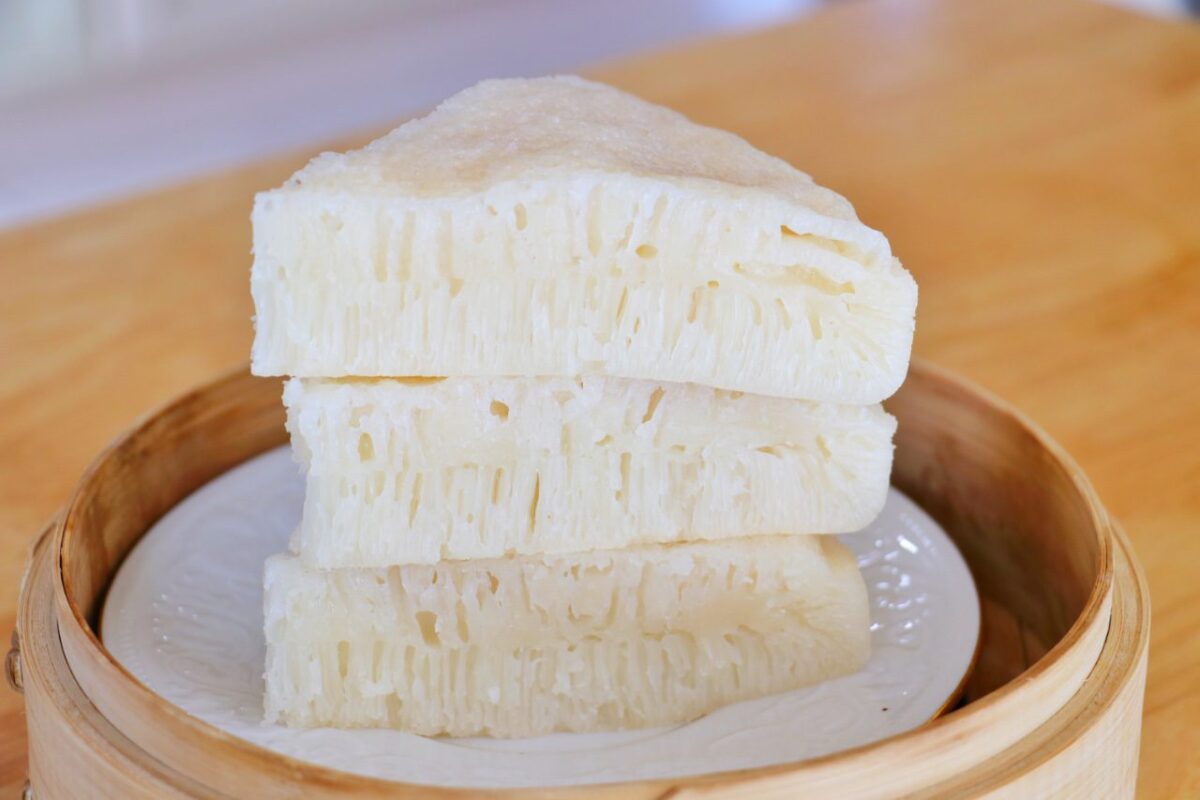
Steamed White Sugar Cake Recipe
Steamed White Sugar Cake (Bai Tang Gao) is a traditional Cantonese rice cake with a delicate sweetness and a uniquely soft, springy texture. Made with just a handful of simple ingredients, this classic steamed treat has been enjoyed for generations throughout Southern China and Hong Kong.
If you’ve ever spotted White Sugar Cake at a Cantonese bakery, tea house, or dim sum restaurant, you may have wondered how such a simple recipe can produce such a distinctive texture. Unlike rich Western-style cakes, White Sugar Cake is light, refreshing, and pleasantly chewy, making it a favorite for breakfast, afternoon tea, or dessert.
While the ingredient list is surprisingly simple, the technique is what makes this cake special. With a little patience and proper fermentation, you can create a cake that’s beautifully airy and full of character.
In this recipe, I’ll show you exactly how to make Steamed White Sugar Cake (Bai Tang Gao) at home, including how to properly ferment the batter and avoid the most common mistakes for the best results.
What Is White Sugar Cake?
White Sugar Cake, known as Bai Tang Gao (白糖糕) in Chinese, is a traditional Cantonese steamed rice cake made with rice flour, sugar, water, and yeast. It is popular throughout Southern China and Hong Kong and is often enjoyed as a snack, light dessert, or alongside a cup of tea.
One of the reasons White Sugar Cake has remained popular for generations is its simplicity. The flavor is mildly sweet, allowing its unique texture to take center stage. Soft, bouncy, and slightly chewy, it’s a comforting treat that’s easy to enjoy any time of day.
Today, White Sugar Cake can often be found at Cantonese bakeries, traditional tea houses, and dim sum restaurants, where it continues to be a beloved part of Cantonese cuisine.
Why Does White Sugar Cake Have a Honeycomb Texture?
The signature honeycomb texture comes from fermentation.
When yeast is added to the batter, it begins consuming sugar and producing carbon dioxide. As the gas becomes trapped in the batter, tiny air pockets develop throughout the mixture.
During steaming, those air pockets expand and set, creating the characteristic network of holes found inside a properly made White Sugar Cake.
This is why fermentation is such an important step. If the batter doesn’t develop enough bubbles before steaming, the finished cake may turn out dense rather than light and airy.
The baking powder added just before steaming provides a final boost of lift, helping create an even more delicate texture.
What Does White Sugar Cake Taste Like?
White Sugar Cake has a delicate sweetness and a wonderfully light texture. It’s soft, springy, and slightly chewy, with a subtle fermented aroma that gives it its distinctive character.
Unlike rich Western cakes, White Sugar Cake is not overly sweet or heavy. Its simple flavor pairs beautifully with tea and makes it a refreshing dessert or snack any time of day.
Let’s Talk Ingredients
Rice flour gives White Sugar Cake its signature soft and slightly chewy texture. Be sure to use regular rice flour, not glutinous rice flour.
Sugar adds sweetness and helps feed the yeast during fermentation.
Active dry yeast creates the bubbles that give the cake its light, airy structure.
Baking powder is added just before steaming to provide an extra boost of lift.
Water hydrates the rice flour and activates the yeast. Warm water is used for proofing, while room-temperature water is used for the batter.
Avocado oil lightly coats the pan to prevent sticking and makes unmolding easier.
Step-by-Step: Let’s Cook
Serves: 8
Prep Time: 30 minutes
Rest Time: 1 hour 15 minutes
Cook Time: 25 minutes
Step 1: Proof the Yeast
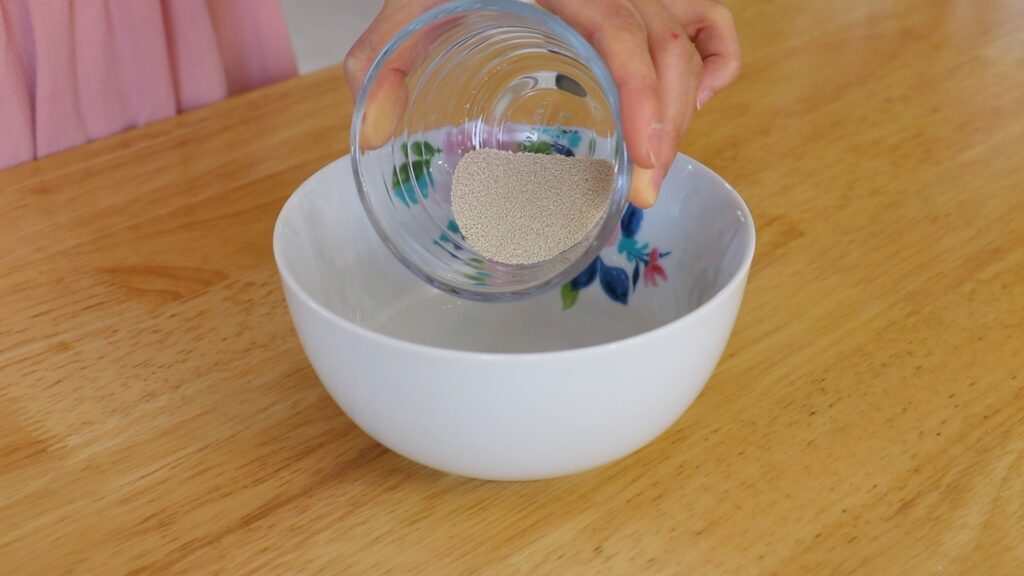
Combine the warm water, yeast, and sugar. Let the mixture sit for about 10 minutes until foamy.
Tip: Foamy yeast confirms that the yeast is alive and active. If no foam develops, the yeast may have expired, or the water may have been too hot.
Step 2: Make the Rice Flour Mixture
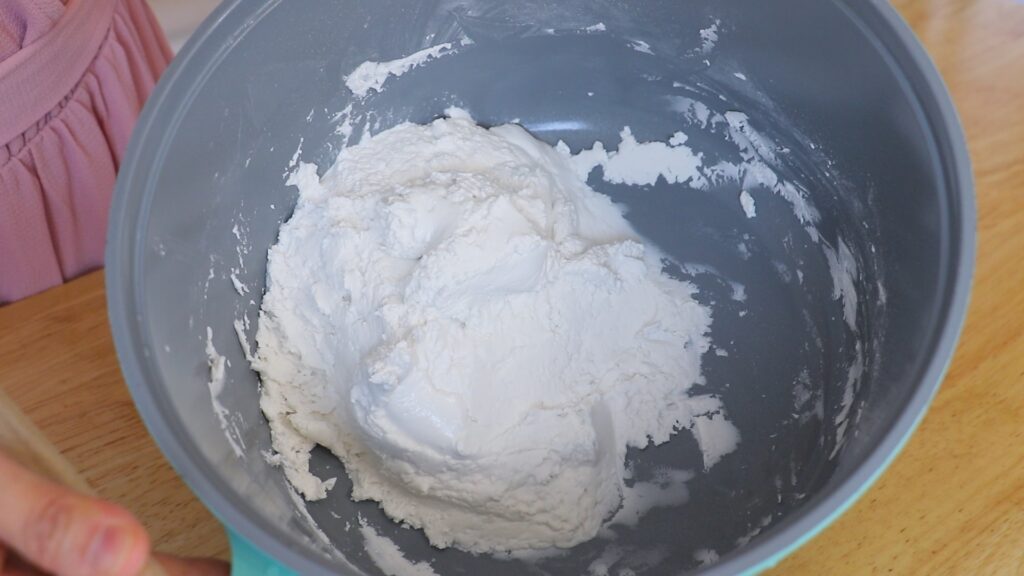
Whisk together the rice flour and water until smooth.
Tip: A smooth batter helps create an even texture throughout the finished cake.
Step 3: Make the Sugar Syrup
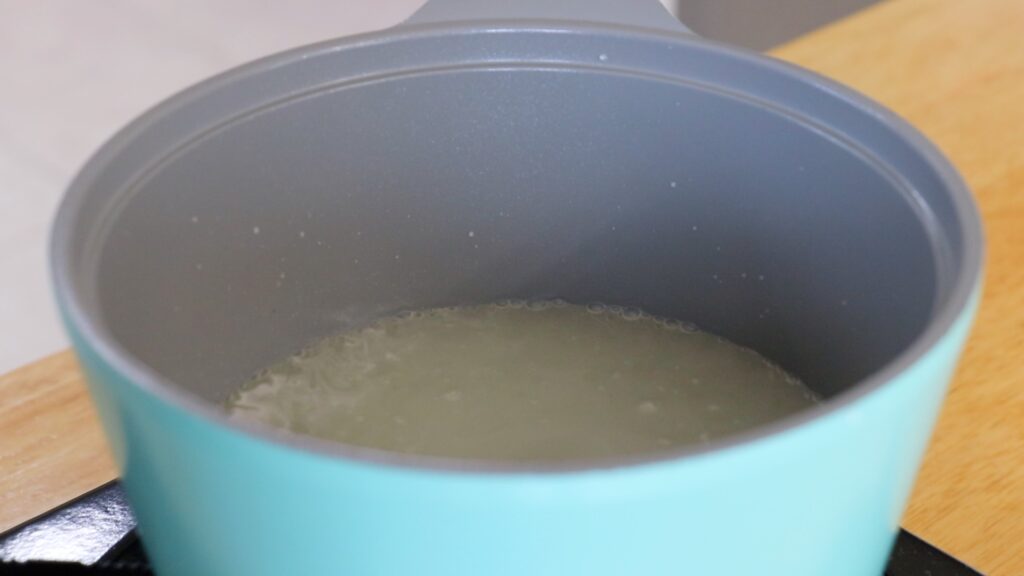
Heat the water and sugar until fully dissolved and boiling.
Tip: Dissolving the sugar first ensures it incorporates evenly into the batter.
Step 4: Combine the Batter
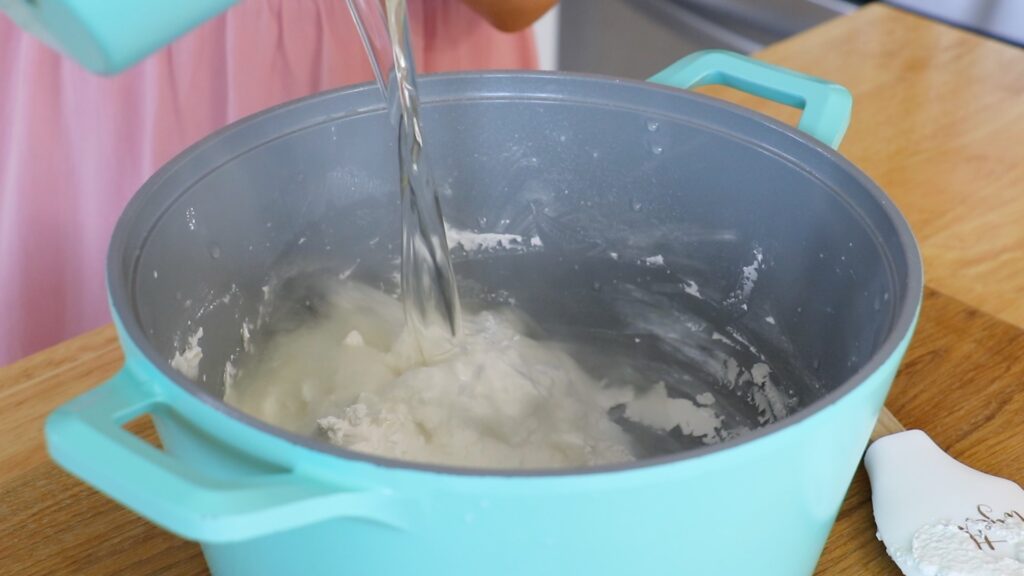
Slowly whisk the hot sugar syrup into the rice flour mixture until smooth.
Tip: Combining the ingredients gradually helps prevent lumps.
Step 5: Add the Yeast
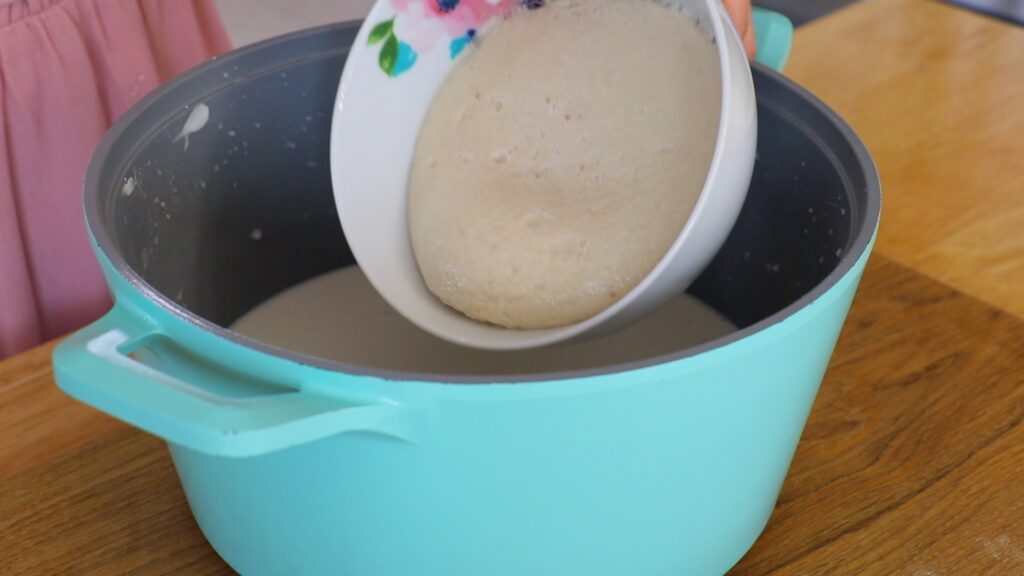
Once the batter cools to about 100°F, stir in the proofed yeast.
Tip: A batter that is too hot can kill the yeast and prevent fermentation.
Step 6: Ferment the Batter
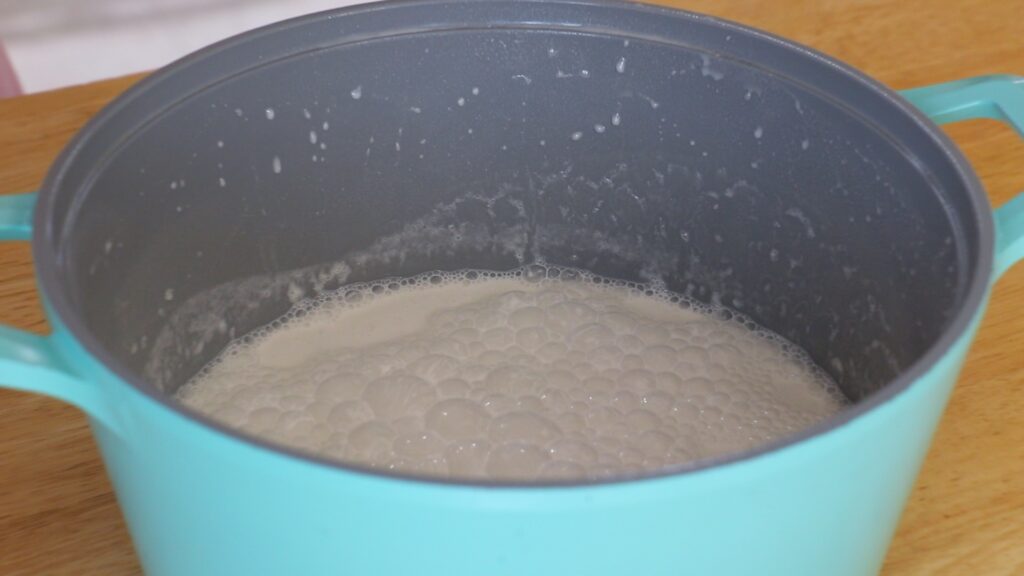
Cover the batter and place it in a warm environment for about 1 hour.
Tip: Fermentation creates the bubbles responsible for the cake’s honeycomb texture.
Step 7: Prepare the Pan
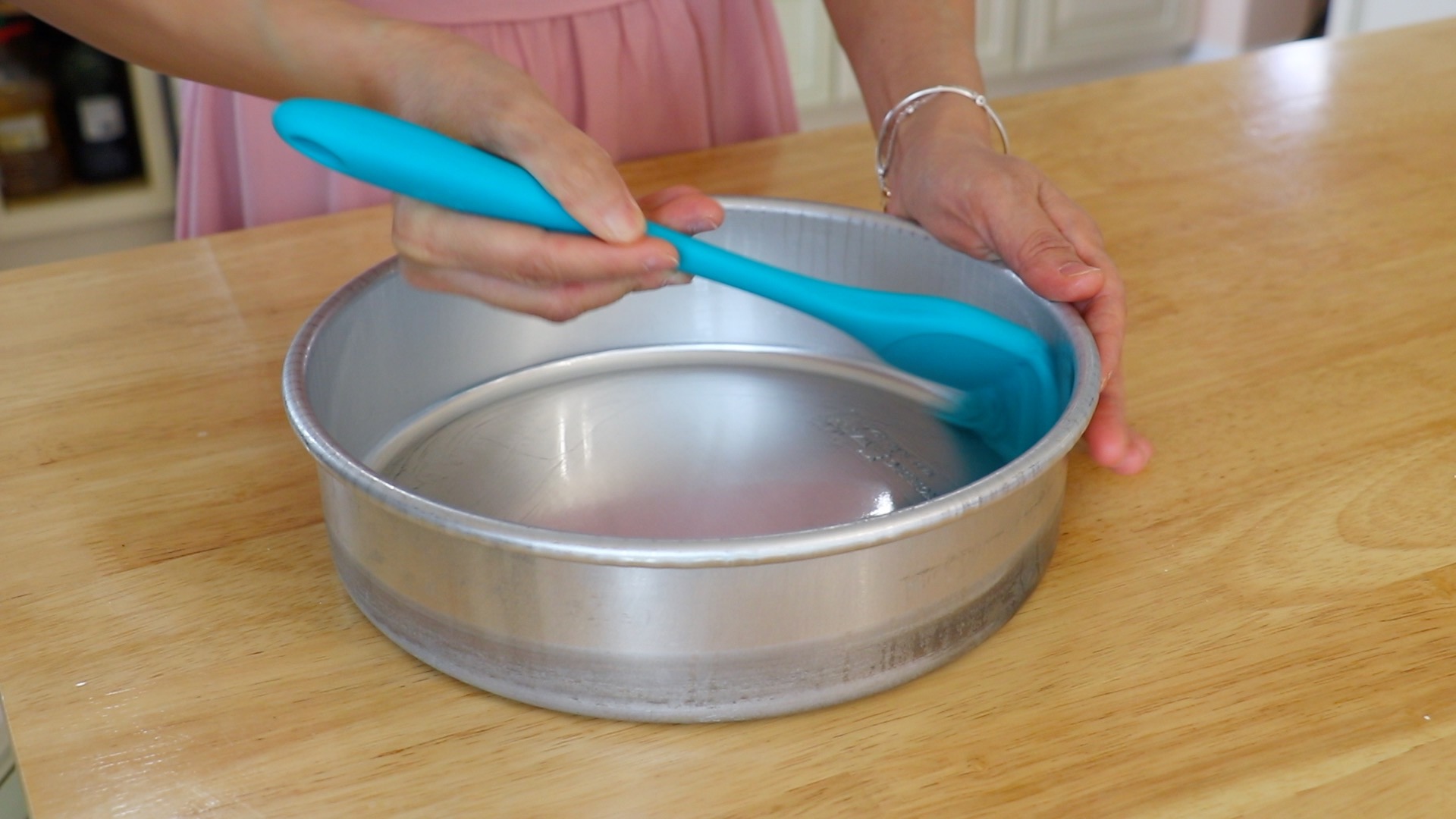
Brush a heatproof pan with avocado oil.
Tip: A lightly greased pan helps the cake release cleanly after steaming.
Step 8: Add the Baking Powder
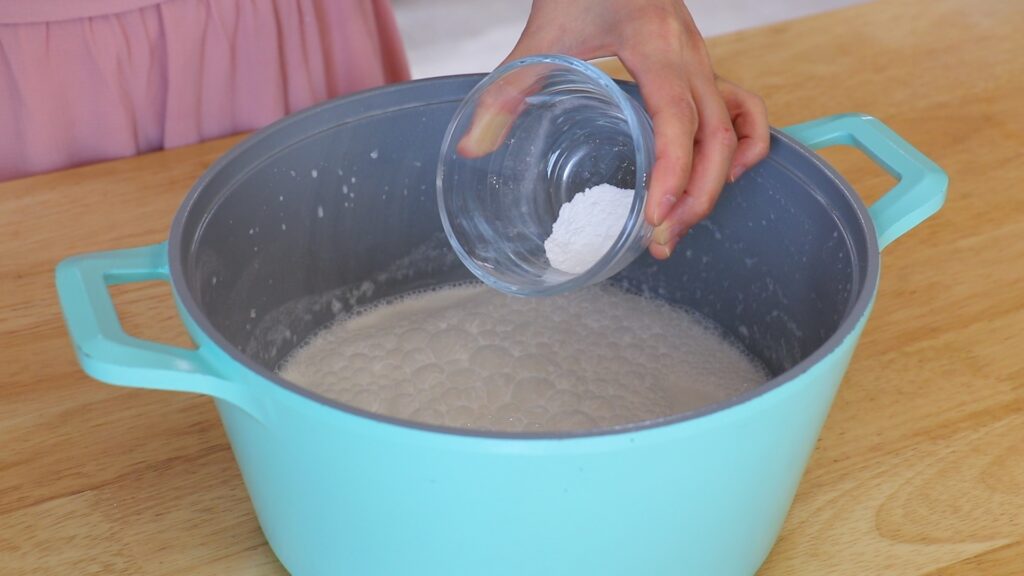
Whisk the baking powder into the fermented batter.
Tip: Baking powder gives the cake an extra boost of lift during steaming.
Step 9: Steam the Cake
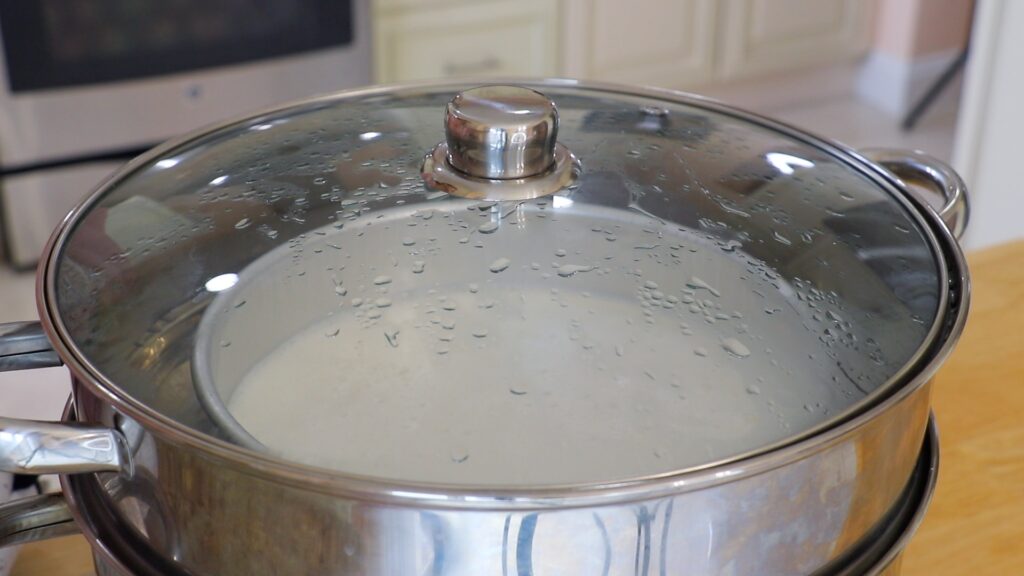
Steam over high heat for 25 minutes.
Tip: Strong, steady steam helps the cake rise evenly and develop its airy structure.
Step 10: Cool and Serve
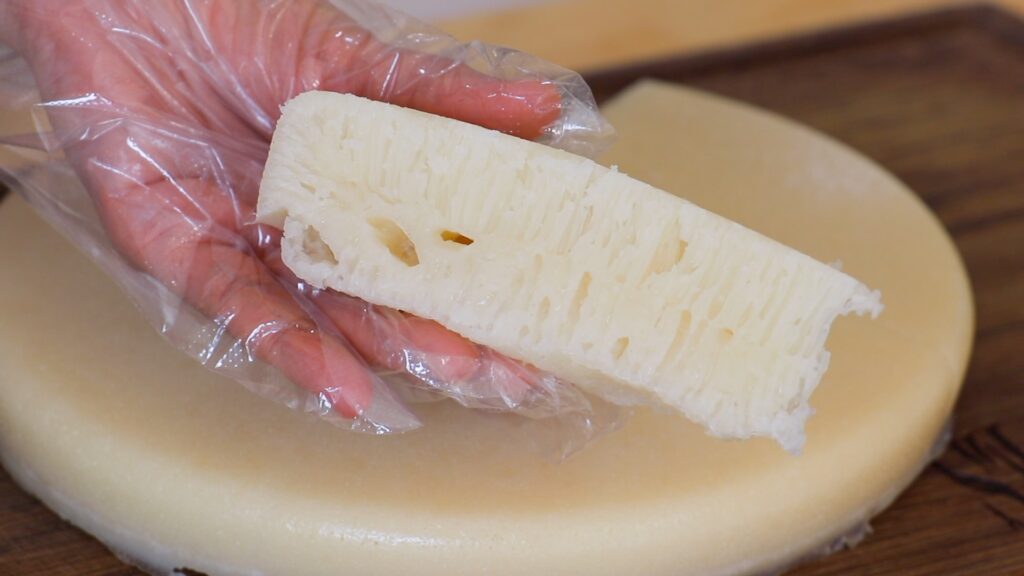
Allow the cake to rest before removing it from the pan.
Tip: Cooling helps the cake firm up and makes slicing easier.
Common Mistakes When Making White Sugar Cake
Using water that’s too hot: Hot water can kill the yeast and prevent proper fermentation.
Using glutinous rice flour: Regular rice flour is required for the correct texture.
Under-fermenting the batter: Without enough bubbles, the cake will turn out dense rather than airy.
Weak steam: Strong, steady steam helps the cake rise properly.
Uncovering too soon: Let the cake rest briefly after steaming to help it hold its structure.
Frequently Asked Questions
Can I use glutinous rice flour?
No. Regular rice flour is essential for the proper texture.
Why didn’t my cake develop holes?
The batter likely didn’t ferment long enough, or the yeast was inactive.
Why is my cake dense?
Insufficient fermentation is usually the cause.
Can I make White Sugar Cake ahead of time?
Yes. Store it in an airtight container and reheat by steaming before serving.
Can I skip the baking powder?
Yes, but the cake may not be quite as light and airy.
Steamed White Sugar Sponge Cake Recipe
Steamed White Sugar Cake (Bai Tang Gao) is a traditional Cantonese rice cake with a soft, springy texture and delicate sweetness.
Ingredients
For the yeast
- ¼ cup warm water, 100–110°F
- 2 teaspoons active dry yeast
- 1 teaspoon sugar
For the batter
- 1¾ cups room-temperature water, divided
- 2 cups rice flour
- 1 cup sugar
- ½ teaspoon baking powder
- ½ teaspoon avocado oil, for brushing
Instructions
- To proof the yeast, in a bowl, combine the warm water, yeast, and sugar. Whisk together and let sit for 10 minutes, or until foamy. If the mixture does not foam, the yeast may be expired.
- To make the rice flour mixture, in a large bowl, whisk together the rice flour and 1 cup of water until smooth. Set aside.
- To make the sugar syrup, in a small pot over medium heat, combine the remaining ¾ cup of water and the sugar. Stir until the sugar dissolves and bring to a boil.
- To combine the batter, slowly pour the hot sugar syrup into the rice flour mixture, whisking constantly until smooth. Let the batter cool to about 100°F before adding the yeast.
- To add the yeast, stir the proofed yeast mixture into the cooled batter until fully combined. Cover the bowl.
- To ferment the batter, place it in a warm environment for about 1 hour, or until large bubbles form on the surface. To create a warm environment, preheat the oven to its lowest setting for 1 minute, then turn it off. Place a pot of boiling water on the bottom rack and the covered batter on the middle rack. Close the oven door.
- To prepare the pan, brush a 9-inch round cake pan or another heatproof container with the avocado oil.
- To finish the batter, whisk the baking powder into the fermented batter until evenly combined.
- To steam the cake, bring a large steamer to a boil over high heat. Pour the batter into the prepared pan and place it in the steamer. Cover and steam for 25 minutes, maintaining a steady boil throughout.
- To cool the cake, turn off the heat and let it rest in the steamer for 5 minutes before uncovering. Remove the pan and let the cake cool for another 15 minutes. Unmold, slice, and serve.
Video
Notes
- Use warm—not hot—water: Water that is too hot can kill the yeast, while cooler water may slow fermentation.
- Look for bubbles: Large bubbles on the surface indicate the batter is properly fermented and ready for steaming.
- Use rice flour only: Glutinous rice flour will produce a completely different texture and should not be substituted.
- Maintain strong steam: A vigorous boil helps the cake rise properly and develop its signature honeycomb texture.
- Let the cake rest: Allowing the cake to cool slightly before unmolding helps it hold its shape and makes slicing easier.
- Storage: Store leftovers in an airtight container in the refrigerator for up to 3 days. Reheat by steaming until warmed through.
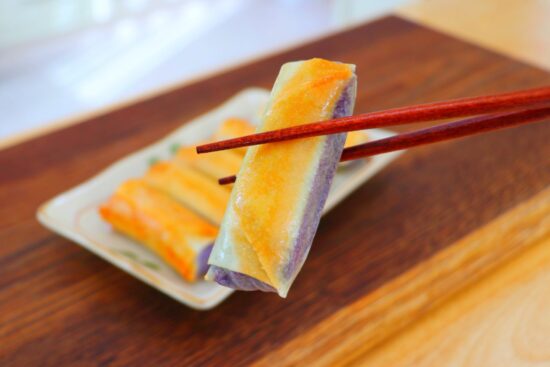
Crispy Purple Sweet Potato Spring Rolls
Crispy Purple Sweet Potato Spring Rolls are a festive treat traditionally enjoyed in China during Li Chun, the beginning of spring, to wish for …
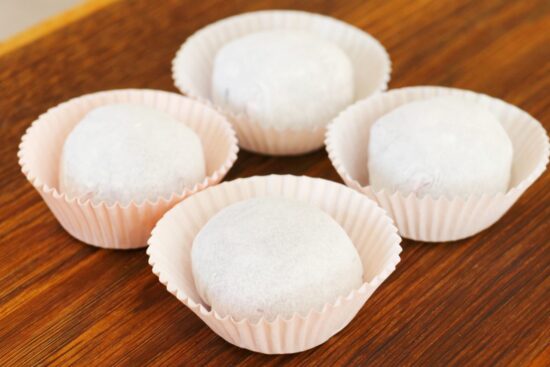
Purple Sweet Potato Mochi with Rice Paper
Purple Sweet Potato Mochi is soft, chewy, and naturally stunning with its vibrant purple color. And here’s the hack—we’re not making the mochi skin …
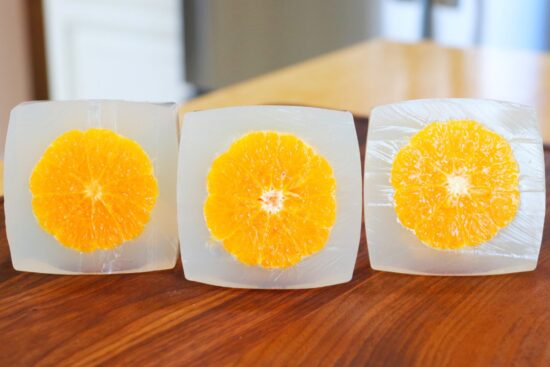
3-Ingredient Mandarin Orange Agar-Agar Jelly Recipe
Have you tried my Mandarin Orange Agar-Agar Jelly yet? It’s light, refreshing, and made with just three simple ingredients: coconut water, agar-agar powder, and …
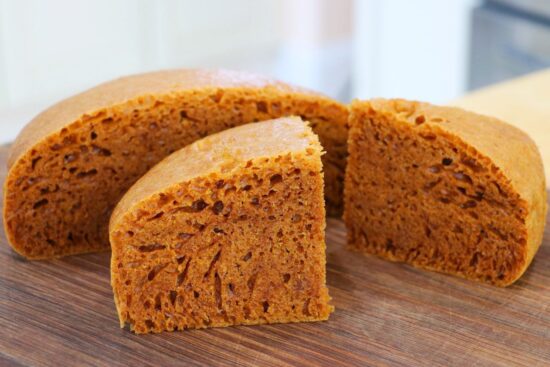
Steamed Ma Lai Sponge Cake Recipe (Ma Lai Gao)
Steamed Ma Lai Sponge Cake, also known as Ma Lai Gao, is one of the most beloved desserts served at dim sum restaurants. It’s soft, …
12-Min Chinese Steamed Cupcake Recipe
Chinese Steamed Cupcakes are a delightful twist on traditional cupcakes—light, fluffy, and incredibly moist. Unlike baked cupcakes that take around 20 to 24 minutes, …
Red Date Zongzi Recipe (Sticky Rice Dumpling)
Red Date Zongzi (Sticky Rice Dumpling) is a traditional delicacy enjoyed during the Dragon Boat Festival and a cherished dish in Northern China. Made …
Thank you, very good。
Hi Jinhua, Thank you for your lovely comment! I’m glad that you enjoy this video! 🙂
You are my inspiration
I show you before on Facebook
Thank you so much for amazing recipes
Thanks a ton for your kind words Anna! You made my day! 🙂
Growing up in Hawaii we’ve been eating rice cakes our entire lives. Now in Texas it’s can be hard to find, and some times they’re not very good. I made this yesterday, and it’s the best! Thank you for sharing this recipe ☺️
Hi Forrest, I’m glad that this recipe brought a bit of home to you in Texas. Rice cakes are such a comforting favorite, and I’m so glad you enjoyed it.
Hi Cici thank you so much…i love all your recipe..ilove you.take care always .god bless your faamily❤️❤️❤️
Hi Jane,
Thank you so much for your heartwarming comment! Best wishes! 🙂
Can you add vanilla extract to the recipe? My memory is a little vague whether that was used in my parent’s recipe.
Hi Serena,
Thanks for the question! I didn’t add any vanilla extract in my recipe, but you could add it as well. Happy cooking! 🙂
I’ll try your recipe looks yummy the white rice cake, my favourite, thank you for your recipe.
Hi Delia,
I’m so happy that you enjoyed this recipe! Happy New Year!
CiCi
Thank you so much for sharing your recipe. I made this and it took me right back to my childhood where my mom used to always buy this for me. I grew up in Hawaii and California. As an adult when I would buy it, it was always dry. Well, thank you to you, I can have it whenever I want. I think next time I’ll add a bit of jasmine flavor. But your recipe was very easy to make.
Thank you
Maryann
Hi Maryann, I’m so glad to hear that you enjoyed the white sugar sponge cake recipe! Food has a wonderful way of bringing back cherished memories, doesn’t it? I think adding a hint of jasmine flavor would be a delightful touch. Cheers to creating more delicious moments! 😀