
No products in the cart.
5-Min Chili Oil Recipe
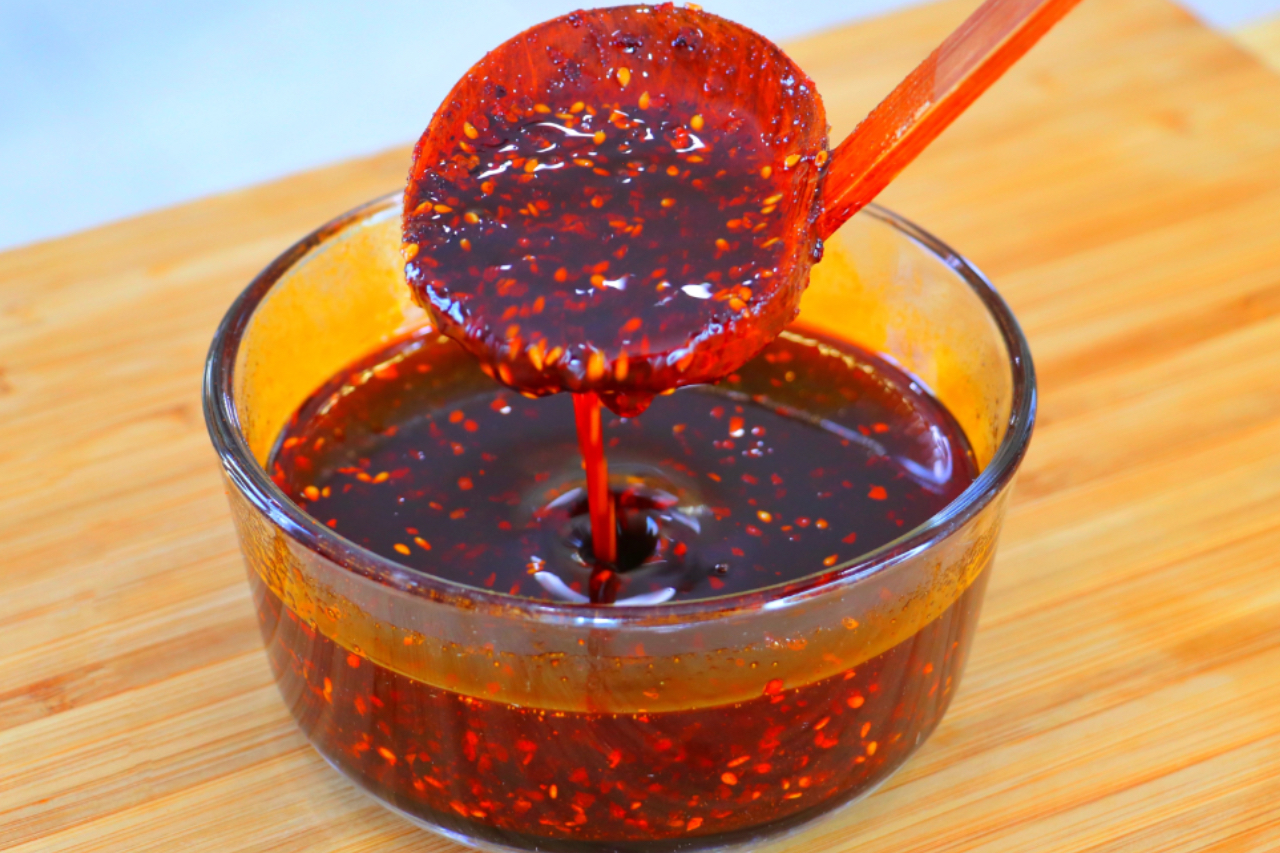
This Chili Oil is fragrant, beautifully red, and full of toasted chili flavor. It takes just 5 minutes to make and instantly adds flavor to dumplings, noodles, wontons, soups, and so many other dishes.
Chili oil is one of those condiments I always love having around. A spoonful can completely change a simple bowl of noodles or become an easy dipping sauce with just a little soy sauce and vinegar.
The method is simple: combine chili flakes, paprika, sesame seeds, and seasonings in a heatproof bowl. Then quickly infuse cooking oil with ginger, scallions, and garlic before pouring the hot oil over the chili mixture. That wonderful sizzling moment is when all those aromas really come alive.
The most important thing is oil temperature. You want the oil hot enough to bloom the chili flakes and bring out their aroma and color, but not so hot that they burn and become bitter. My temperature for this recipe is around 325°F (163°C), and I pour the oil in stages for better control.
What Is Chinese Chili Oil?
Chinese chili oil is a condiment made by pouring hot oil over dried chilies and other seasonings.
There isn’t just one way to make it. Depending on the region, household, and dish, Chinese chili oil can range from a simple combination of chili and oil to versions infused with spices and aromatics.
My version includes red chili flakes, paprika, sesame seeds, a touch of five-spice powder, and an oil infused with ginger, scallions, and garlic. I also finish it with Chinkiang vinegar for a subtle tang that balances the richness.
The result is an aromatic red chili oil that’s easy to spoon over just about anything.
What Does Chili Oil Taste Like?
This chili oil is savory, aromatic, gently spicy, and slightly nutty from the toasted sesame seeds.
The chili flakes provide the heat, while paprika contributes plenty of red color and a milder pepper flavor. Five-spice powder adds just a subtle background aroma—you only need a pinch.
Infusing the oil with ginger, scallions, and garlic adds another layer of fragrance without leaving pieces of fresh aromatics in the finished chili oil.
Finally, Chinkiang vinegar adds a little acidity to balance the rich oil and spicy chilies.
What Kind of Chili Flakes Should I Use?
The type of chili flakes you choose will have a big effect on both the heat and flavor of your chili oil.
For an everyday version, choose Chinese red chili flakes with a heat level you enjoy. Some are relatively mild and aromatic, while others can be very spicy.
If you prefer more heat, use hotter chili flakes. If you want something milder, choose a milder variety rather than simply relying on less chili.
The paprika in this recipe also helps give the chili oil its gorgeous ruby-red color without making it overwhelmingly spicy.
Why Add Paprika to Chili Oil?
Paprika is one of my favorite additions to this recipe because it contributes beautiful red color and mild pepper flavor.
I’m using equal amounts of paprika and red chili flakes, so you get a deeply colored chili oil without making the entire batch extremely hot.
If your chili flakes are already very spicy, the paprika is especially helpful for balancing the mixture while keeping that vibrant red appearance.
What Oil Is Best for Chili Oil?
Choose a neutral cooking oil that can handle the temperature required for blooming the chilies.
Avocado, grapeseed, and peanut oil are all good options. Their neutral flavors allow the chilies, sesame seeds, and aromatics to shine.
If you use avocado oil, don’t be surprised if your chili oil becomes cloudy or partially solidifies in the refrigerator. This is normal. Simply let it sit at room temperature for a little while before serving, and it will become fluid again.
Why Infuse the Oil with Ginger, Scallions, and Garlic?
Instead of adding raw ginger, scallions, and garlic directly to the finished chili oil, I use them to briefly infuse the cooking oil.
Add the aromatics to the oil and cook over medium heat for about 2 minutes. As they heat, they release their aroma into the oil.
Then remove them before bringing the oil to the final temperature. This keeps the aromatics from burning when the oil gets hotter and means you don’t have pieces of fresh garlic, ginger, or scallions sitting in the finished oil.
What Temperature Should Oil Be for Chili Oil?
For this recipe, heat the infused oil to around 325°F (163°C) before pouring.
Temperature matters because chili flakes and spices can burn if the oil is excessively hot. Burned chilies can give your entire batch an unpleasant bitter flavor.
On the other hand, oil that’s not hot enough won’t bloom the dried ingredients as effectively.
At around 325°F, you should get that satisfying sizzle as the oil hits the chili mixture while still having good control over the process.
Why Pour the Hot Oil in Stages?
Rather than dumping all the hot oil into the chili mixture at once, I like to use a multi-step pour.
Start with one ladleful of hot oil and immediately whisk it into the chili mixture. You’ll see and hear the ingredients begin to sizzle and bloom.
Then slowly pour in the remaining hot oil while whisking.
Besides giving you more control, adding the oil gradually helps distribute the heat throughout the chili mixture instead of hitting everything with the full amount of hot oil at once.
Why Add Chinkiang Vinegar to Chili Oil?
Once the hot oil has been poured over the chili mixture, I finish with Chinkiang vinegar.
Chinkiang vinegar, a type of Chinese black vinegar, has a complex, slightly malty, and tangy flavor. Just a tablespoon adds acidity that balances the richness of the oil.
Add it carefully because the vinegar can bubble and splatter when it hits the hot oil.
If you don’t have Chinkiang vinegar, you can substitute another vinegar, although the flavor will be slightly different.
Let’s Talk Ingredients
Red chili flakes: Provide the main chili flavor and heat. Choose the spice level you prefer.
Paprika: Adds rich red color and mild pepper flavor without dramatically increasing the heat.
Salt: Seasons the chili oil.
Five-spice powder: Just a pinch adds subtle warm spice in the background.
Sesame seeds: Add nutty flavor and texture.
Cooking oil: Carries the flavors of the chilies, spices, and aromatics. Use a neutral oil suitable for heating.
Ginger: Briefly infuses the oil with its warm, fresh aroma.
Scallions: Add a mild onion fragrance to the infused oil.
Garlic: Adds savory aroma and depth.
Chinkiang vinegar: Finishes the chili oil with a subtle tang that balances its richness.
Step-by-Step: Let’s Cook
Makes: 2 cups
Prep & Cook Time: 5 minutes
Step 1: Combine the Chili Mixture
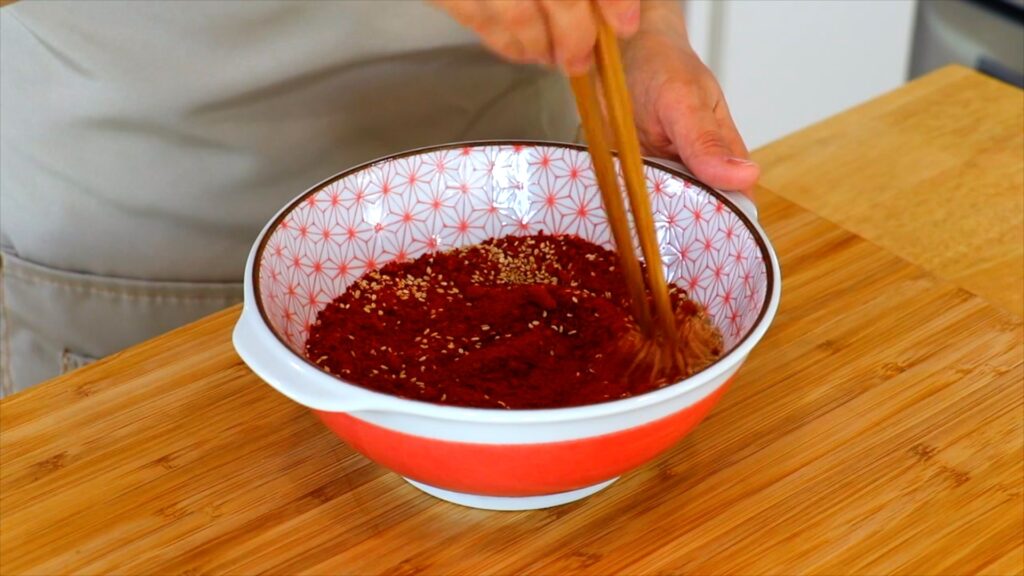
In a large heatproof bowl, combine the red chili flakes, paprika, salt, five-spice powder, and sesame seeds.
Mix everything together until evenly combined.
Tip: Make sure your bowl is truly heatproof and large enough to safely accommodate the bubbling that happens when you add the hot oil.
Step 2: Infuse the Oil
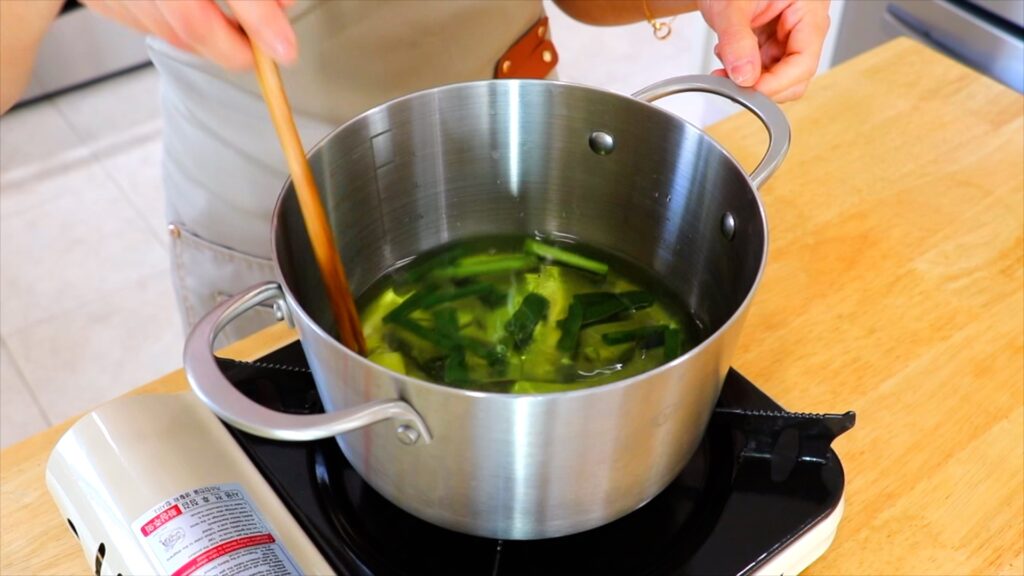
In a small pot over medium heat, add the cooking oil, ginger, scallions, and smashed garlic.
Cook for about 2 minutes, until aromatic.
Remove all the ginger, scallions, and garlic from the oil.
Tip: Don’t let the aromatics burn. We’re using them to flavor the oil, then removing them before increasing the temperature.
Step 3: Heat the Oil
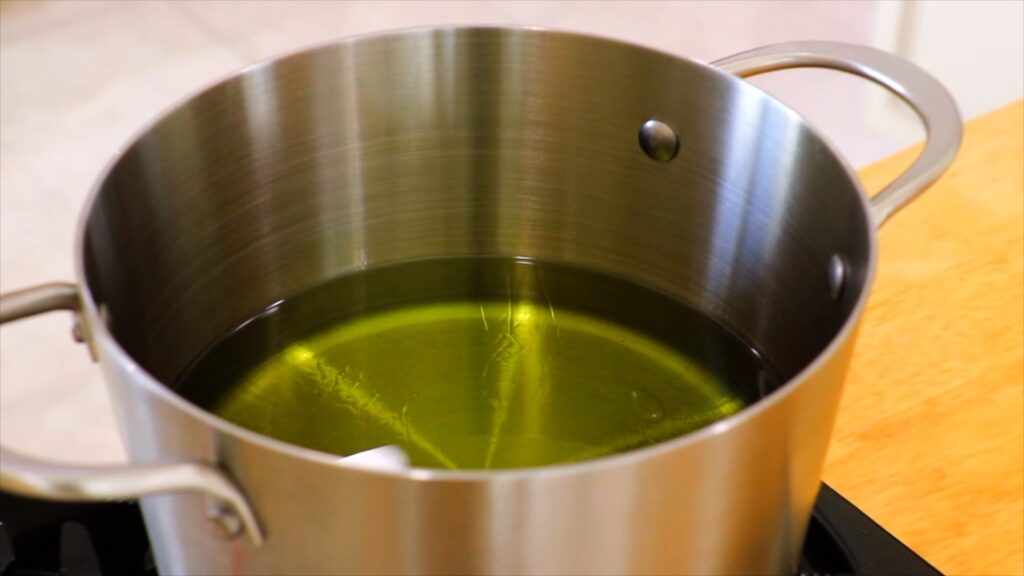
Continue heating the infused oil until it reaches approximately 325°F (163°C).
Using a thermometer is the easiest way to know when the oil is ready.
Tip: Avoid overheating the oil. Oil that’s excessively hot can scorch the chili flakes and spices and make your chili oil taste bitter.
Step 4: Bloom the Chili Mixture
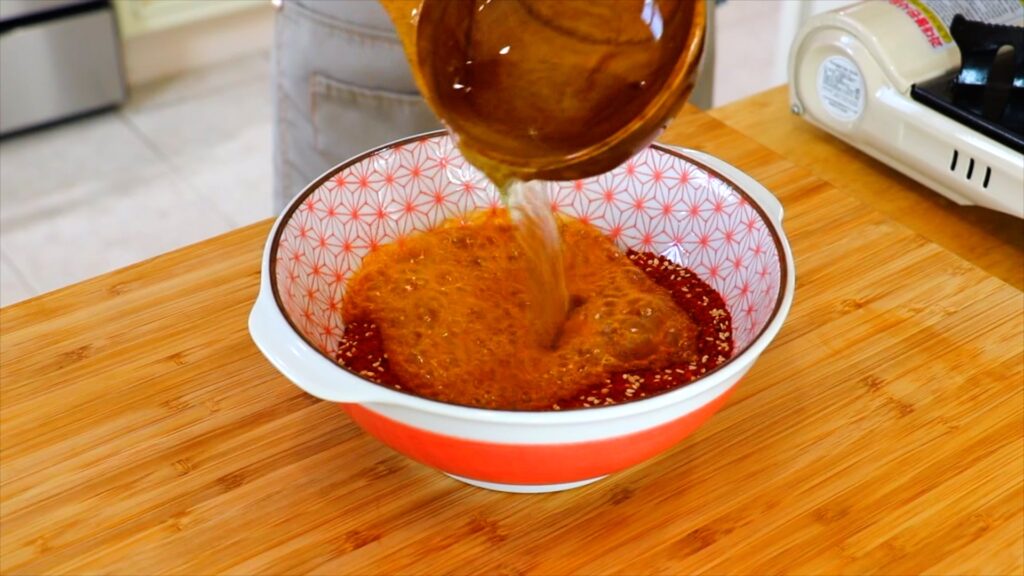
Carefully pour one ladleful of hot oil over the chili mixture and whisk immediately.
Then slowly pour in the remaining hot oil while continuing to whisk so everything is evenly combined.
The mixture should sizzle as the hot oil blooms the chili flakes, paprika, sesame seeds, and spices.
Tip: Pouring the oil in stages gives you more control and helps distribute the heat throughout the chili mixture.
Step 5: Add the Chinkiang Vinegar
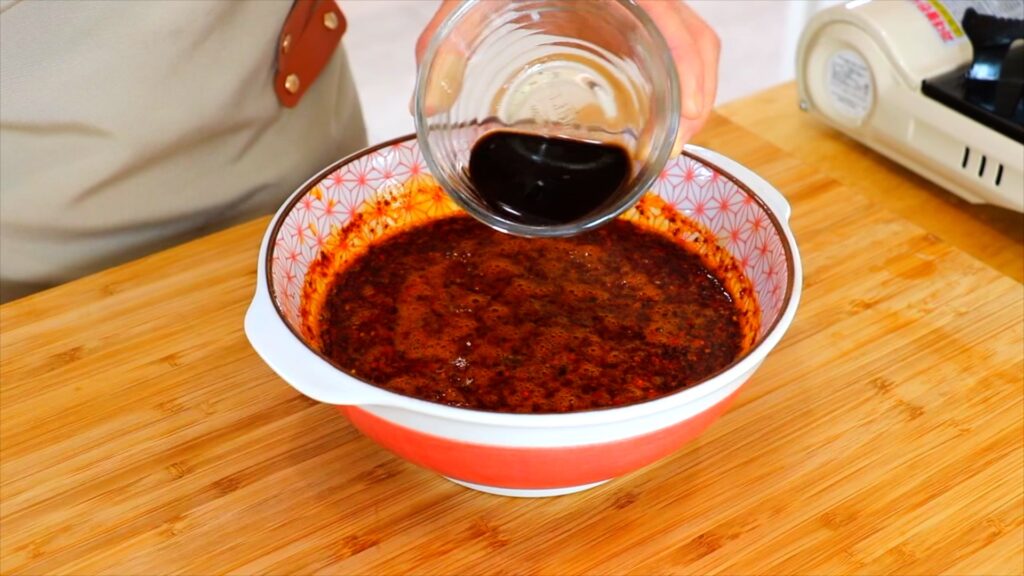
Carefully add the Chinkiang vinegar and stir to combine.
The mixture may bubble when the vinegar hits the hot oil, so add it cautiously and keep your face and hands away from the bowl.
Let the chili oil cool completely.
Step 6: Store the Chili Oil
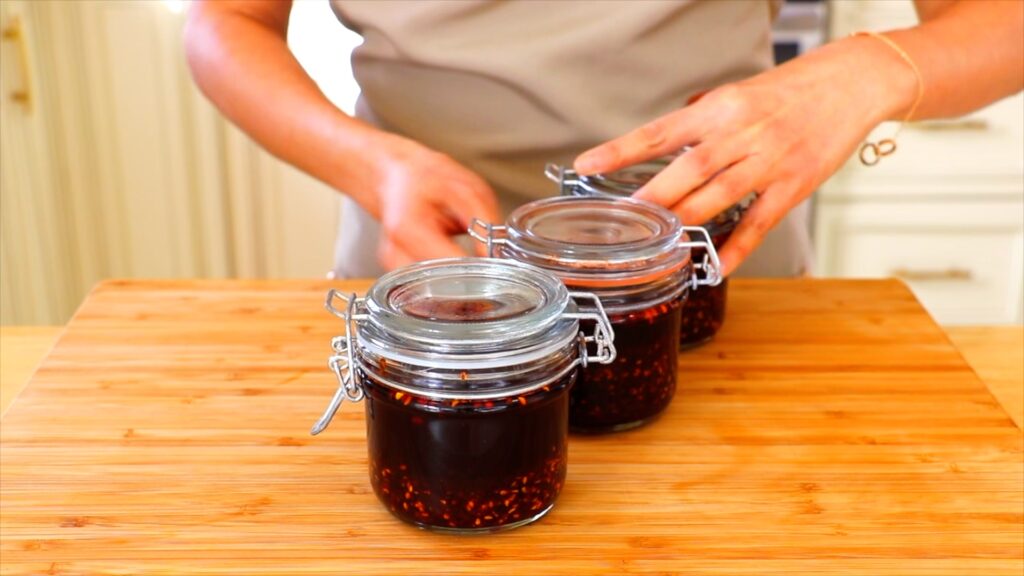
Once completely cooled, transfer the chili oil to a clean, airtight container and refrigerate.
For best quality, use within 2–3 months and always scoop it with a clean, dry spoon.
How Spicy Is This Chili Oil?
The heat level depends heavily on the chili flakes you use.
Because this recipe combines ½ cup chili flakes with ½ cup paprika, it’s designed to have plenty of chili flavor and color without relying entirely on very hot peppers.
For a spicier chili oil, choose hotter chili flakes. For a gentler version, choose mild chili flakes.
This is an easier way to control the heat while maintaining the overall proportions of the recipe.
Can I Adjust the Spiciness?
Absolutely. Homemade chili oil is easy to customize.
You can choose mild or spicy chili flakes depending on your preference. You can also experiment with different dried Chinese chilies to find the combination of heat and aroma you like best.
Just remember that different chili varieties don’t only vary in heat—they can also taste fruity, smoky, earthy, or slightly sweet.
What Can I Eat with Chili Oil?
The easier question might be: what can’t you eat with chili oil?
I love spooning it over dumplings, wontons, noodles, fried rice, soups, eggs, and vegetables. You can also mix it with soy sauce and Chinkiang vinegar for a quick dumpling dipping sauce.
Even a simple bowl of rice or noodles becomes much more exciting with a spoonful on top.
How Should I Store Homemade Chili Oil?
Allow the chili oil to cool completely, then transfer it to a clean, airtight container and refrigerate it.
Because the fresh ginger, scallions, and garlic are removed after infusing the oil, they aren’t left sitting in the finished chili oil. For best quality, use within 2–3 months and always scoop it with a clean, dry spoon.
The oil may become cloudy or partially solidify when refrigerated, depending on the type of oil you use. This is normal; simply let it sit at room temperature briefly before serving. Discard the chili oil if you notice mold, an unusual odor, or other signs of spoilage.
Frequently Asked Questions
Can I make chili oil without a thermometer?
Yes, but a thermometer gives you much better control. Since this recipe specifically targets about 325°F (163°C), I recommend using one when possible.
Why did my chili oil turn bitter?
The oil may have been too hot, causing the chili flakes or spices to scorch. Keep the oil around 325°F for this recipe.
Can I leave out the five-spice powder?
Yes. It’s only a pinch, so you can omit it if you prefer a simpler chili flavor.
Can I leave out the sesame seeds?
Yes. They add nuttiness and texture but aren’t essential to the basic method.
Can I use another vinegar?
Yes. Chinkiang vinegar gives the most distinctive Chinese black vinegar flavor, but another vinegar can be substituted if needed.
Why isn’t my chili oil very spicy?
Different chili flakes vary enormously in heat. Choose a hotter variety if you’d like more spice.
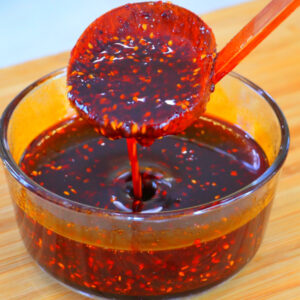
5-Min Chili Oil Recipe
This homemade Chili Oil is fragrant, beautifully red, and full of toasted chili flavor. Ready in just 5 minutes!
Ingredients
For the chili mixture
- ½ cup red chili flakes
- ½ cup paprika
- ½ teaspoon salt
- Pinch of five-spice powder
- 3 tablespoons sesame seeds
For the infused oil
- 1½ cups cooking oil
- 2 pieces ginger
- 2 tablespoons scallions chopped
- 3 cloves garlic smashed
To finish
- 1 tablespoon Chinkiang vinegar or other vinegar
Instructions
- To prepare the chili mixture: In a large heatproof bowl, combine the red chili flakes, paprika, salt, five-spice powder, and sesame seeds. Mix well.
- To infuse the oil: In a small pot over medium heat, add the cooking oil, ginger, scallions, and garlic. Cook for about 2 minutes, until aromatic. Remove all the ginger, scallions, and garlic from the oil.
- To heat the oil: Continue heating the infused oil until it reaches about 325°F (163°C).
- To make the chili oil: Carefully pour one ladleful of hot oil over the chili mixture and whisk immediately. Slowly pour in the remaining hot oil while continuing to whisk until evenly combined.
- To finish: Carefully add the Chinkiang vinegar and stir to combine. Allow the chili oil to cool completely.
- To store: Transfer the cooled chili oil to a clean, airtight container and refrigerate. For best quality, use within 2–3 months and always use a clean, dry spoon.
Video
Notes
- Choose a neutral oil: Avocado, grapeseed, or peanut oil works well. If using avocado oil, it may become cloudy or partially solidify when refrigerated. This is normal; let it sit at room temperature briefly before serving.
- Adjust the heat: Choose milder or hotter chili flakes depending on your preferred spice level.
- Remove the fresh aromatics: Ginger, scallions, and garlic flavor the oil during heating but should be removed before increasing the oil temperature.
- Watch the temperature: Heat the oil to around 325°F (163°C). Oil that's too hot can scorch the chili flakes and make them bitter.
- Pour in stages: Start with one ladleful of hot oil, whisk, then slowly add the remaining oil for better control.
- Add the vinegar carefully: Chinkiang vinegar can bubble and splatter when added to hot oil.
- Store properly: Keep refrigerated in a clean, airtight container and use within 2–3 months for best quality.
Dumpling Recipes to Pair with Chili Oil
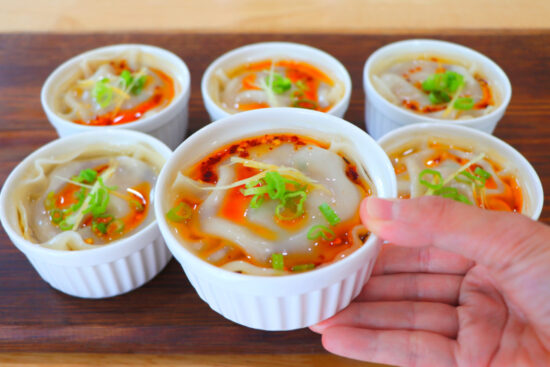
17-Min Lazy Pork Soup Dumplings
These Lazy Pork Soup Dumplings give you everything I love about soup dumplings—juicy pork, plenty of flavorful broth, and a tender dumpling wrapper—but without spending …
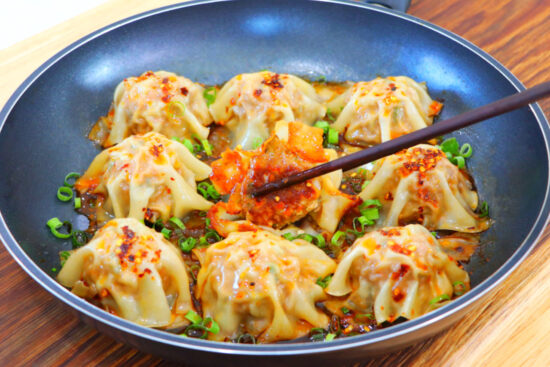
15-Min Pork Blanket Dumplings
If you love homemade dumplings but don’t love spending forever folding them, this recipe is for you. These Pork Blanket Dumplings have everything I love …
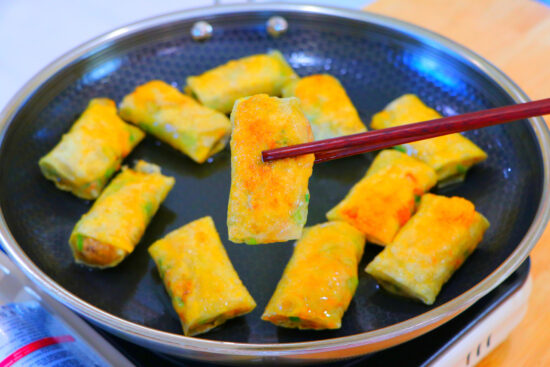
30-Min Crispy Rice Paper Crab Dumplings
Crispy Rice Paper Crab Dumplings are one of my favorite ways to turn a few simple ingredients into something incredibly crunchy and satisfying. Filled with …
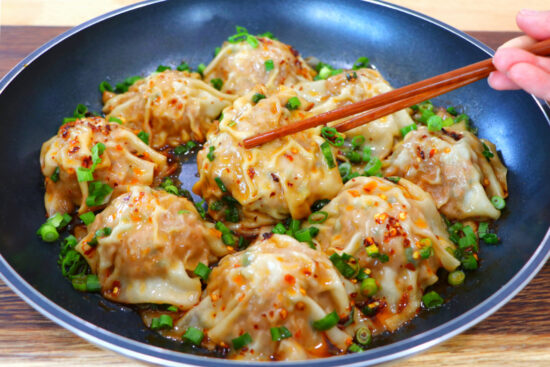
15-Min Chicken Blanket Dumplings
Chicken Blanket Dumplings are one of the easiest ways to enjoy homemade dumplings without spending time rolling dough or folding wrappers. This viral dumpling recipe …
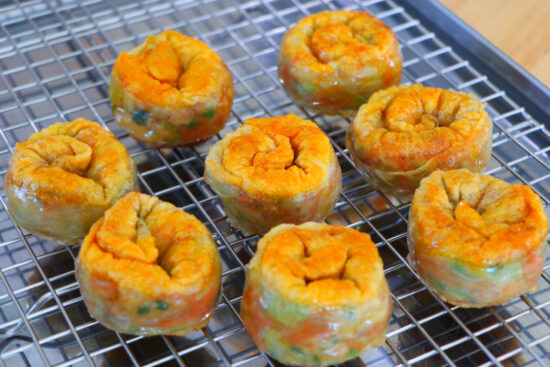
30-Min Crispy Rice Paper Chicken Dumplings
Have you ever made crispy rice paper chicken dumplings that looked great… but fell apart or turned soggy when you cooked them? I’ve tested so …
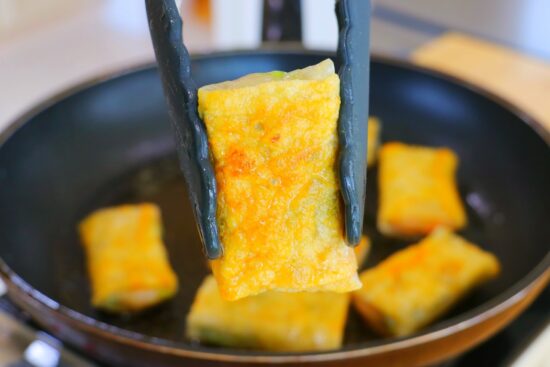
30-Min Crispy Shrimp Dumplings with Rice Paper
Crispy Shrimp Dumplings with Rice Paper are a fun twist on dumplings, with a delicate shell that shatters when you bite into it and a …
Likeit
Thank you, Frank! 😀
What oil should I use?
Hi Charlene, thank you for the question! I used grapeseed oil for this recipe. You could use any high-smokoing point cooking oil like peanut oil, soybean oil, or sunflower oil. Happy cooking! 😀
Great taste! Made it yesterday and had it with paws and savoury rice
Hi Albertha, I’m so happy that you enjoyed it! 😀
this article is very useful, thank you for making a good article
Hi Zidane, thank you for tuning in! 🙂
Im a little confused by the note on adding fresh ingredients, it does not apply to the infusion step, right?
Hi Joe, I see what you mean! We infused the oil with those ingredients, so there’s no fresh moisture left in it. Just make sure not to add any fresh garlic or ginger directly into the chili oil. That way, the chili oil can be stored for a long time. Enjoy!