
No products in the cart.
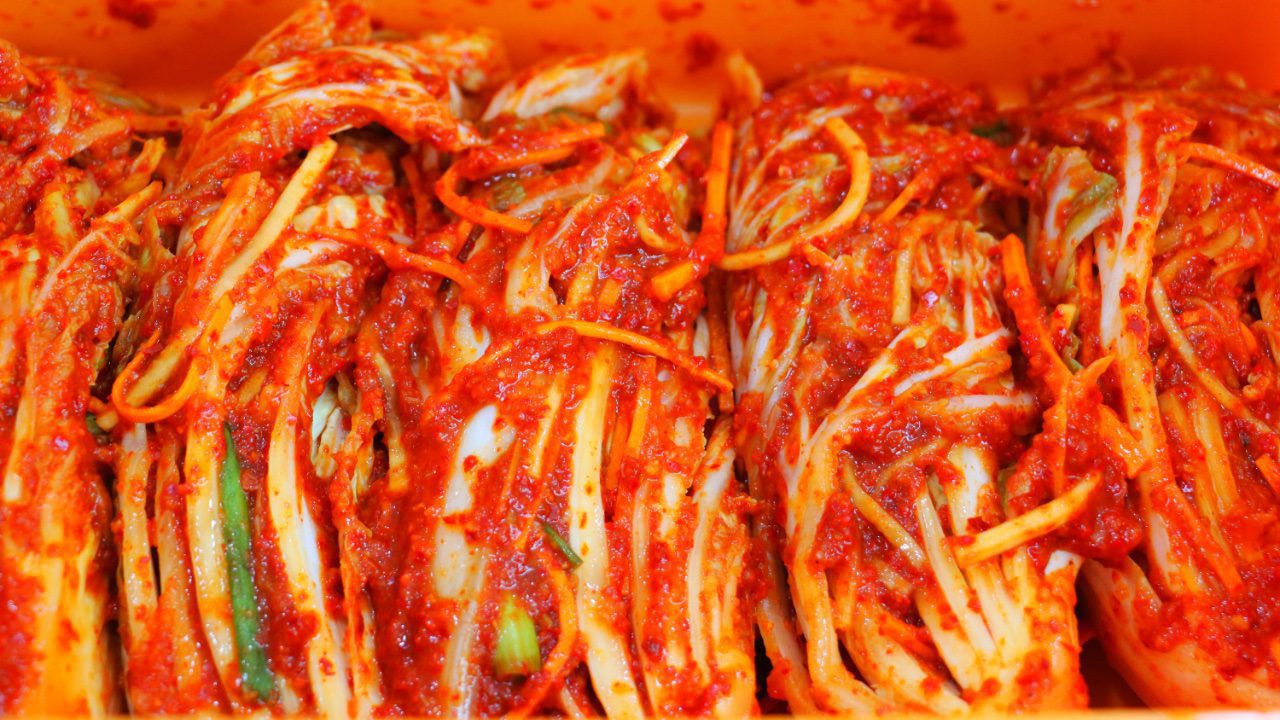
Traditional Whole Napa Cabbage Kimchi (Tongbaechu Kimchi)
Traditional Whole Napa Cabbage Kimchi (Tongbaechu Kimchi) is one of the most iconic dishes in Korean cuisine. Made with whole Napa cabbage quarters layered with a flavorful kimchi paste, this traditional recipe delivers the perfect balance of crunch, spice, tanginess, and umami.
Making kimchi at home may seem intimidating at first, but it’s much easier than many people think. Most of the process involves brining the cabbage and allowing time for fermentation to work its magic. The hands-on portion is surprisingly simple.
One of the things I love most about homemade kimchi is how the flavor changes over time. Fresh kimchi has a bright, crisp flavor, while fermented kimchi develops deeper tanginess and complexity. Every stage has its own unique character and charm.
In this recipe, I’ll show you exactly how to make Traditional Whole Napa Cabbage Kimchi at home, including how to properly brine the cabbage, make the kimchi paste, and ferment it for the best flavor and texture.
What Is Traditional Whole Napa Cabbage Kimchi?
Traditional Whole Napa Cabbage Kimchi, known as Tongbaechu Kimchi, is a classic Korean kimchi made by seasoning whole quarters of Napa cabbage rather than chopped pieces.
The word “tong” means whole, while “baechu” means Napa cabbage.
Unlike quick kimchi recipes, the seasoning paste is carefully spread between each leaf layer. This traditional method helps distribute flavor evenly throughout the cabbage and creates the beautiful layered appearance often seen in homemade Korean kimchi.
Today, Tongbaechu Kimchi remains one of the most popular and recognizable types of kimchi in Korea.
Why Is Kimchi So Important in Korean Cuisine?
Kimchi has been a staple of Korean meals for centuries and is served alongside everything from rice and soups to grilled meats and noodle dishes.
Many Korean families continue the tradition of Kimjang, a seasonal event where large batches of kimchi are prepared for the months ahead. It’s a tradition that brings families and communities together while preserving food for future meals.
For many Koreans, kimchi isn’t simply a side dish—it’s an essential part of everyday life.
Why Do You Need to Brine the Cabbage?
Brining is one of the most important steps in making kimchi.
The salt draws moisture from the cabbage while softening the thick stems and helping the leaves become flexible. Proper brining also allows the cabbage to absorb the seasoning more effectively during fermentation.
A properly brined cabbage should bend easily without breaking.
Brining also helps maintain the cabbage’s texture and creates an environment that supports successful fermentation.
What Does the Rice Paste Do?
Many traditional kimchi recipes include a rice paste made from sweet rice flour and water.
The rice paste helps the seasonings cling to the cabbage leaves and distributes the flavors more evenly throughout the kimchi.
It also provides carbohydrates that help support the fermentation process.
While some modern recipes skip this step, rice paste remains a common ingredient in many traditional Korean kimchi recipes.
What Does Kimchi Taste Like?
Kimchi is known for its bold and complex flavor.
Depending on how long it has fermented, kimchi can be:
- Savory
- Tangy
- Spicy
- Slightly sweet
- Garlicky
- Umami-rich
Fresh kimchi tends to be brighter and crunchier, while longer fermentation creates a deeper, tangy flavor and softer texture.
How Long Should Kimchi Ferment?
One of the best things about kimchi is that you can enjoy it at different stages of fermentation.
After 1 day: Fresh and lightly fermented.
After 3 to 7 days: More balanced flavor with a pleasant tang.
After 2 to 4 weeks: Deeper fermentation and more complexity.
After 1 month or longer: Stronger tanginess that works beautifully in fried rice, soups, and stews.
After several months: Very tangy and intensely flavorful. Many people use well-aged kimchi in dishes like Kimchi Fried Rice, Kimchi Jjigae, and Kimchi Pancakes.
There is no perfect fermentation time—the best flavor comes down to personal preference. Some people enjoy fresh, crunchy kimchi, while others prefer the deeper flavor of well-aged kimchi.
Why Is My Kimchi Too Salty?
If your kimchi tastes too salty, one of these may be the cause:
- The cabbage wasn’t rinsed thoroughly after brining.
- The cabbage was brined for too long.
- Fine salt was used instead of Korean coarse sea salt.
After brining, rinse the cabbage 2 to 3 times and drain it thoroughly before adding the kimchi paste.
Why Isn’t My Kimchi Fermenting?
Fermentation speed depends largely on temperature.
If your kimchi isn’t fermenting, possible causes include:
- A very cold room temperature
- Refrigerating too soon
- Not enough fermentation time
Remember that fermentation happens more slowly in colder environments and more quickly in warmer ones.
What to Serve With Kimchi
Traditional Kimchi pairs well with:
- Steamed rice:
- Korean BBQ
- Kimchi Fried Rice
- Tofu Stew
Let’s Talk Ingredients
Napa cabbage forms the foundation of traditional kimchi and develops a wonderful texture during fermentation.
Korean coarse sea salt helps properly brine the cabbage without oversalting it.
Sweet rice flour creates the rice paste that helps the seasoning adhere to the leaves.
Garlic and ginger provide the classic aromatic base.
Korean pear adds natural sweetness and helps balance the spice.
Fish sauce and salted shrimp contribute savory depth and umami.
Gochugaru gives kimchi its signature color and flavor.
Scallions, radish, and carrots add freshness, crunch, and texture.
Let’s Cook!
Serves: 16
Prep Time: 1 hour 15 minutes
Rest Time: 8 hours
Cook Time: 5 minutes
Step 1: Brine the Cabbage
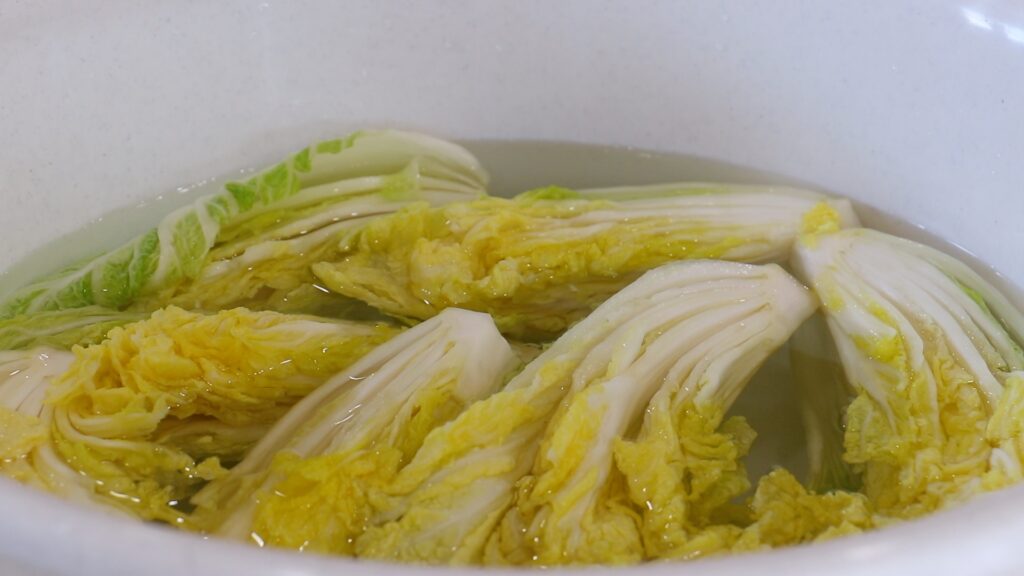
Cut the Napa cabbage into quarters and rinse them thoroughly under running water.
In a large bowl, dissolve ¼ cup of the Korean coarse sea salt in the water.
Sprinkle the remaining ½ cup of salt between the leaves of each cabbage quarter, paying extra attention to the thick white stems.
Place the cabbage into the salt water and press down gently to submerge.
Let the cabbage brine for about 8 hours, or until the thick stems become soft and bend easily without breaking.
Rinse the cabbage under cold running water 2 to 3 times and drain thoroughly.
Tip: The thick white stems should bend easily when properly brined. If they still feel stiff, continue brining a little longer.
Step 2: Make the Rice Paste
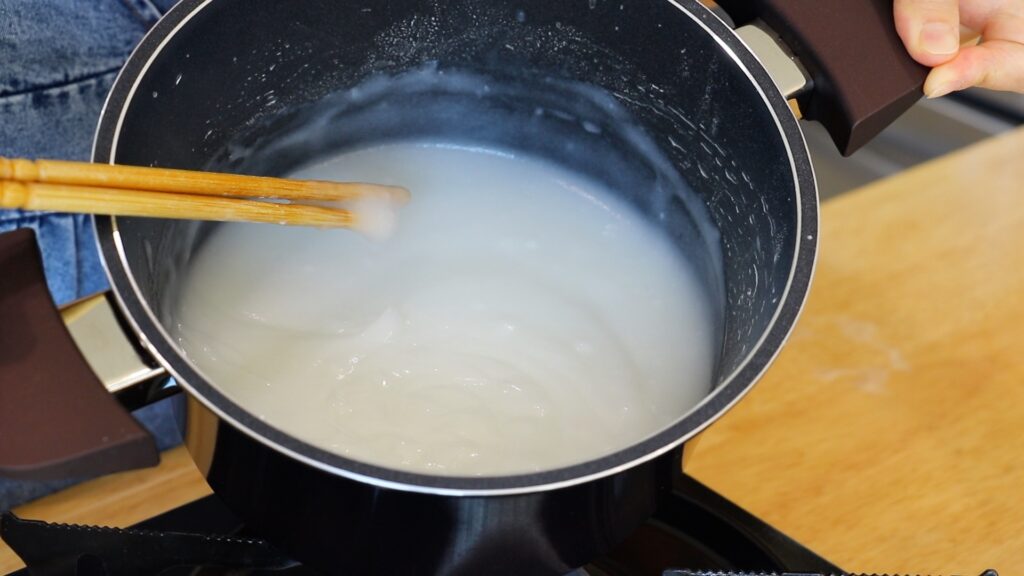
In a saucepan over low heat, combine the water and sweet rice flour.
Whisk constantly until the mixture thickens into a smooth paste and comes to a gentle boil.
Remove from the heat and let cool to room temperature, about 20 minutes.
Tip: Stir constantly while cooking to prevent lumps from forming.
Step 3: Prepare the Seasoning Paste
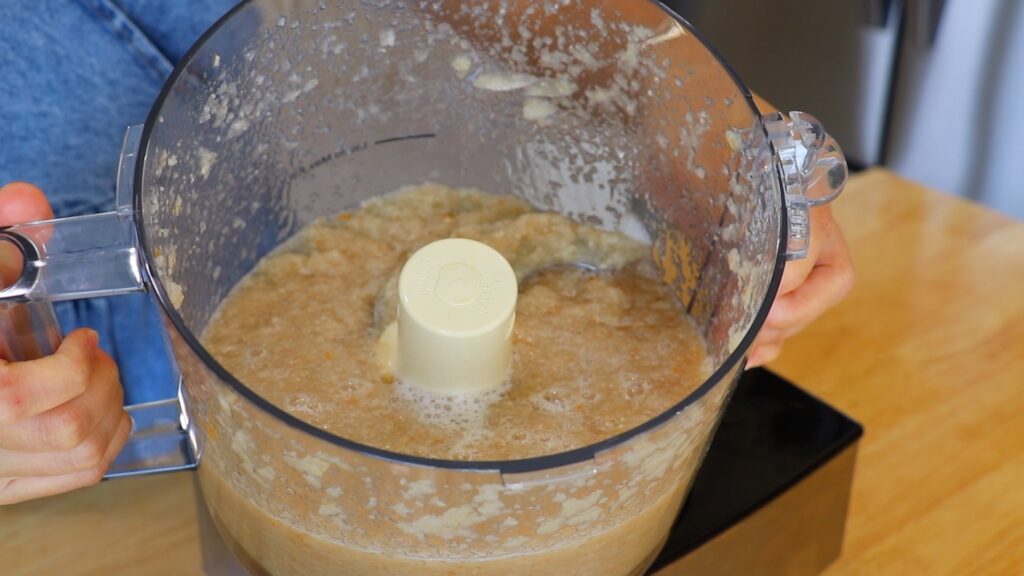
In a blender or food processor, combine the garlic, ginger, Korean pear, onion, fish sauce, salted shrimp, and plum syrup.
Blend until smooth.
Tip: The smoother the mixture, the easier it will spread between the cabbage leaves.
Step 4: Make the Kimchi Paste
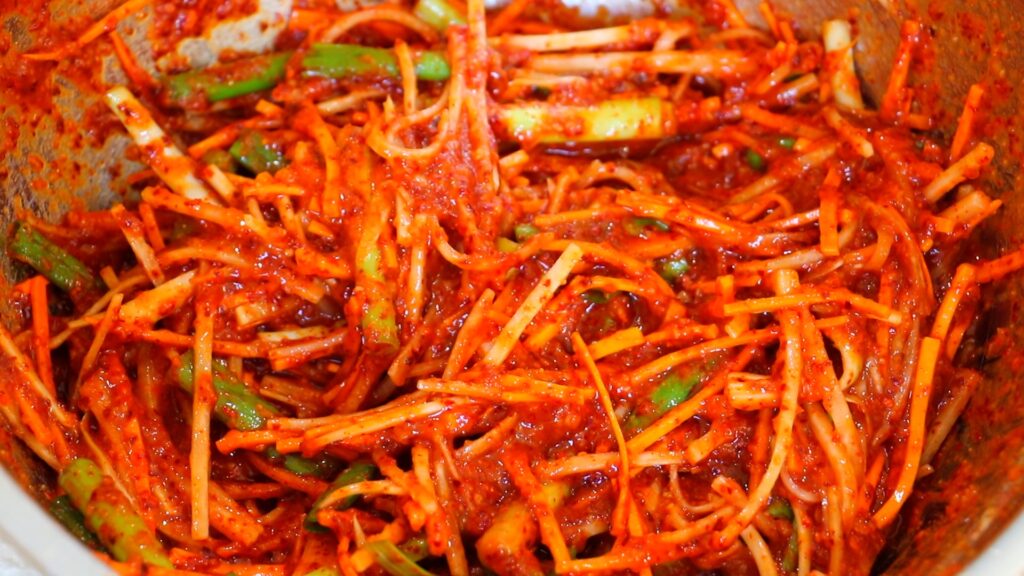
In a large mixing bowl, combine the cooled rice paste and seasoning paste.
Add the gochugaru and mix until evenly combined.
Add the scallions, radish, and carrots. Mix until the vegetables are evenly coated.
Tip: Start with less gochugaru if you’re sensitive to spice. You can always add more to taste.
Step 5: Assemble the Kimchi
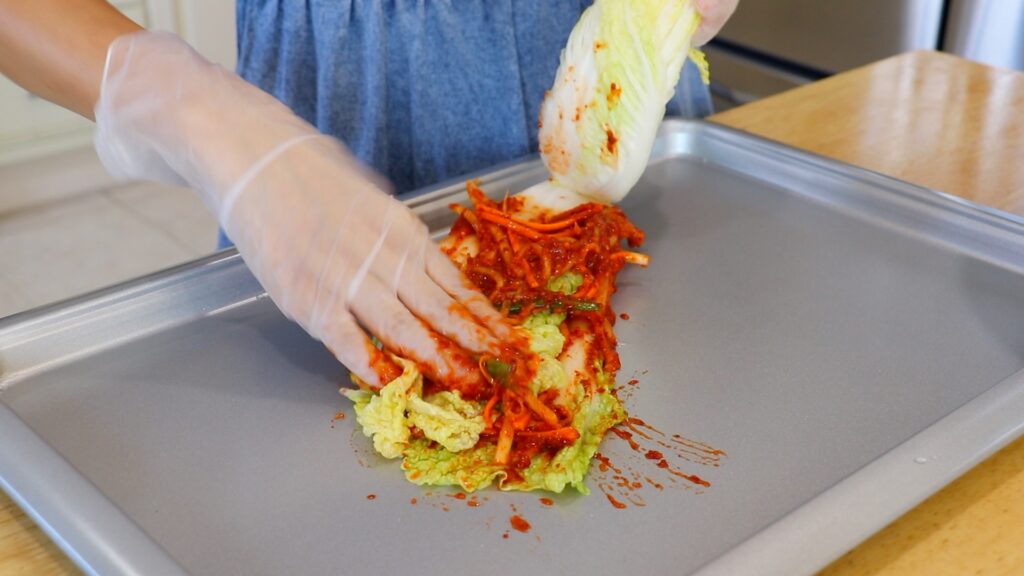
Working with one cabbage quarter at a time, spread the kimchi paste between each layer of leaves, making sure every leaf is coated.
Fold the cabbage quarter into a compact bundle and place it into an airtight container.
Repeat with the remaining cabbage.
Tip: Wear disposable gloves to protect your hands from the chili paste and prevent staining.
Step 6: Ferment the Kimchi
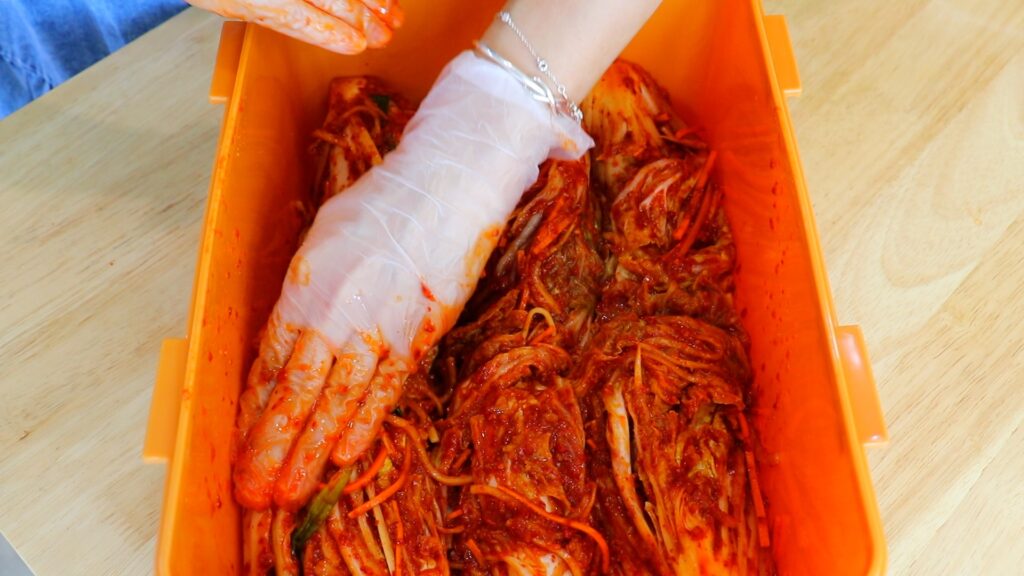
Leave the container at room temperature for about 1 day to start the fermentation process.
Transfer the kimchi to the refrigerator and continue fermenting to your taste.
For a mild flavor, enjoy it after a few days. For a deeper, tangier flavor, allow it to ferment longer.
Tip: As the kimchi ferments, the flavor will continue to develop and become more complex over time.
Common Mistakes When Making Kimchi
Skipping the brining step: Proper brining is essential for texture and fermentation.
Using table salt: Korean coarse sea salt produces better results.
Not draining the cabbage well: Excess water can dilute the seasoning paste.
Under-seasoning the leaves: Make sure every layer is coated with kimchi paste.
Packing the container too tightly: Leave a little room for fermentation activity.
Frequently Asked Questions
Can I eat kimchi immediately?
Yes. Fresh kimchi is delicious, although the flavor will continue to develop as it ferments.
How long does homemade kimchi last?
Properly stored kimchi can last for several months in the refrigerator.
Can I make vegetarian kimchi?
Yes. Replace the fish sauce and salted shrimp with vegetarian alternatives.
Can I use an apple instead of a Korean pear?
Yes. Apple is a common substitute.
Why is my kimchi too salty?
The cabbage may not have been rinsed thoroughly after brining.
Why is my kimchi sour?
Longer fermentation naturally increases acidity.
How spicy is kimchi?
The spice level depends on the amount of gochugaru used.
Traditional Kimchi Recipe (Tongbaechu)
Traditional Whole Napa Cabbage Kimchi (Tongbaechu Kimchi) is a classic Korean side dish made with whole Napa cabbage quarters layered with a flavorful kimchi paste and fermented until tangy, spicy, and packed with umami.
Ingredients
For the Napa cabbage
- 2 medium Napa cabbages, quartered (6 pounds)
- ¾ cup Korean coarse sea salt, divided
- 1 gallon water
For the rice paste
- 2 cups water
- 5 tablespoons sweet rice flour
For the kimchi paste
- 10 cloves garlic
- 1 teaspoon ginger
- 1 medium Korean pear, chopped
- ½ large onion, chopped
- 5 tablespoons anchovy fish sauce
- 2 tablespoons salted shrimp, (saeu-jeot)
- 4 tablespoons Korean plum syrup, (maesil cheong0
- 4 stalks s scallions, cut into 2-inch pieces
- 2 cups Korean white radish, cut into matchsticks
- 2 cups carrots, cut into matchsticks
- 1½ cups Korean red pepper flakes, (gochugaru)
Instructions
- To brine the cabbage, cut the Napa cabbages into quarters and rinse them thoroughly under running water. In a large bowl, dissolve ¼ cup of the Korean coarse sea salt in the water. Sprinkle the remaining ½ cup of salt between the leaves of each cabbage quarter, paying extra attention to the thick white stems. Place the cabbage into the salt water and press down gently. Let them brine for about 8 hours, or until the thick stems become soft and bend easily. Rinse the cabbage under cold running water 2 to 3 times and drain thoroughly.
- To make the rice paste, in a saucepan over low heat, combine the water and sweet rice flour. Whisk constantly until the mixture thickens into a smooth paste and comes to a gentle boil. Remove from the heat and let cool to room temperature.
- To prepare the seasoning paste, in a blender or food processor, combine the garlic, ginger, Korean pear, onion, fish sauce, salted shrimp, and plum syrup. Blend until smooth.
- To make the kimchi paste, in a large mixing bowl, combine the cooled rice paste and seasoning paste. Add the gochugaru and mix well. Add the scallions, radish, and carrots. Mix until evenly coated.
- To assemble the kimchi, working with one cabbage quarter at a time, spread the kimchi paste between each layer of leaves, making sure every leaf is coated. Fold the cabbage into a compact bundle and place it into an airtight container. Repeat with the remaining cabbage.
- To ferment the kimchi, leave the container at room temperature for about 1 day to start the fermentation process. Transfer to the refrigerator and continue fermenting to your taste. For a milder flavor, enjoy after a few days. For a deeper tangy flavor, ferment longer.
Video
Notes
- Use Korean coarse sea salt: Fine salt can oversalt the cabbage and affect the texture.
- Check the cabbage: The thick stems should bend easily after brining. If they still feel stiff, continue brining a little longer.
- Drain thoroughly: Excess water can dilute the kimchi paste.
- Wear gloves: Kimchi paste can stain hands and may irritate sensitive skin.
- Adjust the gochugaru: Use more or less depending on your preferred spice level.
- Vegetarian option: Replace the fish sauce and salted shrimp with vegetarian alternatives.
- Storage: Store in an airtight container in the refrigerator. Enjoy after a few days for a milder flavor or ferment longer for a deeper tang.
Other Recipes You Might Enjoy

25-Min Honey Butter Fried Chicken Wings
Honey Butter Fried Chicken Wings are one of those dishes that always feel a little special—crispy, golden wings tossed in a buttery, sweet-savory glaze that’s …

25-Min Soy Garlic Fried Chicken Wings
Soy Garlic Fried Chicken Wings are crispy on the outside, juicy on the inside, and coated in a sticky, glossy glaze that makes you want …
3-Min Korean Cucumber Salad Recipe
Korean Cucumber Salad is a quick and refreshing side dish that packs bold flavor with minimal effort. This no-cook recipe features crisp cucumber slices …
30-Min Korean Cubed Radish Kimchi Recipe
Korean Cubed Radish Kimchi is an easy, fast, and flavorful side dish that’s perfect for kimchi beginners. With a crisp texture, spicy kick, and tangy-sweet …

12-Min Kimchi Fried Rice Recipe
Kimchi Fried Rice is a classic Korean comfort dish and one of the easiest, boldest ways to transform leftover rice into something deeply flavorful. With …
Great recipie
Many thanks, Joseph
Like it much. Thanks
Thank you, Orly! 🙂
My favorite, thank you for sharing your recipe,
Hi Rosalina, I must thank you for stopping by! Happy cooking! 🙂
Hello!happy new year!
Thank you for sharing us your kimchi procedures and ingredients..this is my favorite!
God bless you.
Hi Jona,
You are most welcome! I’m really glad that you enjoyed this video. Happy New Year to you and your family! 🙂
I like thwme video, coz I been serving Korean here in Cebu
Thank you for watching my video, Joselito! 🙂
I loved kimchi. Thank you for sharing another way on how to do it. I will try this. Hope you can help and share more tips. All the best.
I hope you’ll enjoy this recipe. Happy cooking, Jennifer! 🙂
Greetings from Germany.
I would love to make your Kimchi recipe.
It looks so fresh!
Please, I have a question….
Your recipe asks for ‘2 medium cabbages (6 pounds)’…. Is that a total of 6 pounds, or 6 pounds each?
Thanking you in advance for your reply. 🙂
Hi Corrie,
Thank you for the question! The two napa cabbages combined weigh about 6 pounds. I hope you enjoy this recipe! Happy kimchi making!
CiCi
Hi Cici
If I want the Kimchi to be sweeter, do I add pear/apple puree or more sugar?
Hi Gina,
Thank you for reaching out! Yes, you could add more pear, apple, sugar, or Korean plum syrup – all of them will work out beautifully. Enjoy!
CiCi