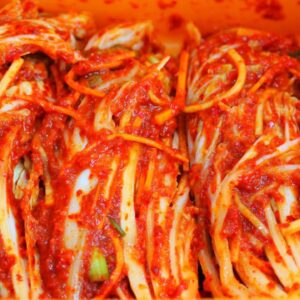
Traditional Kimchi Recipe (Tongbaechu)
Traditional Whole Napa Cabbage Kimchi (Tongbaechu Kimchi) is a classic Korean side dish made with whole Napa cabbage quarters layered with a flavorful kimchi paste and fermented until tangy, spicy, and packed with umami.
Ingredients
For the Napa cabbage
- 2 medium Napa cabbages, quartered (6 pounds)
- ¾ cup Korean coarse sea salt, divided
- 1 gallon water
For the rice paste
- 2 cups water
- 5 tablespoons sweet rice flour
For the kimchi paste
- 10 cloves garlic
- 1 teaspoon ginger
- 1 medium Korean pear, chopped
- ½ large onion, chopped
- 5 tablespoons anchovy fish sauce
- 2 tablespoons salted shrimp, (saeu-jeot)
- 4 tablespoons Korean plum syrup, (maesil cheong0
- 4 stalks s scallions, cut into 2-inch pieces
- 2 cups Korean white radish, cut into matchsticks
- 2 cups carrots, cut into matchsticks
- 1½ cups Korean red pepper flakes, (gochugaru)
Instructions
- To brine the cabbage, cut the Napa cabbages into quarters and rinse them thoroughly under running water. In a large bowl, dissolve ¼ cup of the Korean coarse sea salt in the water. Sprinkle the remaining ½ cup of salt between the leaves of each cabbage quarter, paying extra attention to the thick white stems. Place the cabbage into the salt water and press down gently. Let them brine for about 8 hours, or until the thick stems become soft and bend easily. Rinse the cabbage under cold running water 2 to 3 times and drain thoroughly.
- To make the rice paste, in a saucepan over low heat, combine the water and sweet rice flour. Whisk constantly until the mixture thickens into a smooth paste and comes to a gentle boil. Remove from the heat and let cool to room temperature.
- To prepare the seasoning paste, in a blender or food processor, combine the garlic, ginger, Korean pear, onion, fish sauce, salted shrimp, and plum syrup. Blend until smooth.
- To make the kimchi paste, in a large mixing bowl, combine the cooled rice paste and seasoning paste. Add the gochugaru and mix well. Add the scallions, radish, and carrots. Mix until evenly coated.
- To assemble the kimchi, working with one cabbage quarter at a time, spread the kimchi paste between each layer of leaves, making sure every leaf is coated. Fold the cabbage into a compact bundle and place it into an airtight container. Repeat with the remaining cabbage.
- To ferment the kimchi, leave the container at room temperature for about 1 day to start the fermentation process. Transfer to the refrigerator and continue fermenting to your taste. For a milder flavor, enjoy after a few days. For a deeper tangy flavor, ferment longer.
Video
Notes
- Use Korean coarse sea salt: Fine salt can oversalt the cabbage and affect the texture.
- Check the cabbage: The thick stems should bend easily after brining. If they still feel stiff, continue brining a little longer.
- Drain thoroughly: Excess water can dilute the kimchi paste.
- Wear gloves: Kimchi paste can stain hands and may irritate sensitive skin.
- Adjust the gochugaru: Use more or less depending on your preferred spice level.
- Vegetarian option: Replace the fish sauce and salted shrimp with vegetarian alternatives.
- Storage: Store in an airtight container in the refrigerator. Enjoy after a few days for a milder flavor or ferment longer for a deeper tang.