
No products in the cart.
30-Min Hong Kong Crispy Chow Mein with Shrimp
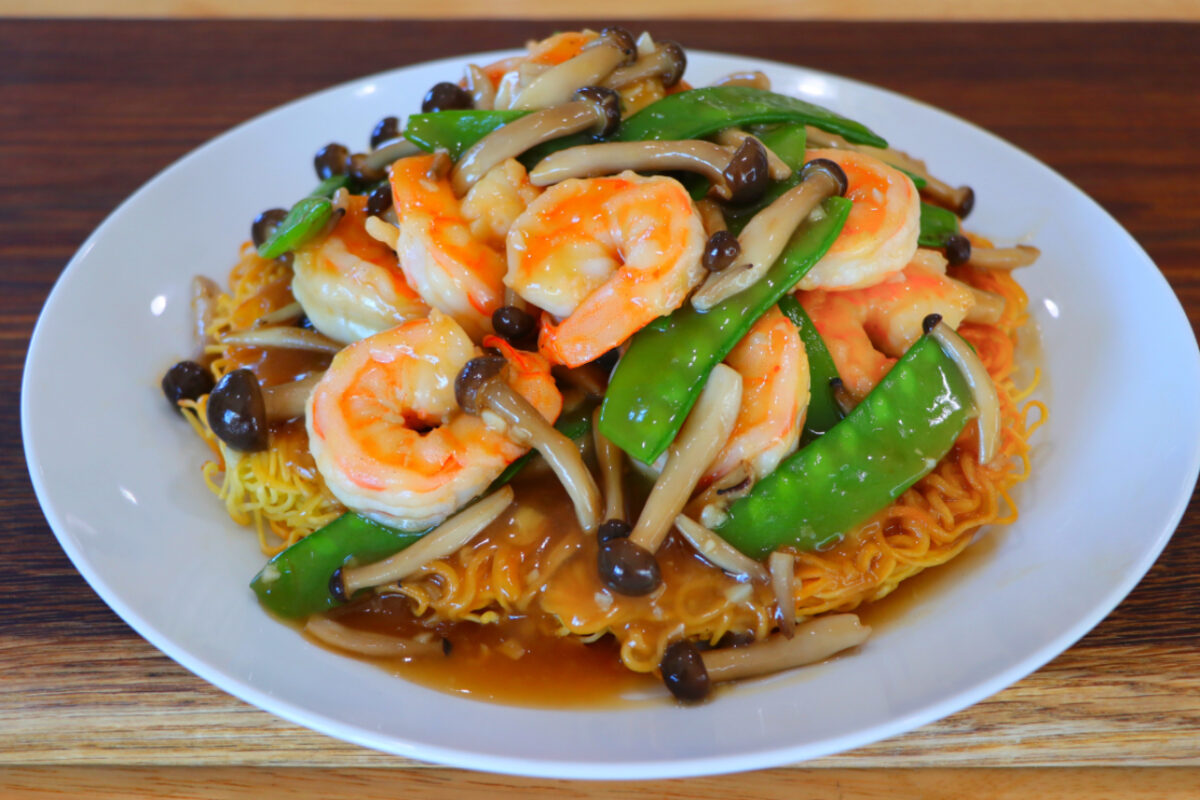
Hong Kong Crispy Chow Mein is all about texture—that moment when the noodles hit the plate still golden and crackly, with silky shrimp and glossy sauce spooned right over the top. The edges stay crispy, the center softens slightly from the sauce, and every bite has that perfect contrast between crunchy and savory.
At home, everyone always reaches for a different part of the noodles. My husband likes the softer noodles underneath that soak up all the sauce, while my daughters always go straight for the crispiest pieces around the edges. That mix of crispy and saucy is really what makes this dish so special.
What I love about this version is that you don’t need to deep-fry the noodles to get that restaurant-style crust. With a few simple techniques, you can create that same golden, crispy texture right at home using a pan.
What Is Hong Kong Crispy Chow Mein?
Hong Kong Crispy Chow Mein, also known as Hong Kong Style Pan-Fried Noodles or Two-Sided Golden Noodles, is a Cantonese noodle dish made with egg noodles that are pan-fried until crispy and golden, then topped with a savory shrimp and vegetable sauce.
Unlike softer chow mein dishes, this version is all about contrast:
- Crispy noodles on the outside
- Slightly chewy noodles underneath
- Silky sauce poured over the top
The name “Two-Sided Golden Noodles” comes from the technique of pan-frying both sides until crisp and deeply golden.
What Does Crispy Chow Mein Taste Like?
This dish is savory, slightly smoky, and full of texture.
The noodles are crispy and golden on the outside while still slightly chewy in the center.
The shrimp stays juicy and tender, and the glossy sauce ties everything together without making the noodles too heavy.
The contrast between crispy noodles and silky sauce is what makes this dish so satisfying.
Best Noodles for Crispy Chow Mein
The best noodles for this dish are Hong Kong pan-frying noodles.
They’re thin egg noodles designed specifically for crisping in a wok or pan.
If you can’t find them, you can also use:
- Ramen noodles
- Wheat noodles
- Lo mein noodles
- Linguini pasta
The texture will vary slightly, but they still work well.
The Secret to Crispy Chow Mein Without Deep-Frying
The key is removing moisture before the noodles crisp.
First, blanch the noodles just until softened, then rinse briefly in cold water and drain very well.
Next, lightly coat them with cornstarch. This helps absorb extra moisture and allows the noodles to bind together into a crisp noodle cake.
Once the noodles go into the pan, let them sit long enough to develop a crust before moving them too much.
That’s what creates that golden restaurant-style texture without deep-frying.
Why Coat the Noodles with Cornstarch?
This small step makes a surprisingly big difference.
The cornstarch helps absorb excess surface moisture so the noodles crisp more evenly.
It also lightly binds the noodles together, which makes them easier to flip without falling apart.
The result is a crispier, more even crust.
How to Flip Crispy Chow Mein Without Breaking It?
Flipping the noodles can feel intimidating at first, but the key is letting the crust fully set before flipping.
Once the bottom is golden and crispy, the noodles should hold together much more easily—especially with the light cornstarch coating.
In fact, when the noodles are crisped properly, you can sometimes literally lift and flip them with chopsticks.
If the noodles still feel loose or soft, give them another minute before trying to flip.
You can also:
- Slide the noodles onto a plate
- Place another plate on top
- Flip and slide them back into the pan
The more the crust develops, the easier the flip becomes.
Pan-Fried vs Deep-Fried Chow Mein
Many restaurants deep-fry the noodles for extra crispiness.
At home, pan-frying is much easier and uses far less oil while still giving you that crispy texture.
The noodles become golden and crunchy on the outside while staying lighter and less greasy.
Let’s Talk Ingredients
Every ingredient helps build texture and flavor in this dish.
Hong Kong noodles crisp beautifully while staying chewy underneath.
Shrimp cook quickly and add sweetness and tenderness.
Cornstarch helps both the shrimp and noodles hold texture better.
Snow peas and mushrooms add freshness and balance the richness of the noodles.
Soy sauce, oyster sauce, and hoisin sauce create a savory, slightly rich sauce.
Sesame oil adds aroma right at the end.
Chicken stock creates the silky sauce that gets poured over the crispy noodles.
Step-by-Step: Let’s Cook
Serves: 4
Prep time: 15 minutes
Cook time: 15 minutes
Step 1: Season the shrimp
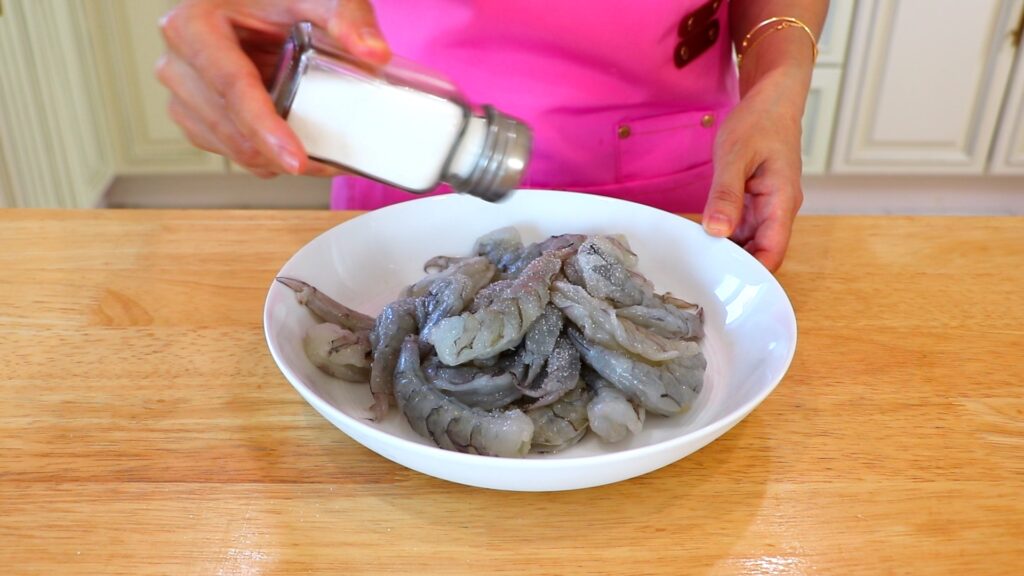
In a bowl, mix the shrimp with the salt until slightly sticky, then add the white pepper, cornstarch, and cooking oil and mix well.
Tip: The cornstarch helps keep the shrimp juicy during stir-frying.
Step 2: Prepare the sauce
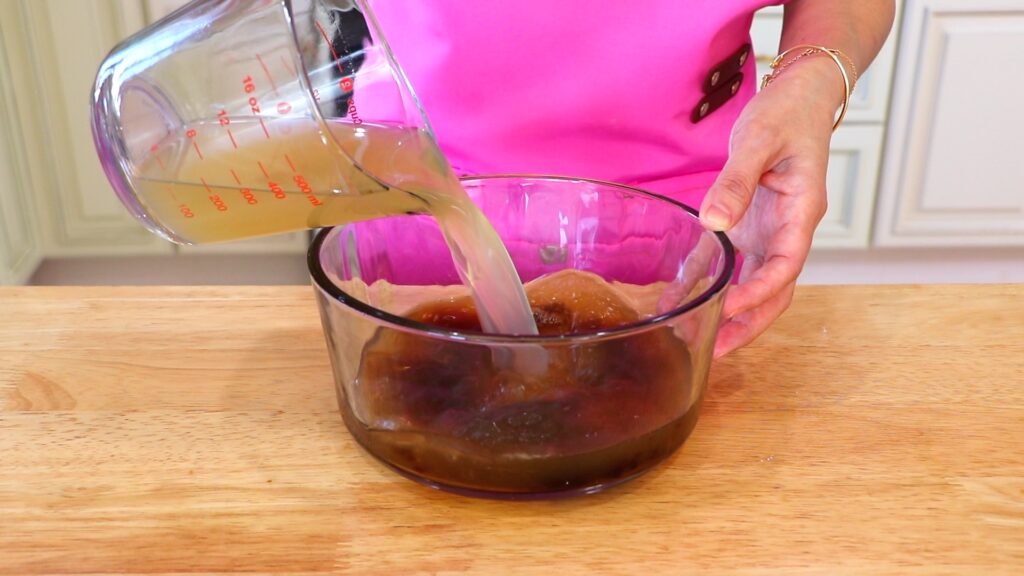
In a bowl, mix the soy sauce, oyster sauce, hoisin sauce, sesame oil, white pepper, and chicken stock until combined. In a separate bowl, mix the cornstarch and water to form a slurry.
Tip: Preparing the sauce ahead keeps the stir-fry fast and smooth.
Step 3: Prepare the noodles
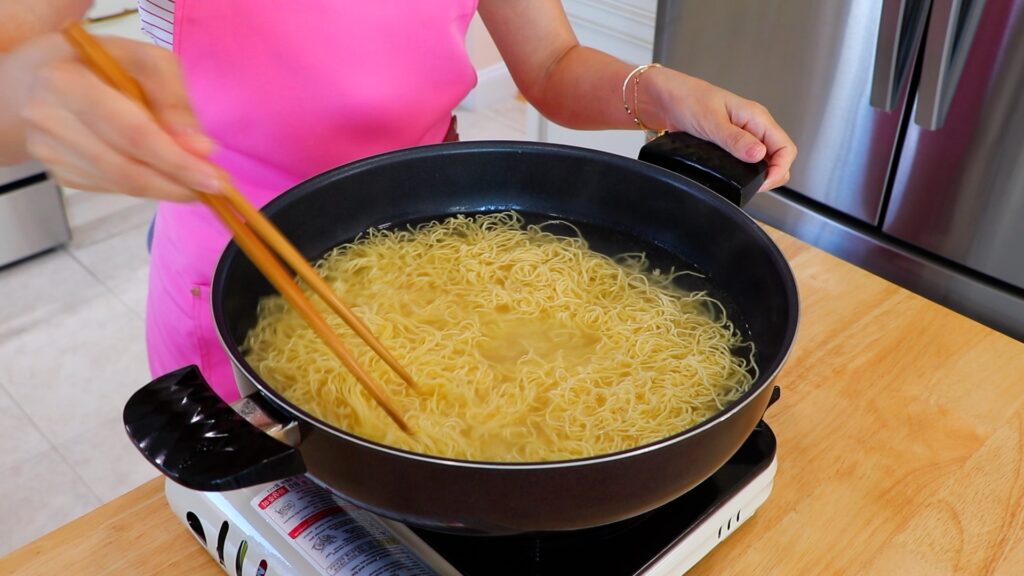
In a pot over high heat, blanch the noodles for about 2 minutes until just softened, then rinse briefly in cold water and drain very well. Lightly toss with cornstarch.
Tip: Dry noodles crisp much better.
Step 4: Crisp the noodles
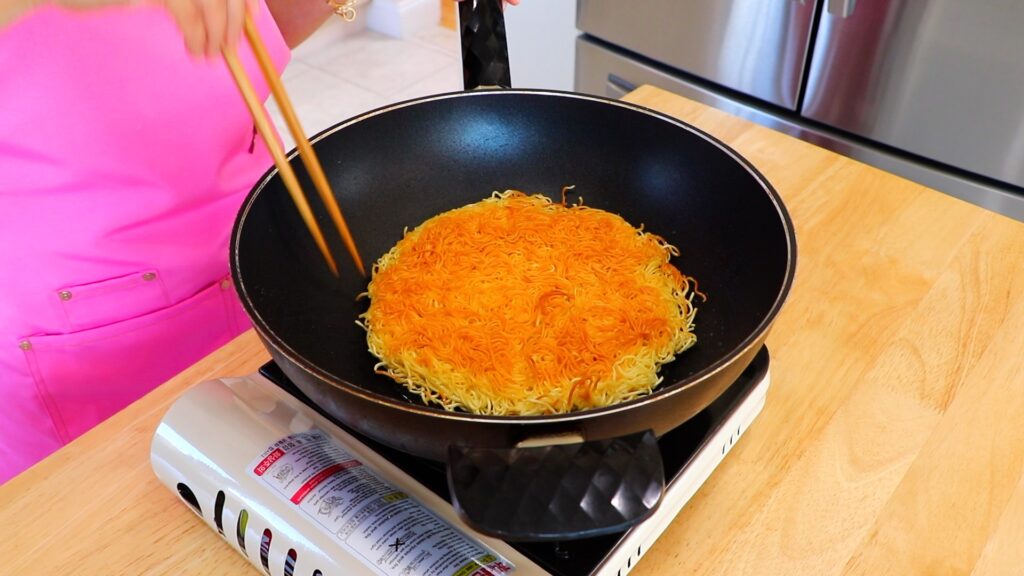
In a wok over medium-high heat, add the cooking oil and spread the noodles evenly. Let the moisture cook off first, then allow the bottom to fully crisp before flipping. Cook about 3 minutes per side until golden and crispy.
Tip: Don’t move the noodles too early or the crust won’t form properly.
Step 5: Stir-fry the shrimp
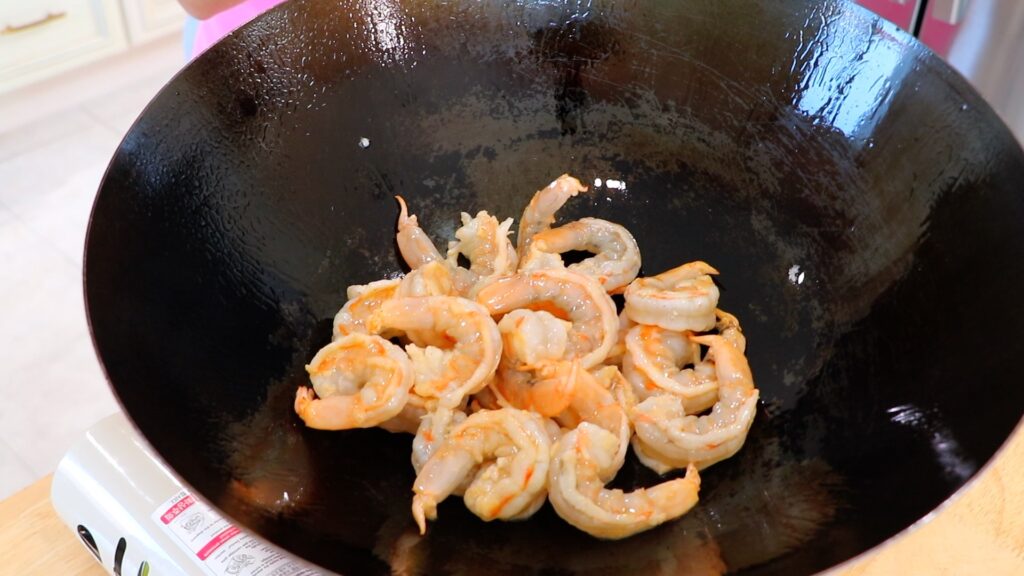
In the same wok over high heat, add cooking oil and stir-fry the shrimp for about 1 minute until just pink, then remove.
Tip: Shrimp cook very quickly, so avoid overcooking.
Step 6: Stir-fry the vegetables
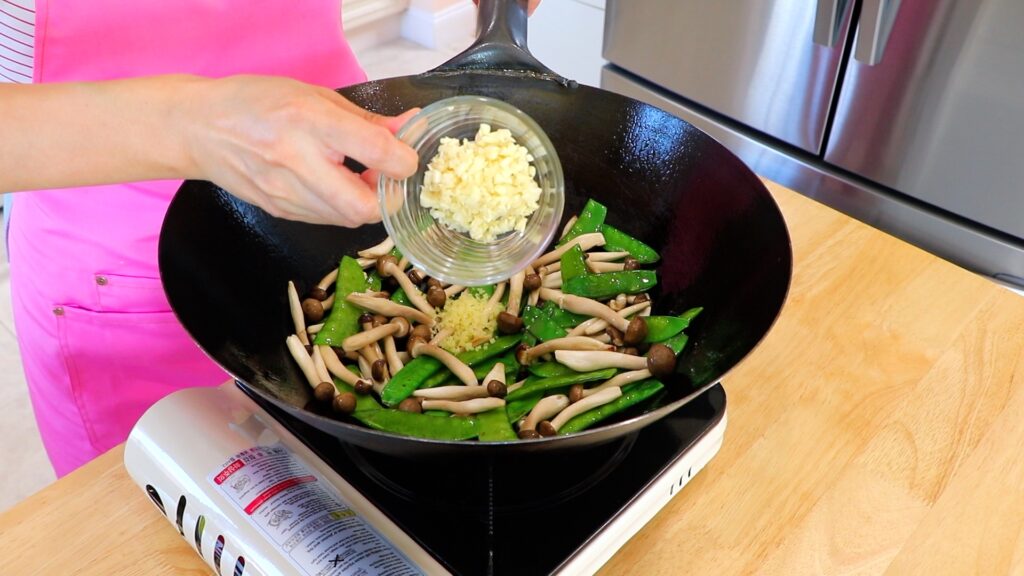
In the same wok over high heat, stir-fry the snow peas and mushrooms until slightly tender, then add the ginger and garlic and cook briefly until fragrant.
Tip: Add garlic later so it doesn’t burn.
Step 7: Finish and serve
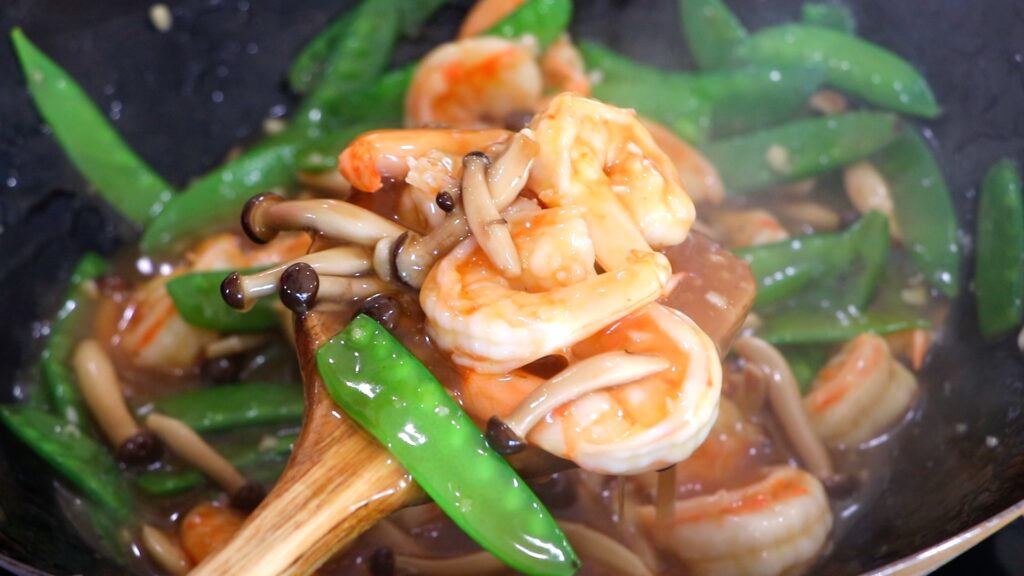
Pour in the sauce and bring to a simmer, then slowly stir in the slurry until thickened. Return the shrimp and toss briefly, then pour everything over the crispy noodles and serve immediately.
Tip: Serve right away while the noodles are still crunchy.
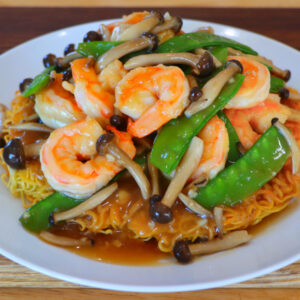
30-Min Hong Kong Crispy Chow Mein with Shrimp
Hong Kong Crispy Chow Mein with Shrimp features golden crispy noodles topped with juicy shrimp, vegetables, and a silky savory sauce.
Ingredients
For the shrimp
- 1 pound large shrimp, peeled and deveined
- Pinch of salt
- Pinch of white pepper
- 1 teaspoon cornstarch
- 1 teaspoon cooking oil
For the crispy chow mein
- 1 package Hong Kong pan-frying noodles
- 1 teaspoon cornstarch
- 4 tablespoons cooking oil
For the sauce
- 1 tablespoon soy sauce
- 1 tablespoon oyster sauce
- 1 tablespoon hoisin sauce
- 1 teaspoon sesame oil
- Pinch of white pepper
- 2 cups unsalted chicken stock
- 2 tablespoons cornstarch
- 6 tablespoons water
For the stir-fry
- 2 tablespoons cooking oil, divided
- 1 cup snow peas
- 1 cup beech mushrooms
- 1 teaspoon ginger, minced
- 3 cloves garlic, minced
Instructions
- To season the shrimp, in a bowl, mix the shrimp with the salt until slightly sticky, then add the white pepper, cornstarch, and cooking oil and mix until evenly coated, then let sit while preparing the remaining ingredients.
- To prepare the sauce, in a bowl, mix the soy sauce, oyster sauce, hoisin sauce, sesame oil, white pepper, and chicken stock until combined, then in a small bowl, mix the cornstarch and water to form a slurry.
- To prepare the noodles, in a pot over high heat, blanch the noodles for about 2 minutes until just softened, then rinse briefly in cold water and drain very well, then lightly toss with the cornstarch.
- To pan-fry the noodles, in a wok over medium-high heat, add the cooking oil and spread the noodles evenly, then let the moisture cook off first and pan-fry for about 3 minutes until golden and crispy, then flip and pan-fry the other side for another 3 minutes until crispy, then transfer to a serving plate.
- To stir-fry the shrimp, in the same wok over high heat, add 1 tablespoon of cooking oil and stir-fry the shrimp for about 1 minute until just pink, then remove.
- To stir-fry the vegetables, in the same wok over high heat, add the remaining cooking oil and stir-fry the snow peas and mushrooms for about 1 minute until slightly tender, then add the ginger and garlic and stir-fry briefly until fragrant.
- To finish, pour in the sauce and bring to a simmer, then stir the slurry again and slowly pour it in until thickened, then return the shrimp and toss briefly before pouring everything over the crispy noodles.
Video
Notes
Season the shrimp first: This helps the shrimp stay juicy and flavorful.
Drain the noodles well: Less moisture helps the noodles crisp more evenly.
Use cornstarch on the noodles: It helps absorb moisture and creates a crispier crust.
Let the crust fully set before flipping: Once crispy, the noodles hold together much more easily.
Keep the heat steady: Medium-high heat helps the noodles brown without burning.
Serve immediately: The contrast between crispy noodles and silky sauce is best while fresh.
Protein swap: You can use chicken, beef, tofu, or scallops.
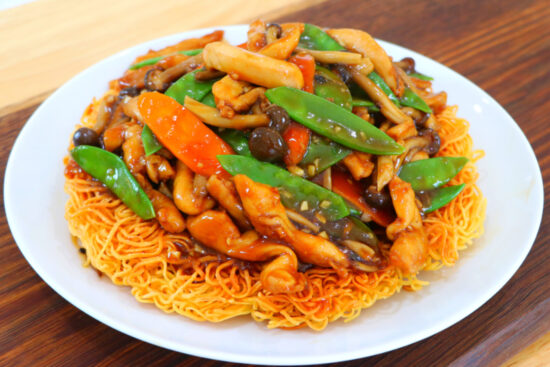
30-Min Hong Kong Crispy Chow Mein with Chicken
There’s something special about Hong Kong Crispy Chow Mein. You start with golden, crispy noodles, then spoon tender chicken, fresh vegetables, and a silky, savory …
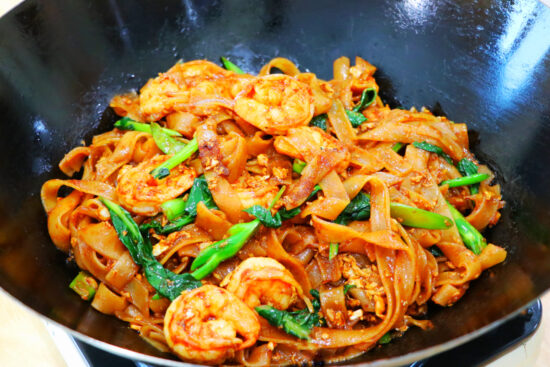
15-Min Shrimp Pad See Ew Recipe
Shrimp Pad See Ew has always been a nostalgic dish for me. Growing up in Thailand, it was one of those meals you could find …
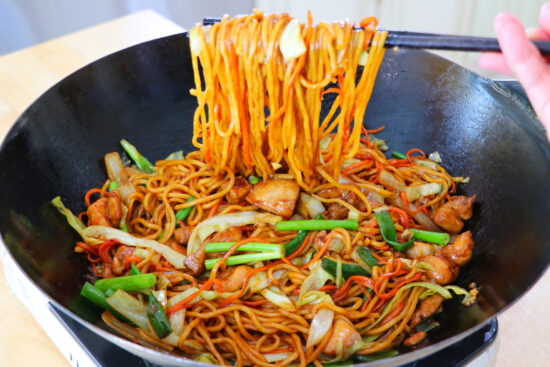
20-Min Chicken Teriyaki Lo Mein Recipe
Teriyaki Chicken Lo Mein brings together two flavors I’ve always loved: classic Chinese lo mein noodles and the sweet, glossy richness of Japanese-style teriyaki. Lo …
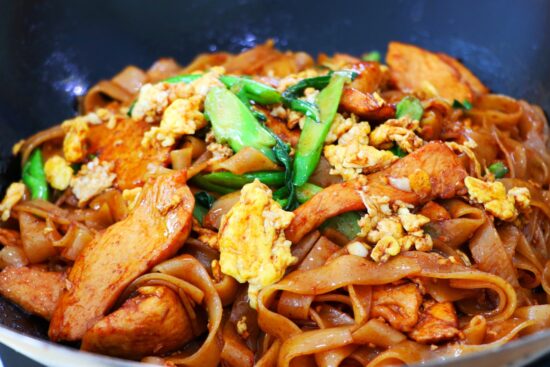
20-Minute Chicken Pad See Ew Recipe
Chicken Pad See Ew was the noodle dish I grew up eating on the streets of Bangkok. Vendors would stir-fry wide rice noodles over blazing-hot …
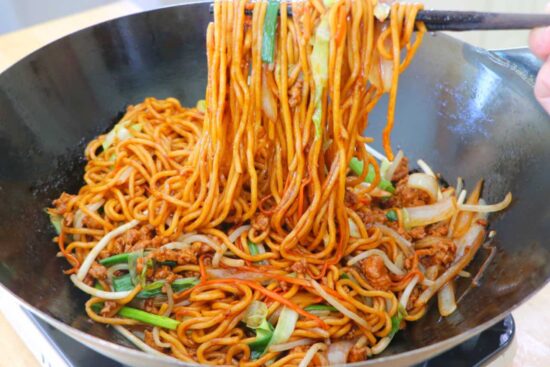
15-Min Ground Chicken Lo Mein Recipe
Ground Chicken Lo Mein is one of my favorite weeknight dinners when I need something fast, comforting, and satisfying. Instead of slicing chicken breast like …
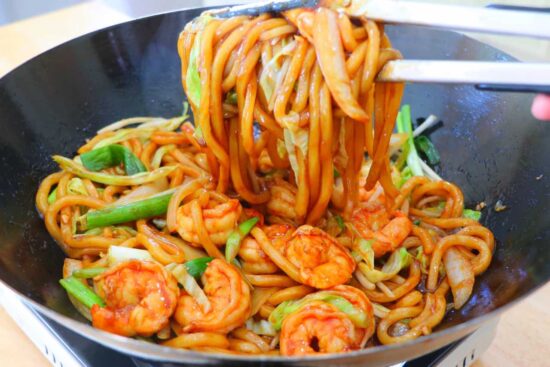
15-Min Shrimp Udon Stir-Fry Recipe
Shrimp Udon Stir-Fry is something I make often at home, especially because udon is my daughters’ favorite type of noodle. They love that thick, chewy …
I used Toasted Sesame oil here and it was very nice. Regular sesame oil is different and it would be good if you clarified which one to use in all your recipes. This is a delightful dish and I can’t wait to try with other proteins!
Hi Kay, thank you so much for your kind feedback and your 5-star review! I really appreciate you taking the time to share your thoughts. Yes, I used toasted sesame oil as well. Thanks for mentioning it—I’ll make a note to clarify that in the recipe for future readers. Thanks again for your support! ❤️