
No products in the cart.
30-Min Vegetable Spring Roll Recipe
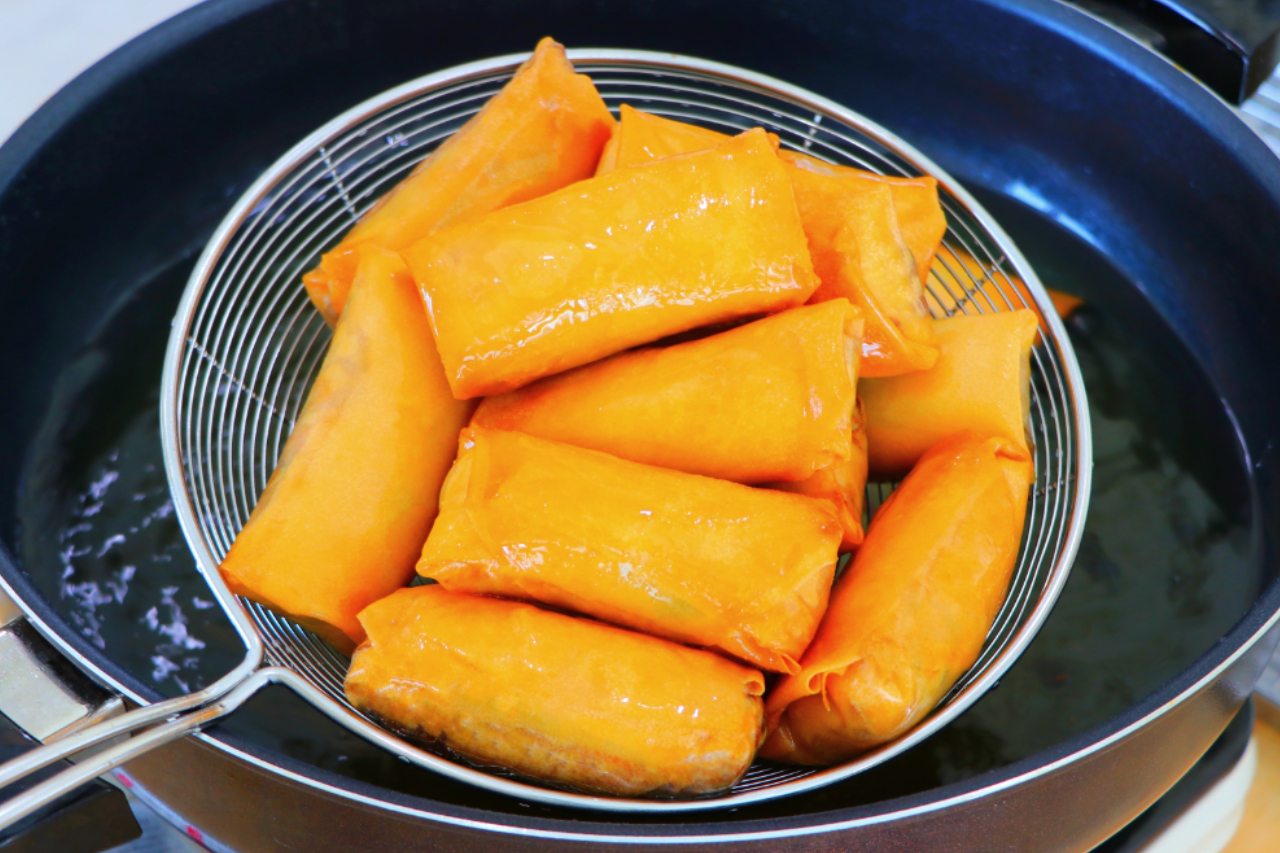
Vegetable Spring Rolls are golden, crispy, and filled with tender vegetables that are savory, slightly sweet, and full of flavor in every bite. When you bite into one, you hear that light crackle first—then the soft, fragrant filling inside. It’s that contrast that makes them so hard to stop eating.
Every time I make these at home, my daughters get so excited. I’ll tell them in the car while picking them up from school, “We’re having spring rolls today,” and right away I hear cheering from the back seat. By the time we get home, they’re already in the kitchen, peeking over the counter, asking, “Are they ready yet?”
And honestly, I get it. There’s something about a tray of freshly fried spring rolls—hot, golden, and crisp—that just feels special. The smell alone fills the whole kitchen, and before you know it, one disappears… then another… and another.
If you’ve ever tried making spring rolls at home and they didn’t turn out quite right—maybe the wrapper got soggy, or the filling felt a little too soft—you’re not alone. That’s the part that trips most people up.
But the secret is actually very simple. It’s not about complicated ingredients—it’s about how you handle moisture and heat. In this recipe, I’ll walk you through exactly how to make vegetable spring rolls that stay crispy in every single bite, so you can get that same light, golden crunch every time you make them.
What Are Vegetable Spring Rolls?
Vegetable spring rolls are a classic Chinese appetizer made with a thin wrapper filled with stir-fried vegetables, then rolled and fried until golden and crisp.
The filling is usually simple—cabbage, carrots, mushrooms, sometimes glass noodles—but when it’s cooked properly, it becomes incredibly flavorful and well-balanced.
And what makes spring rolls so special is the texture: a light, delicate wrapper on the outside, and the warm, savory filling inside.
Spring Rolls vs Egg Rolls
This is a question I get all the time, and they’re actually quite different.
Spring rolls have a thin, delicate wrapper, so when you fry them, they turn light and crispy—not heavy.
Egg rolls, on the other hand, use a thicker wrapper, so they come out more bubbly, crunchy, and a little heavier.
Spring rolls are what I grew up eating at home—lighter, crispier, and a little more delicate.
How to Make Spring Rolls Crispy?
The key to crispy spring rolls is really about keeping everything light and dry.
First, you want to stir-fry the vegetables over high heat so any excess moisture cooks off instead of staying in the filling.
Second, the glass noodles help absorb any remaining moisture, so the filling doesn’t become watery.
And just as important—let the filling cool before wrapping. If it’s too hot, it creates steam, and that softens the wrapper before you even start frying.
Finally, fry at the right temperature—around 350°F. That’s what gives you that even, golden crisp.
Why Are Your Spring Rolls Soggy?
If your spring rolls come out soft instead of crispy, it usually comes down to moisture.
Maybe the vegetables weren’t cooked long enough, or the filling was still warm when you wrapped it. Sometimes the oil isn’t hot enough, so instead of crisping, the rolls absorb oil.
Even something as simple as stacking them right after frying can trap steam and soften the wrapper.
Once you control that moisture, everything changes—the texture becomes light, crisp, and stays that way.
How to Air Fry Spring Rolls?
If you prefer a lighter version, you can absolutely air fry these.
Just brush or spray the spring rolls lightly with cooking oil, then air fry at 375°F for about 8 to 10 minutes, flipping halfway through.
They won’t have quite the same deep golden color as frying, but they’ll still come out crisp and delicious.
Let’s Talk Ingredients
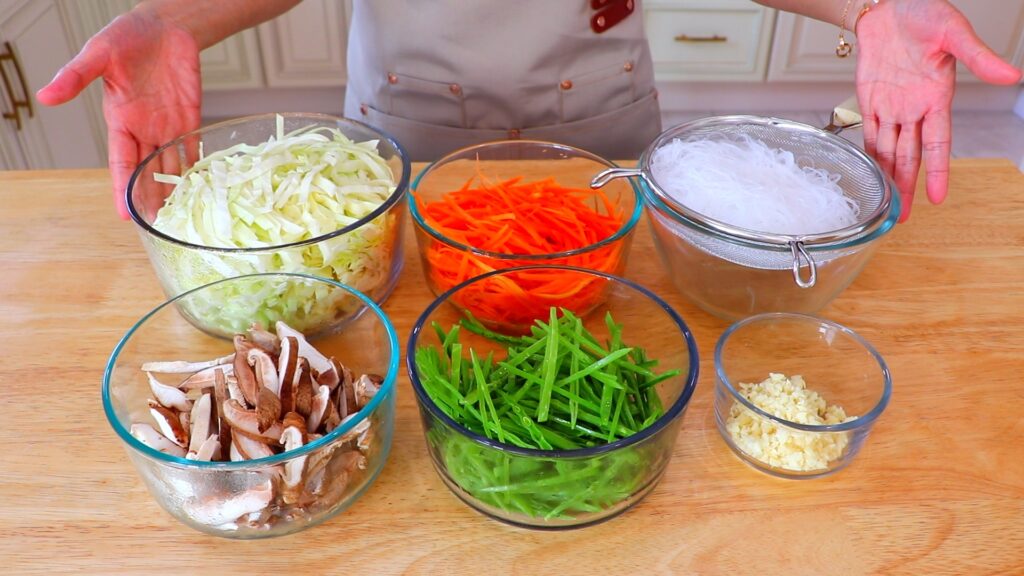
For these vegetable spring rolls, the ingredients are simple—but each one plays an important role in getting that perfect texture and flavor.
Glass noodles might not look like much, but they’re doing a lot of work here. They soak up any extra moisture from the vegetables, which keeps the filling light and helps the spring rolls stay crispy.
Cabbage and carrots bring a natural sweetness and a bit of crunch. Once stir-fried, they soften just enough while still keeping some texture.
Fresh shiitake mushrooms add that deep, savory flavor. Even without any meat, they give the filling a really rich, umami taste.
Snow peas keep everything feeling fresh and slightly crisp—they add a nice contrast to the softer vegetables.
Garlic ties everything together. Once it hits the pan, it brings out all the aromas and makes the whole filling smell incredible.
For the sauce, it’s very simple.
Vegetarian oyster sauce and hoisin sauce create that rich, savory-sweet balance that coats all the ingredients beautifully.
White pepper adds a gentle warmth in the background without overpowering the filling.
And of course, cooking oil is important here—use a high-smoking-point oil when stir-frying and frying, so everything cooks cleanly and helps the spring rolls stay crisp.
Step-by-Step: Let’s Cook
Makes: 12–15 pieces
Prep time: 22 minutes
Cook time: 8 minutes
Step 1: Prepare the glass noodles
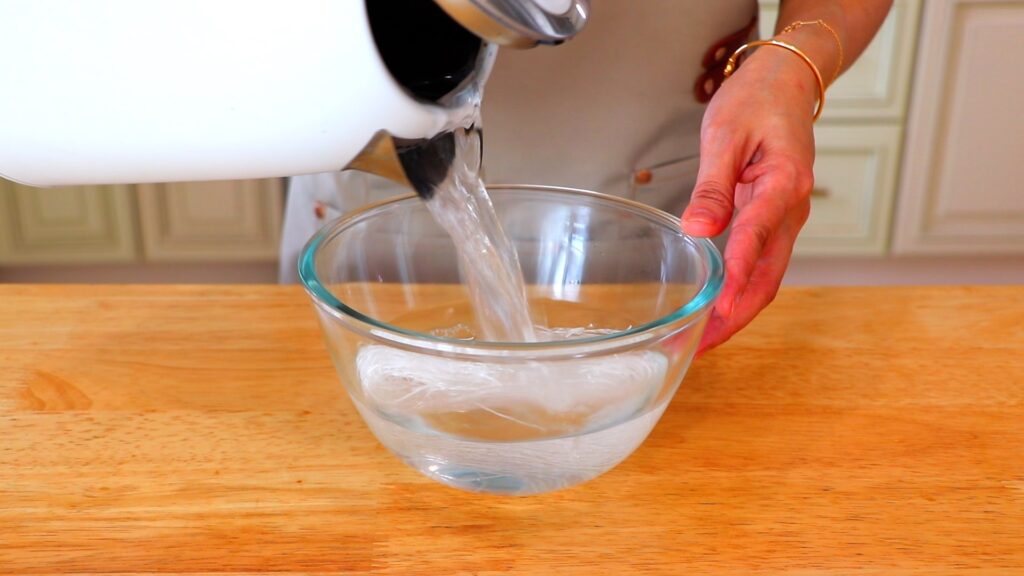
In a bowl, add the dried glass noodles and cover with hot water. Let them soak for about 2 minutes, until softened, then drain well and cut into shorter segments.
Tip: The glass noodles help absorb excess moisture from the vegetables, which keeps the filling from becoming watery.
Step 2: Stir-fry the filling
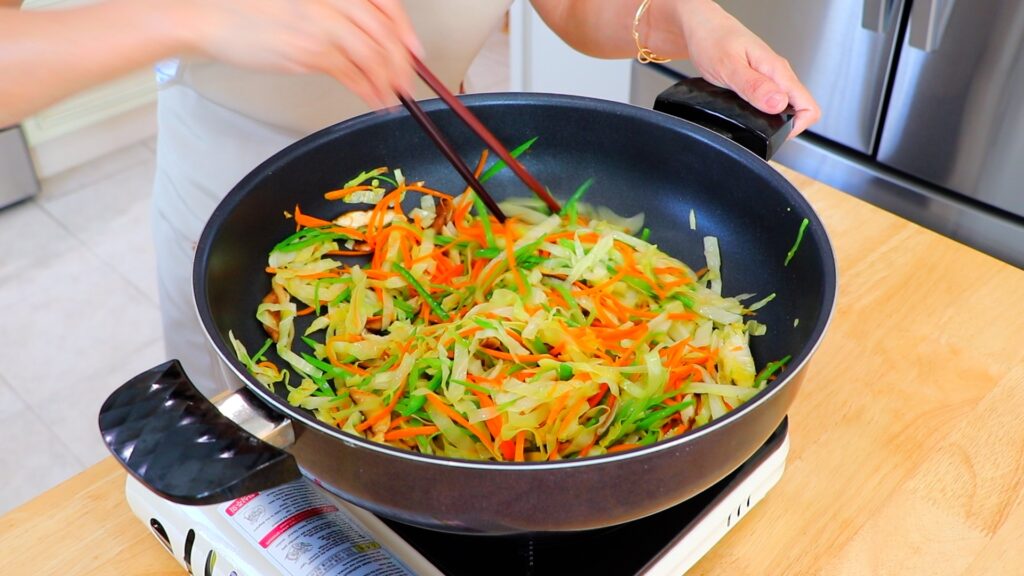
In a pan over high heat, add the cooking oil. Once the oil is hot, add the carrot, cabbage, snow peas, and shiitake mushrooms. Stir-fry for about 2 minutes, until slightly softened.
Add the garlic and stir-fry for about 10 seconds, just until fragrant.
Add the glass noodles, then the vegetarian oyster sauce, hoisin sauce, and white pepper. Stir-fry everything together until evenly combined and any excess moisture has cooked off.
Turn off the heat and let the filling cool slightly.
Tip: This step is where most people go wrong—if there’s too much moisture left in the pan, the spring rolls won’t stay crispy.
Step 3: Wrap the spring rolls
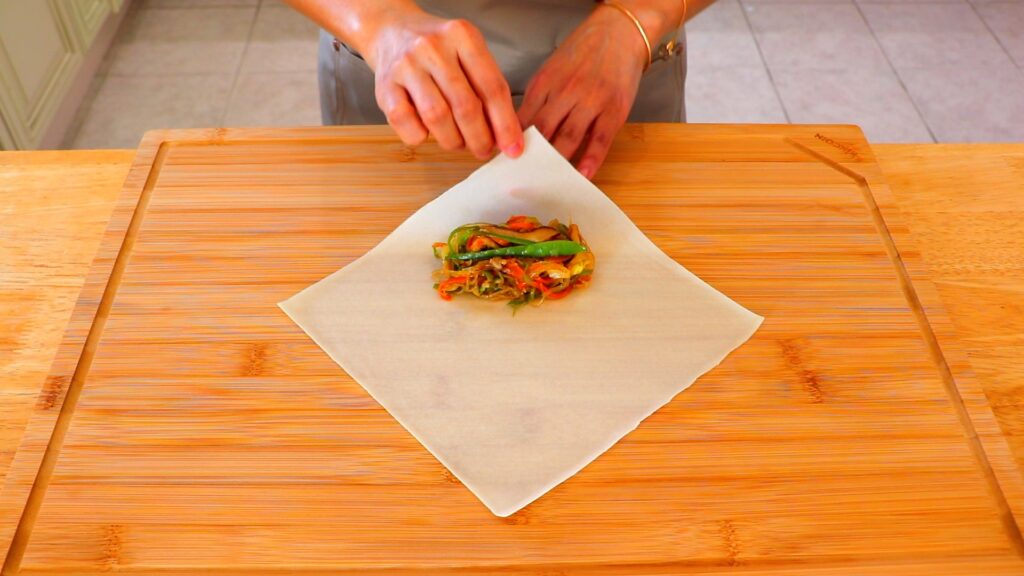
Place a spring roll wrapper on a flat surface in a diamond shape, with one corner pointing toward you.
Add about 2 tablespoons of filling near the bottom corner. Fold the bottom corner over the filling, fold in the sides, and roll it up tightly.
Brush the top corner with beaten egg to seal. Repeat with the remaining wrappers.
Tip: Keep the rolls tight but not overpacked—this helps them cook evenly and stay crisp.
Step 4: Fry until golden and crispy
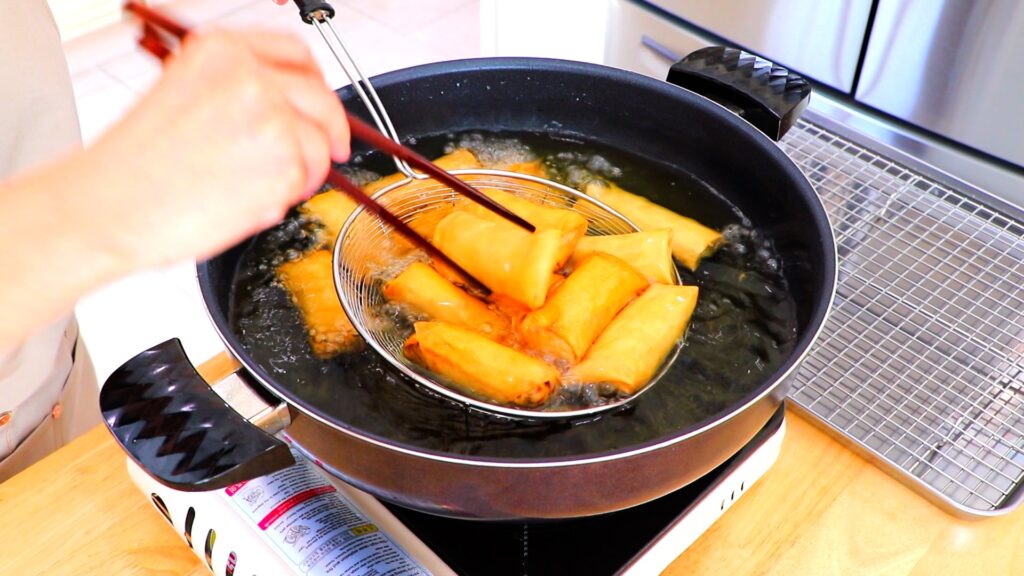
In a pot, heat the cooking oil over high heat to about 350°F (177°C).
Carefully add the spring rolls and fry for about 4 minutes, turning as needed, until they are golden brown and crispy.
Remove and place on a rack to drain.
Tip: Don’t stack the spring rolls right away—letting steam escape keeps them crispy longer.
30-Min Vegetable Spring Roll Recipe
Vegetable Spring Rolls are crispy, golden, and filled with savory vegetables that stay light and crunchy in every bite.
Ingredients
For the filling
- 4 ounces dried glass noodles
- 1 tablespoon cooking oil, for stir-fry (high-smoking-point)
- 1 large carrot, shredded
- 2 cups cabbage, thinly sliced
- 1 cup snow peas, thinly sliced
- 5 large fresh shiitake mushrooms, thinly sliced
- 5 cloves garlic, minced
For the stir-fry sauce
- 2 tablespoons vegetarian oyster sauce
- 1 tablespoon hoisin sauce
- Pinch of white pepper
For the spring rolls
- 15 sheets spring roll wrappers
- 1 large egg, beaten
- 4 cups cooking oil, for frying (high-smoking-point)
Instructions
- To prepare the glass noodles, in a bowl, cover the dried glass noodles with hot water and soak for about 2 minutes until softened, then drain well and cut into shorter segments.
- To stir-fry the filling, in a pan over high heat, add the cooking oil. Add the carrot, cabbage, snow peas, and shiitake mushrooms, then stir-fry for about 2 minutes until slightly softened. Add the garlic and stir-fry for about 10 seconds until fragrant. Add the glass noodles along with vegetarian oyster sauce, hoisin sauce, and white pepper, then stir-fry until everything is evenly combined and excess moisture has cooked off. Turn off the heat and let the filling cool slightly.
- To wrap the spring rolls, on a flat surface, place a spring roll wrapper in a diamond shape with one corner pointing toward you. Add about 2 tablespoons of filling near the bottom corner, fold the bottom corner over the filling, fold in both sides, and roll tightly. Brush the top corner with the egg to seal, then repeat with the remaining wrappers.
- To fry the spring rolls, in a pot over high heat, add the cooking oil and heat to 350°F (177°C). Carefully add the spring rolls and fry for about 4 minutes, turning as needed, until golden brown and crispy. Remove and place on a rack to drain.
Video
Notes
- Soak and cut the glass noodles: The glass noodles help soak up any extra moisture from the vegetables, so the filling stays light and not watery.
- Stir-fry over high heat: Keep the heat high so the vegetables cook quickly and don’t release too much water.
- Cook until it looks dry: If you still see moisture in the pan, keep stir-frying a little longer—this makes a big difference in how crispy your spring rolls turn out.
- Let the filling cool a bit: If the filling is too hot, it creates steam inside the wrapper and softens it.
- Wrap snug, not too full: Keep the rolls tight, but don’t overfill them, so they cook evenly and hold their shape.
- Keep the oil hot: Around 350°F is perfect—hot enough to crisp quickly without getting greasy.
- Fry in batches: Give them a little space so they fry evenly instead of steaming.
- Let them rest on a rack: This helps them stay crispy longer—if you stack them, they soften pretty quickly.
- Air-fry option: Lightly brush with oil and air fry at 375°F for about 8–10 minutes, flipping halfway, until golden and crisp.
- Protein swap: You can easily add tofu, shrimp, chicken, or pork—just make sure the filling isn’t too wet.