
No products in the cart.
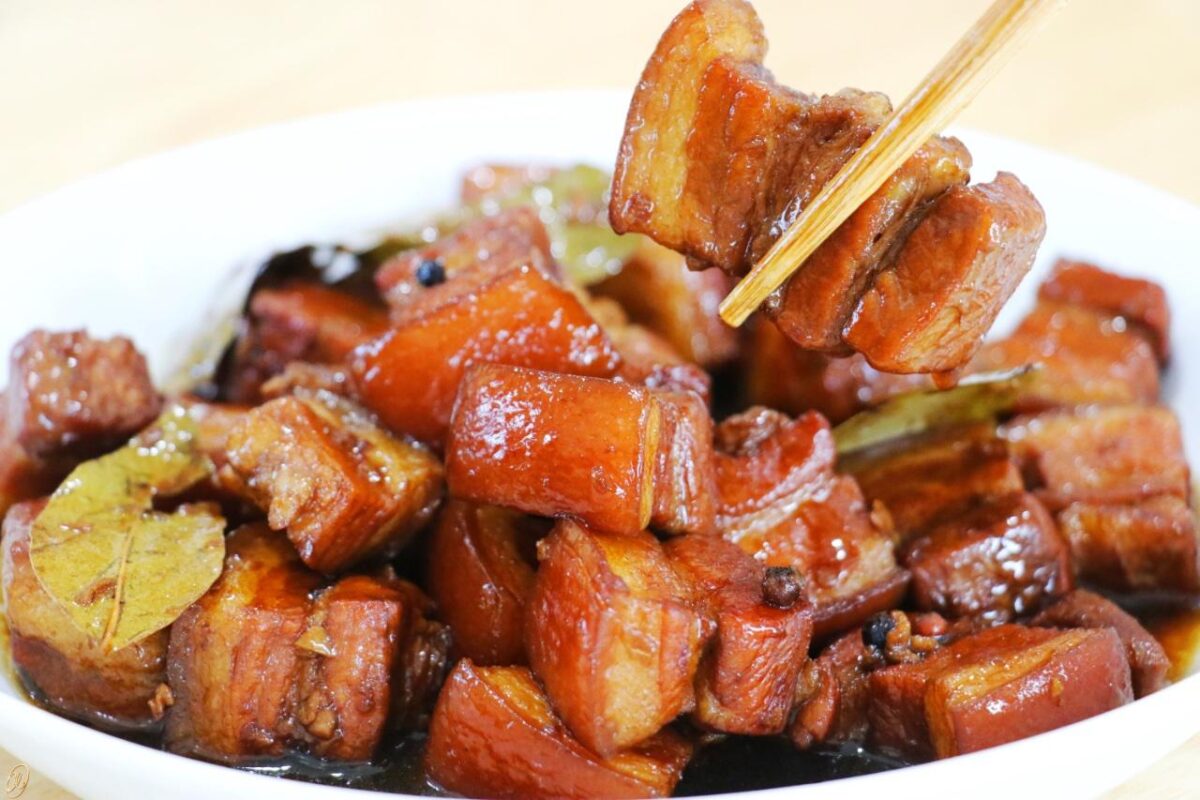
Filipino Pork Adobo Recipe
Filipino Pork Belly Adobo is rich, savory, and deeply comforting — a true staple of Filipino home cooking. Tender pieces of pork belly gently braise in a bold soy-vinegar sauce infused with garlic, bay leaves, and peppercorns. As it cooks, the sauce slowly concentrates into a glossy, intensely flavorful finish that’s made for spooning over warm rice.
One of the reasons adobo tastes even better the next day is time. As the pork rests, it continues absorbing the sauce, allowing the flavors to settle and deepen. What begins as a sharp, bright braise transforms into something rounder, richer, and more balanced.
This recipe keeps the process straightforward and traditional — building flavor through proper browning, simmering low and slow, and finishing with a careful vinegar stage that defines the dish. No unnecessary steps. Just patience and good technique.
By the end, you’ll understand how to create tender pork, a well-balanced sauce, and that signature adobo depth that makes it unforgettable.
What Is Filipino Adobo?
Filipino adobo is a classic braised dish where meat is slowly cooked in vinegar, soy sauce, garlic, bay leaves, and whole peppercorns. While it’s widely regarded as one of the national dishes of the Philippines, it’s less about strict rules and more about tradition passed down through families.
At its core, adobo is about balance — acidity from vinegar, savoriness from soy sauce, and the warmth of garlic and spices. The ingredients are simple, but when simmered together properly, they create something far greater than the sum of their parts.
Some cooks marinate the meat before cooking. Others prefer browning it first to develop a deeper flavor. Each approach reflects personal and regional preference.
Variations of Filipino Adobo
Adobo is not one single recipe — it’s a cooking style. Across the Philippines, you’ll find countless interpretations shaped by local ingredients and family traditions.
Chicken Adobo is one of the most common versions, often made with bone-in pieces for added richness and tenderness.
Adobong Puti (White Adobo) omits soy sauce entirely, relying on vinegar, garlic, salt, and pepper for a brighter, more pronounced acidity.
Adobo sa Gata incorporates coconut milk, resulting in a creamier, fuller-bodied sauce. This style is especially associated with the Bicol region, known for its love of coconut and chilies.
Some households add hard-boiled eggs to simmer in the sauce, allowing them to soak up the savory braising liquid.
Others cook the dish down further into Adobong Tuyo, where the sauce reduces significantly and clings tightly to the meat in a thick coating.
No matter the variation, the defining foundation remains the same: vinegar, garlic, and slow simmering. That harmony of sharp, savory, and aromatic elements is what makes Filipino adobo so enduring — and so comforting.
Let’s Talk Ingredients
Pork belly
Rich and fatty, pork belly becomes incredibly tender after simmering. The fat renders into the sauce, creating depth and body.
Soy sauce
Adds saltiness and umami. It forms the savory backbone of the dish.
Vinegar
The defining ingredient of adobo. It adds brightness and balance.
Garlic, bay leaves, and black peppercorns
These aromatics create complexity without overpowering the dish.
Sugar (optional)
Just a small amount softens the sharpness of the vinegar if desired.
Cooking oil (high-smoking-point oil)
Used for proper searing at high heat to build flavor early on.
Step-by-Step: Let’s Cook
Step 1: Prepare the pork
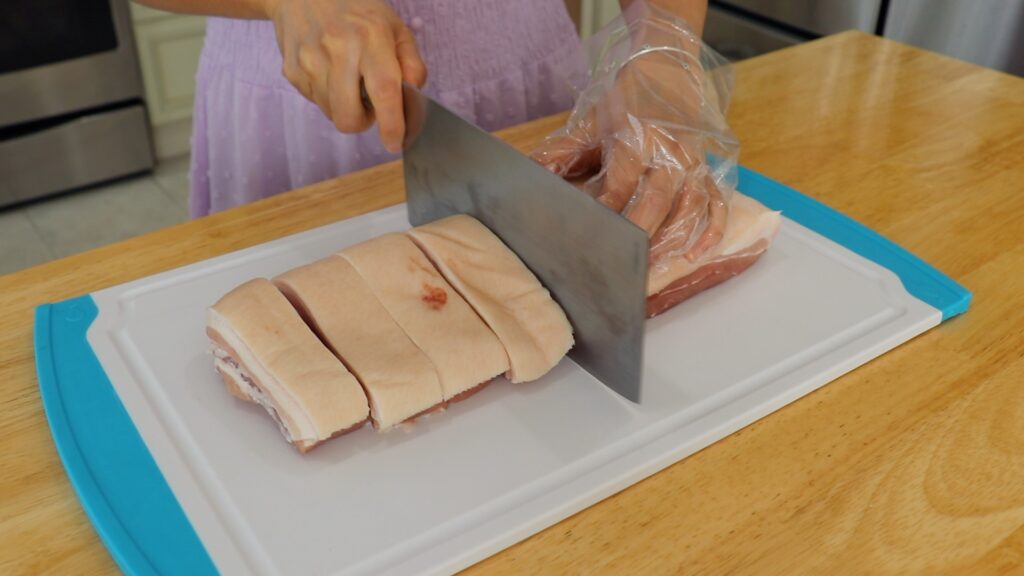
Cut the pork belly into 1-inch pieces and remove any stray hairs if necessary.
Why this matters: Even-sized pieces cook evenly and absorb flavor consistently.
Step 2: Sear the pork
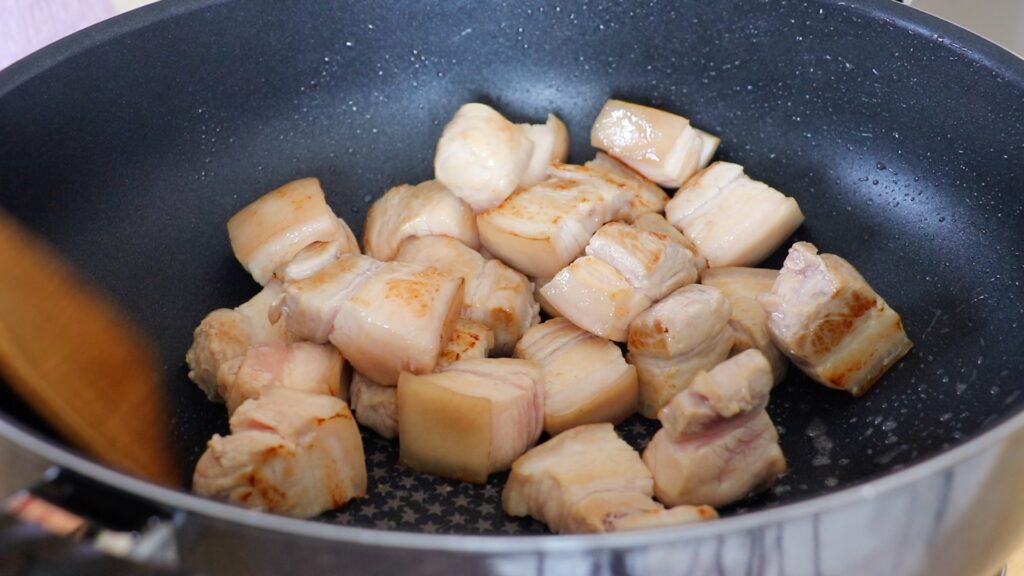
In a large pan over high heat, add the cooking oil (use a high-smoking-point oil). Add the pork belly and stir-fry until lightly browned.
Why this matters: Browning builds flavor directly in the pan and creates a richer base than marinating first.
Step 3: Add aromatics and seasonings

Add the garlic and stir-fry for about 30 seconds until fragrant. Add the bay leaves, black peppercorns, soy sauce, and sugar (if using). Stir and cook for 1 minute.
Why this matters: Toasting the aromatics in the rendered fat releases deeper flavor.
Step 4: Simmer until tender
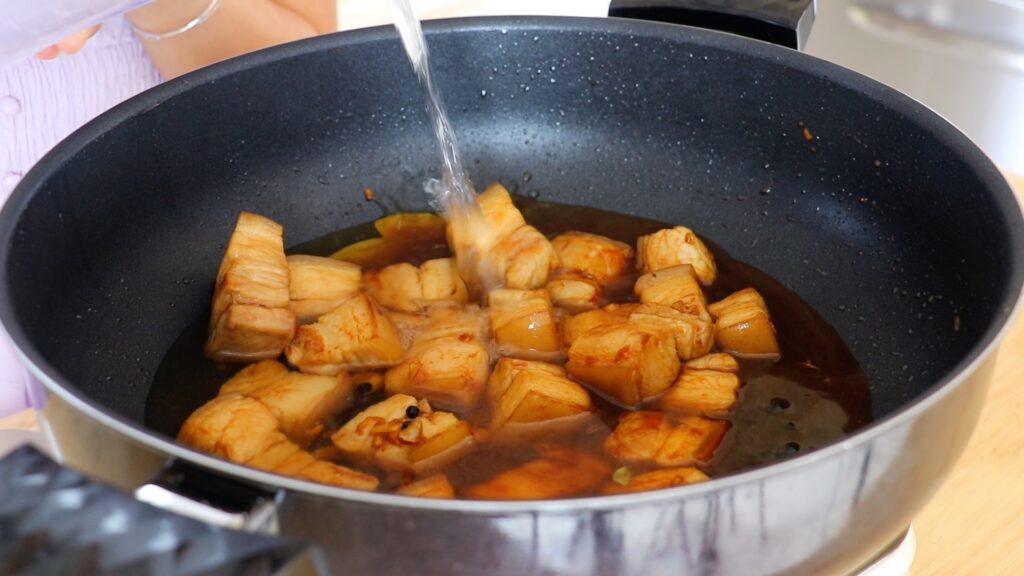
Pour in the water and bring to a simmer. Cover, reduce the heat to low, and cook for about 45 minutes until the pork is tender.
Why this matters: Gentle simmering breaks down connective tissue while keeping the meat moist.
Step 5: Add vinegar and finish
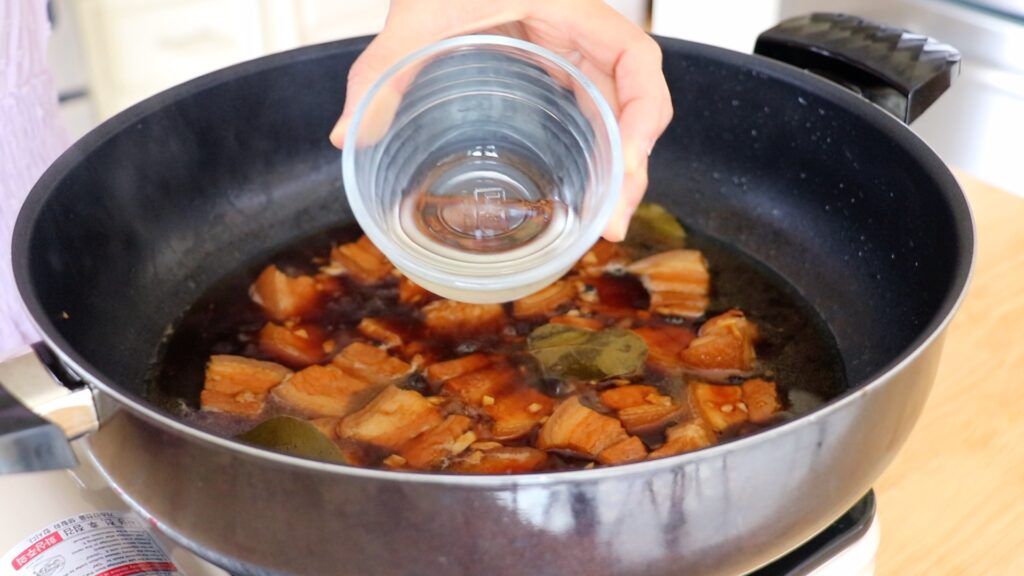
Uncover and pour in the vinegar. Let it cook uncovered for another 15 minutes. Do not stir during this stage.
Why this matters: Allowing the vinegar to simmer undisturbed mellows its sharpness and prevents harsh acidity.
Step 6: Serve
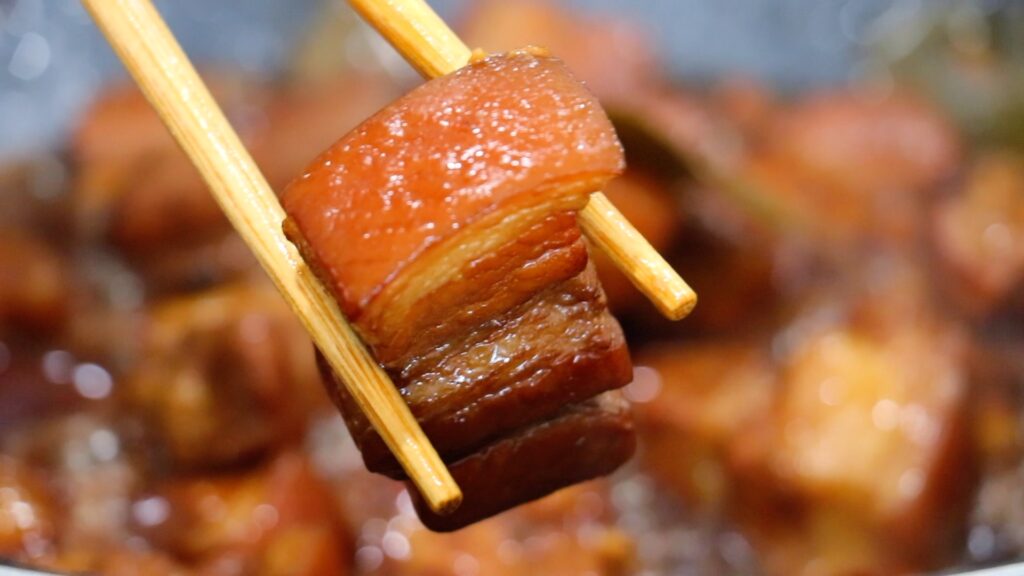
Serve hot with steamed rice and spoon extra sauce over the top.
Why this matters: That glossy sauce is everything — don’t waste a drop.
Filipino Pork Adobo Recipe
Filipino Pork Belly Adobo is a classic Filipino braised pork dish simmered in soy sauce, vinegar, garlic, and bay leaves until tender and deeply flavorful.
Ingredients
- 2 ½ pounds pork belly, cut into 1-inch pieces
- 1 tablespoon cooking oil, high-smoking-point oil
- 5 cloves garlic chopped
- 5 pieces bay leaves
- 1 tablespoon whole black peppercorns
- ½ cup soy sauce
- 1 teaspoon sugar, optional
- 4 cups water
- 4 tablespoons vinegar
Instructions
- To prepare the pork, trim and cut the pork belly into 1-inch pieces.
- To sear, in a pan over high heat, add the cooking oil and the pork belly. Stir-fry until lightly browned.
- To build flavor, add the garlic and stir-fry until fragrant. Add the bay leaves, the black peppercorns, the soy sauce, and the sugar if using. Cook for 1 minute.
- To braise, pour in the water and bring to a simmer. Cover, reduce to low heat, and cook for 45 minutes until the pork is tender.
- To finish, uncover and pour in the vinegar. Simmer uncovered for 15 minutes without stirring to allow the vinegar to mellow and the sauce to reduce.
- Serve hot with steamed rice.
Video
Notes
- Brown first: Searing before simmering builds deeper flavor directly in the pan.
- Simmer gently: Keep the heat low to prevent the pork from becoming tough.
- Do not stir after adding vinegar: Letting it cook undisturbed allows the acidity to mellow properly.
- Reduce for a thicker sauce: Simmer uncovered longer at the end if you prefer a richer glaze.
- Leftovers taste better: Adobo develops even deeper flavor overnight.
- Protein swap: This method works beautifully with chicken thighs or drumsticks — adjust simmering time accordingly.
This looks like our Indonesian dish called smoor.!
But we use Ketjap Manis .
That sounds tasty! Thanks for sharing, Charles! 😀
I’ll try this recipe. I’ve made Philippino pork and chicken adobo several times. Normally I marinade it for several hours overnight to give it amazing flavor. Yours looks faster for an easier made meal.
Hi AL, Thank you! Yes, Filipino adobo is amazing when marinated overnight. This version is quicker, but since the pork is sliced into small pieces and simmered, the flavors soak in beautifully while cooking. Perfect for when you want adobo flavors without the long wait. I hope you’ll enjoy it!