
No products in the cart.
30-Min Crispy Shrimp Dumplings with Rice Paper
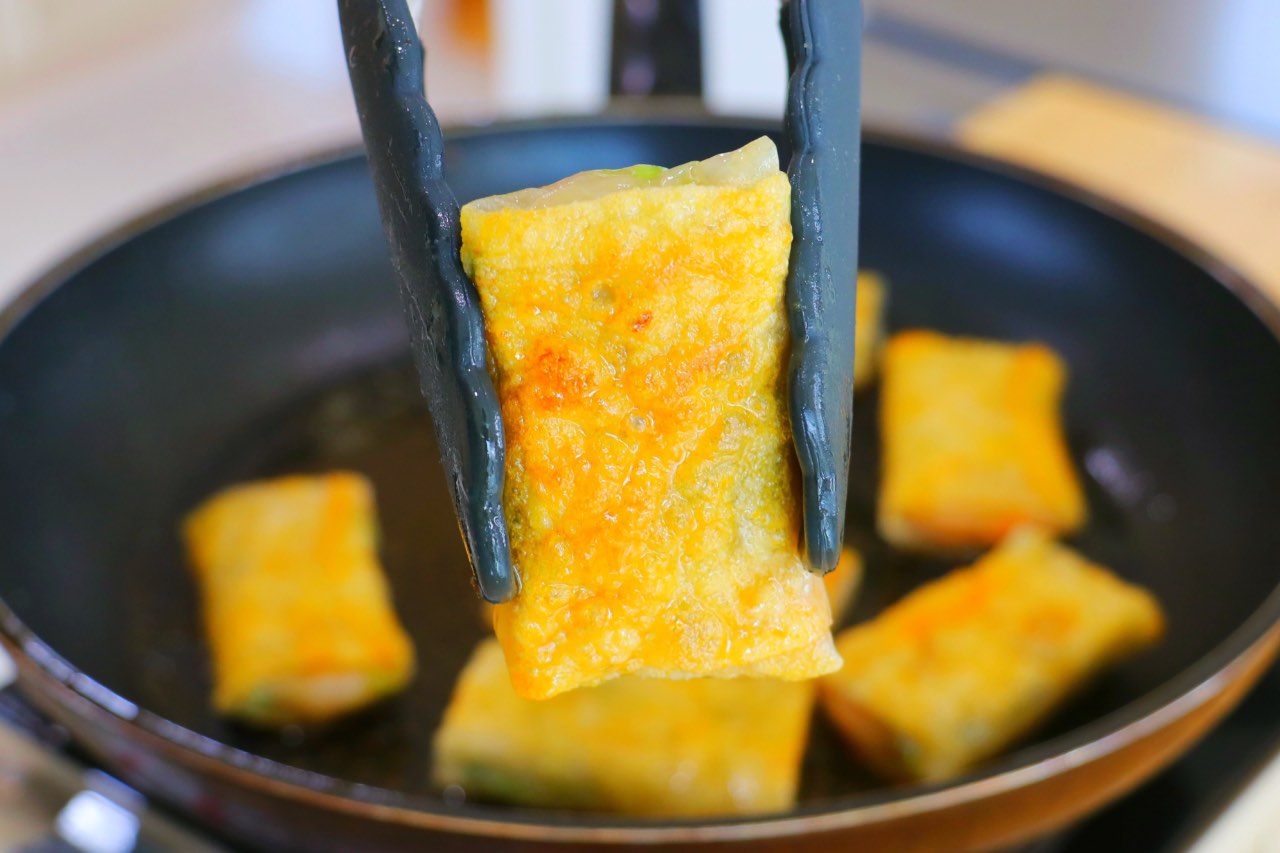
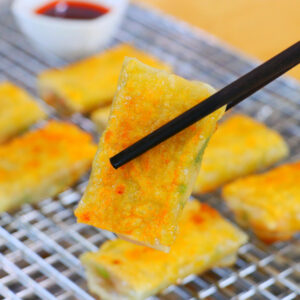
Crispy Shrimp Dumplings with Rice Paper are a fun twist on dumplings, with a delicate shell that shatters when you bite into it and a juicy shrimp filling inside. While testing different ways to cook rice paper, I discovered that brushing the wrappers with beaten egg instead of soaking them in water completely changes the texture.
Instead of turning chewy, the rice paper becomes super crispy and crackly, with a beautiful golden color. Rice paper normally doesn’t brown on its own—you often need sugar, vinegar, or cornstarch to help with browning—but the egg naturally creates that rich golden finish while keeping the dumplings sturdy and easy to wrap.
What Are Rice Paper Dumplings?
Rice paper dumplings are a creative variation of traditional dumplings that use Vietnamese rice paper wrappers instead of wheat dumpling skins.
Because rice paper is made from rice flour and water, it is naturally gluten-free and very thin. When cooked properly, it forms a delicate shell that can become lightly crisp or extremely crunchy depending on the cooking method.
Unlike traditional dumplings that are usually steamed or boiled, rice paper dumplings are most often pan-fried or air-fried, which gives them their signature crispy texture.
They’re also incredibly versatile—you can fill them with shrimp, chicken, pork, tofu, or vegetables, making them a fun option for both appetizers and light meals.
What Is Rice Paper?
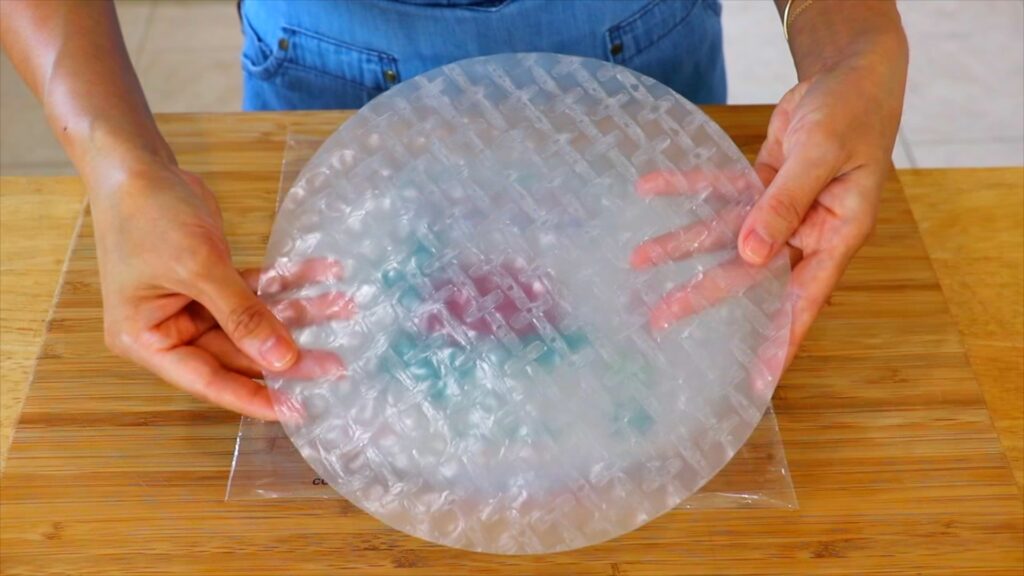
Rice paper is a thin, translucent sheet made primarily from rice flour, water, and sometimes tapioca starch. It is a staple ingredient in Vietnamese cooking and is most commonly used for fresh spring rolls.
The wrappers are naturally dry and firm when packaged. Normally, they are briefly softened with water so they become flexible enough to wrap fillings.
However, rice paper reacts very differently depending on how it is treated. When it comes into contact with heat and oil, the thin starch layer rapidly dehydrates and becomes crisp, creating the unique crackly texture that makes rice paper dumplings so satisfying.
Because it’s shelf-stable, lightweight, and easy to use, rice paper has become a popular shortcut for creative dumpling recipes.
Why Use Egg Instead of Water for Rice Paper Dumplings?
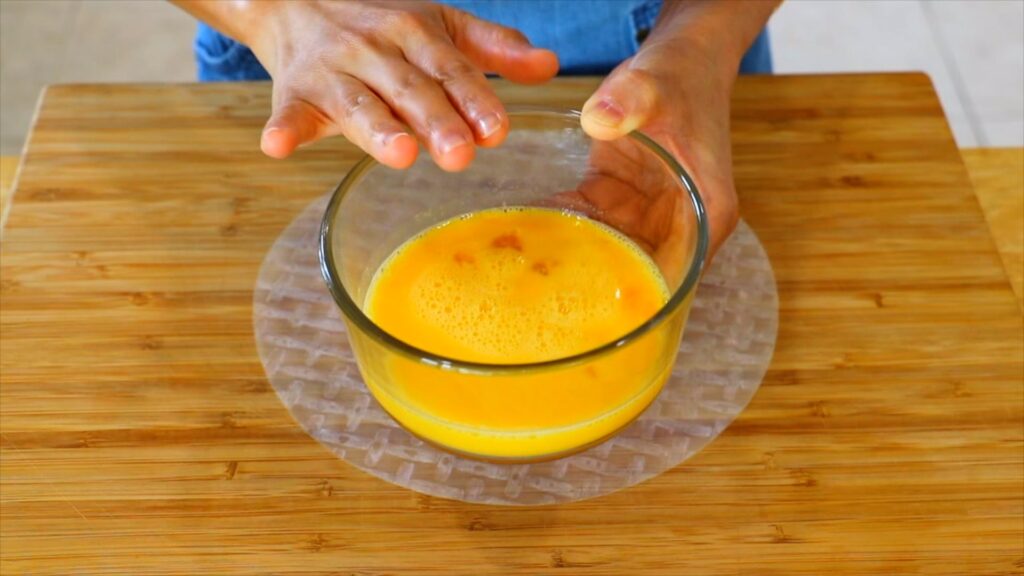
Most recipes soften rice paper with water, which works well for fresh spring rolls. But when dumplings are pan-fried, water can make the wrapper too soft and fragile, often leading to tearing or a chewy texture.
Brushing the rice paper with beaten egg instead of water solves several problems at once:
• Stronger wrapper: The egg softens the rice paper gently without making it overly wet. This keeps the wrapper flexible while helping the dumplings hold together during wrapping and cooking.
• Crispier texture: As the dumplings pan-fry, the egg forms a thin coating that helps the rice paper turn shatteringly crisp instead of chewy.
• Better browning: Rice paper normally stays pale when fried. The proteins in egg naturally brown in hot oil, giving the dumplings a beautiful golden color and deeper flavor without needing sugar, vinegar, or cornstarch.
It’s a small change, but it makes a big difference in both texture and appearance.
Why Do Rice Paper Dumplings Tear?
Rice paper dumplings usually tear because the wrapper becomes too wet or too thin during wrapping.
When rice paper absorbs too much liquid, it loses structure and becomes fragile. This makes the wrapper difficult to handle and more likely to break when the filling expands during cooking.
A few simple habits can help prevent tearing:
• Avoid over-softening the wrapper: Too much liquid weakens the rice paper and makes it delicate.
• Don’t overfill the dumplings: Too much filling stretches the wrapper and can cause it to rip.
• Roll the dumplings tightly: Overlapping layers help reinforce the wrapper and make it sturdier.
• Handle the wrapper gently: Once softened, rice paper becomes delicate and should be moved carefully.
Using the egg-brushing method in this recipe also helps reinforce the wrapper, making the dumplings easier to wrap and less likely to tear during cooking.
Why Aren’t My Rice Paper Dumplings Crispy?
If rice paper dumplings turn soft or chewy instead of crispy, the issue usually comes down to heat, moisture, or oil.
Rice paper crisps best when it cooks quickly in hot oil. If the pan temperature is too low, the wrapper will absorb oil and steam instead of frying.
Other factors can also affect crispness:
• Too much moisture in the wrapper: Over-softening the rice paper can make it difficult for the surface to crisp.
• Filling that is too wet: If the filling releases too much liquid while cooking, the steam can soften the wrapper from the inside.
• Overcrowding the pan: Too many dumplings at once lowers the pan temperature and traps steam.
• Not enough oil: A thin layer of oil helps the wrapper fry evenly and develop a crisp shell.
• Dumplings sitting too long before serving: Rice paper can absorb moisture from the filling over time and lose its crunch.
How to Air Fry Rice Paper Dumplings?
Rice paper dumplings can also be cooked in an air fryer, which makes them crispy with less oil.
Lightly brush or spray the dumplings with cooking oil. This helps the rice paper crisp and brown properly.
Preheat the air fryer to 375°F (190°C). Arrange the dumplings in a single layer in the basket, leaving space between them so the hot air can circulate.
Air fry for 8–10 minutes, flipping halfway through, until the dumplings are golden and crispy.
Because air fryers cook with circulating hot air instead of direct oil contact, the dumplings may be slightly lighter in color than pan-fried ones, but they will still develop a crisp shell.
How to Freeze Rice Paper Dumplings?
Yes, rice paper dumplings can be frozen before cooking, which makes them great for meal prep.
To freeze them, arrange the assembled dumplings in a single layer on a tray lined with parchment paper or lightly dusted with cornstarch so they don’t stick. Make sure the dumplings are not touching each other.
Place the tray in the freezer and freeze until the dumplings are firm. Once frozen, transfer them to a freezer bag or an airtight container for longer storage.
When ready to cook, the dumplings can be pan-fried directly from frozen. Simply add 1–2 extra minutes per side to ensure the filling cooks through.
Freezing them this way allows you to prepare a batch ahead of time while still enjoying freshly cooked, crispy dumplings whenever you want.
Let’s Talk Ingredients
Shrimp
Shrimp makes a perfect filling for these dumplings because it cooks quickly and stays naturally juicy. Finely chopping the shrimp helps the filling hold together and makes the dumplings easier to wrap.
Scallions
Scallions add freshness and a mild onion flavor that balances the richness of the shrimp. They also bring a little brightness to the filling without overpowering it.
Sesame oil
A small amount of sesame oil adds a warm, nutty aroma that enhances the seafood flavor.
Rice paper wrappers
Rice paper is thin, delicate, and naturally gluten-free. When cooked properly, it transforms from a translucent sheet into a crispy shell.
Eggs
Instead of soaking the rice paper in water, this recipe uses beaten eggs. The egg gently softens the wrapper while helping it crisp and turn golden during cooking.
Cooking oil
A high-smoking-point cooking oil, such as avocado, grapeseed, or peanut oil, works best for pan-frying. It allows the dumplings to crisp properly without burning.
Step-by-Step: Let’s Cook
Makes: 12 rice paper dumplings
Prep time: 22 minutes
Cook time: 8 minutes
Step 1: Prepare the shrimp filling
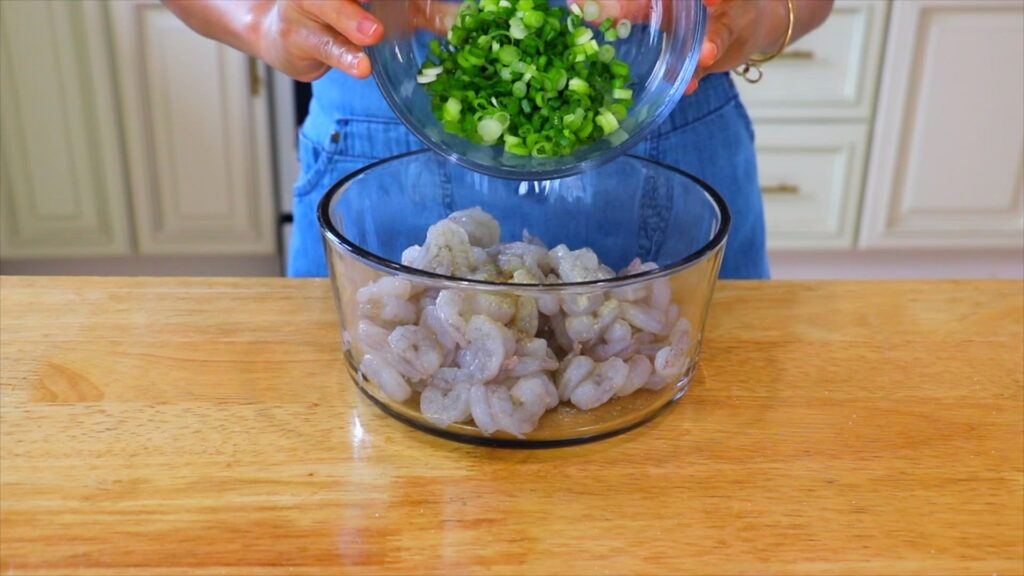
Finely chop the scallions.
In a large bowl, add the shrimp, salt, white pepper, sesame oil, and scallions. Mix well until evenly combined.
Tip: Pat the shrimp dry before mixing the filling. Keeping the filling relatively dry helps the dumplings crisp better and prevents excess moisture from softening the rice paper wrapper.
Step 2: Prepare the rice paper
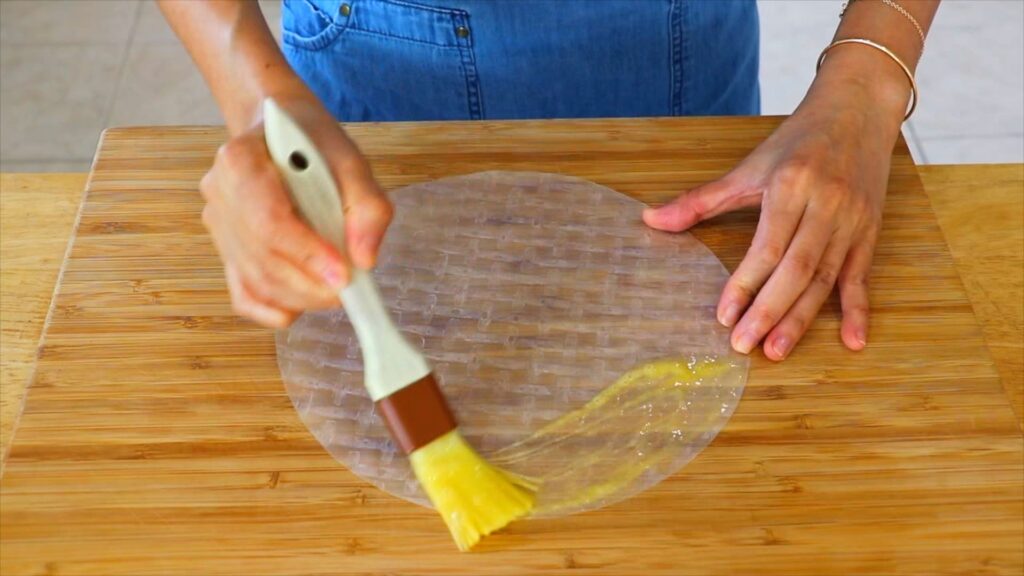
In a bowl, beat the eggs.
Place a sheet of rice paper on a clean working surface. Lightly brush the beaten egg over both sides of the wrapper until it becomes flexible but not overly wet.
Tip: The rice paper may not soften immediately. Wait a few seconds for the egg to absorb into the wrapper. If it still feels stiff, lightly brush a little more egg until it becomes flexible enough to roll.
Step 3: Assemble the dumplings
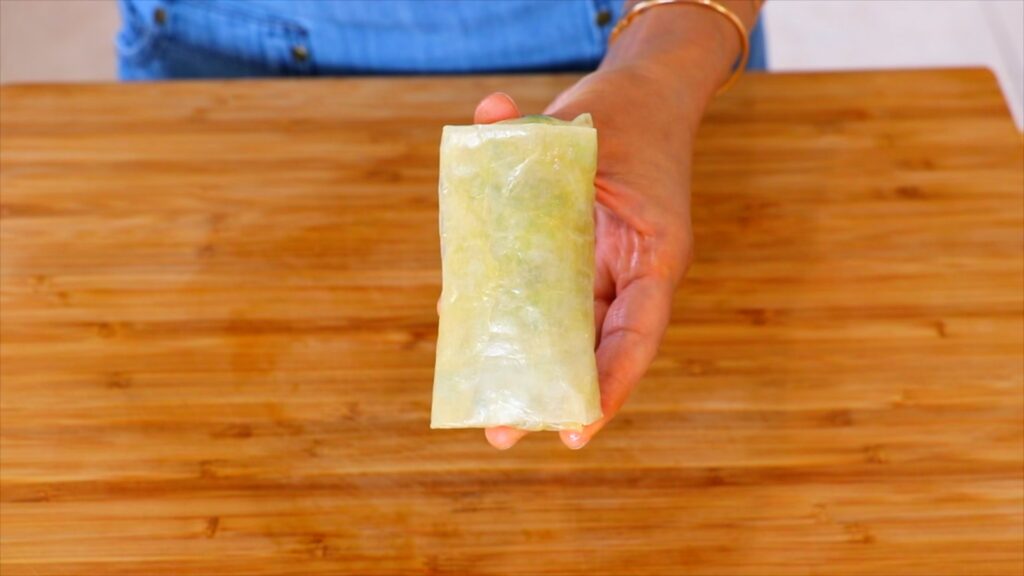
Place about 1 tablespoon of shrimp filling near the bottom corner of the rice paper.
Fold the bottom corner up over the filling. Fold in the sides, then roll tightly to form a dumpling.
Tip: Avoid overfilling the dumplings. Too much filling can stretch the rice paper and cause the wrapper to tear while wrapping or cooking.
Step 4: Pan-fry the dumplings
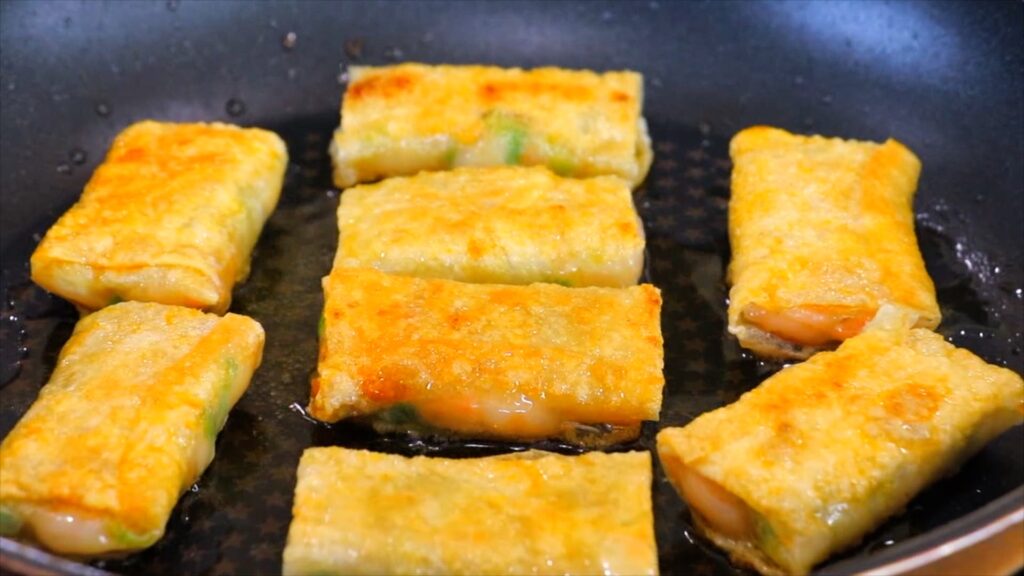
In a non-stick pan over medium heat, add the cooking oil.
Carefully place the dumplings in the pan and cook for about 2 minutes per side, until golden and crispy and the shrimp filling is fully cooked through (145°F / 63°C).
Remove from the pan and repeat with the remaining dumplings.
Tip: Leave a little space between the dumplings so they don’t stick together and can crisp evenly.
Step 5: Make the dipping sauce and serve
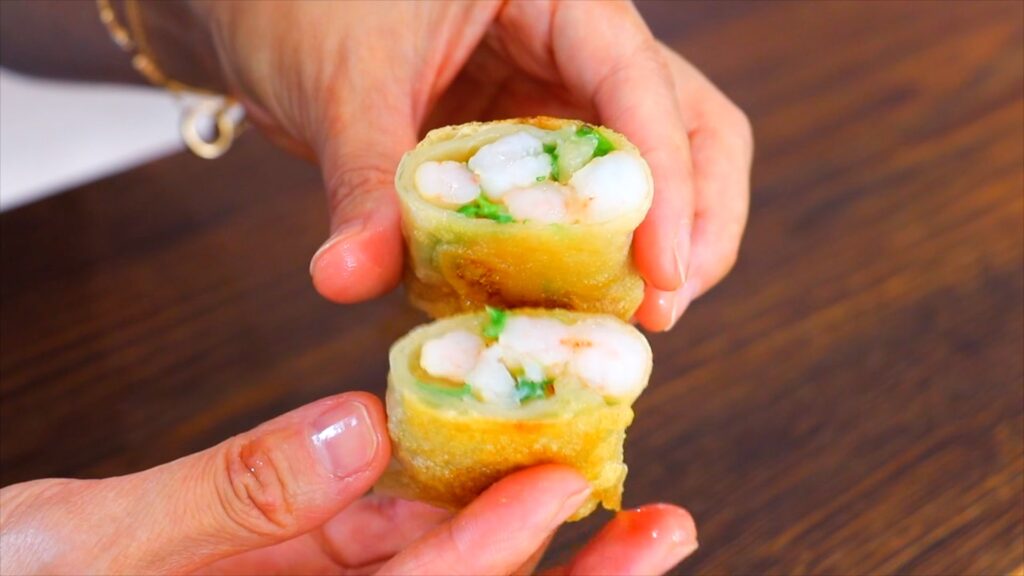
In a small bowl, combine the soy sauce, Chinkiang vinegar, and chili oil. Mix well.
Serve the dumplings hot while the shells are still crispy.
Tip: Rice paper dumplings are best eaten right away, when the wrapper is at its most crisp.
30-Min Crispy Shrimp Dumplings with Rice Paper
Crispy Shrimp Dumplings with Rice Paper are golden, crackly dumplings made with shrimp and rice paper wrappers that turn shatteringly crispy when pan-fried.
Ingredients
For the shrimp dumplings
- 1 pound small shrimp, peeled and deveined
- Pinch of salt
- Pinch of white pepper
- 1 teaspoon sesame oil
- 3 stalks scallions finely chopped
- 3 tablespoons cooking oil, for pan-frying (high-smoking-point oil such as avocado, grapeseed, or peanut oil)
For the rice paper
- 12 sheets rice paper
- 2 large eggs, beaten
For the dipping sauce
- 2 tablespoons soy sauce
- 2 tablespoons Chinkiang vinegar
- 1 tablespoon chili oil
Instructions
- To prepare the shrimp filling, finely chop the scallions. In a bowl, combine the shrimp, salt, white pepper, sesame oil, and scallions, then mix until evenly combined.
- To prepare the rice paper, in a bowl, beat the eggs. Place a sheet of rice paper on a clean working surface and lightly brush the beaten egg over both sides of the wrapper until it becomes flexible but not overly wet.
- To assemble the dumplings, place about 1 tablespoon of shrimp filling near the bottom corner of the rice paper. Fold the bottom corner over the filling, fold in the sides, and roll tightly to form a dumpling. Repeat with the remaining wrappers and filling.
- To pan-fry the dumplings, in a non-stick pan over medium heat, add the cooking oil. Carefully place the dumplings in the pan and cook for about 2 minutes per side, until golden and crispy and the shrimp filling is fully cooked through (145°F / 63°C).
- To make the dipping sauce and serve, in a small bowl, combine the soy sauce, Chinkiang vinegar, and chili oil, then mix well. Serve the dumplings hot with the dipping sauce.
Video
Notes
• Pat the shrimp dry: Removing excess moisture helps the filling stay firm and prevents steam from softening the rice paper wrapper during cooking.
• Use small shrimp: Small shrimp work well for this recipe and do not need chopping. If using larger shrimp, roughly chop them so the filling distributes evenly.
• Use beaten egg instead of water: Brushing the rice paper with egg softens the wrapper while helping it become extra crispy and golden when pan-fried.
• Let the wrapper soften naturally: After brushing with egg, wait a few seconds for the rice paper to absorb the egg and become flexible. Brush a little more if needed.
• Avoid overfilling the dumplings: Too much filling can stretch the wrapper and cause it to tear during wrapping or cooking.
• Use a non-stick pan: Rice paper can stick easily while frying, so a non-stick pan helps the dumplings cook evenly and release more easily.
• Give the dumplings space: Leave a little space between dumplings in the pan so they crisp evenly instead of steaming.
• Serve immediately: Rice paper dumplings are best enjoyed right after cooking, when the wrapper is still crisp and crackly.
• Freezing tip: Arrange uncooked dumplings on a tray lined with parchment or lightly dusted with cornstarch so they don’t stick. Freeze until firm, then store in a sealed container and cook directly from frozen, adding 1–2 extra minutes per side.
• Air fryer option: Lightly brush the dumplings with cooking oil and air fry at 375°F (190°C) for 8–10 minutes, flipping halfway, until golden and crispy.
• Protein swap: Shrimp can be replaced with precooked ground chicken, pork, or tofu. Adjust the cooking time as needed based on the filling.
Sounds yummy.
Thank you, James!
That looks and sounds delicious
Thank you, Sandra! I hope you’ll enjoy it!
Using egg instead of water to soften the rice paper is an original approach! Thanks.
Thanks so much, Rob! It’s a game-changer, and I hope you’ll enjoy making it! 🙂
It looks delicious!!!!.
Thank you, Quilma!
I just made these and they were so good. Dipping sauce was awesome. I did have a little problem, that by the time I was ready to fry them they soften a lot and was like glue on my dish. Any advise on that. Will definitely making them again. My husband and and I are always trying something new. We are both in our 70s, keeps us young. Thanks
Hi Gail, I’m so glad you both liked them! To keep the rice paper from getting sticky, try not to oversoak it and lightly brush the rolls with beaten egg. If they’re still a bit tacky, a light dusting of cornstarch will help. I love that you and your husband are cooking together — that really is the secret to staying young at heart!
What is a substitute for the Chinkiang vinegar if no access to it ?
Hi J, you can replace it with balsamic vinegar or rice vinegar. Happy cooking!
Great
Thank you, Michael!