
No products in the cart.
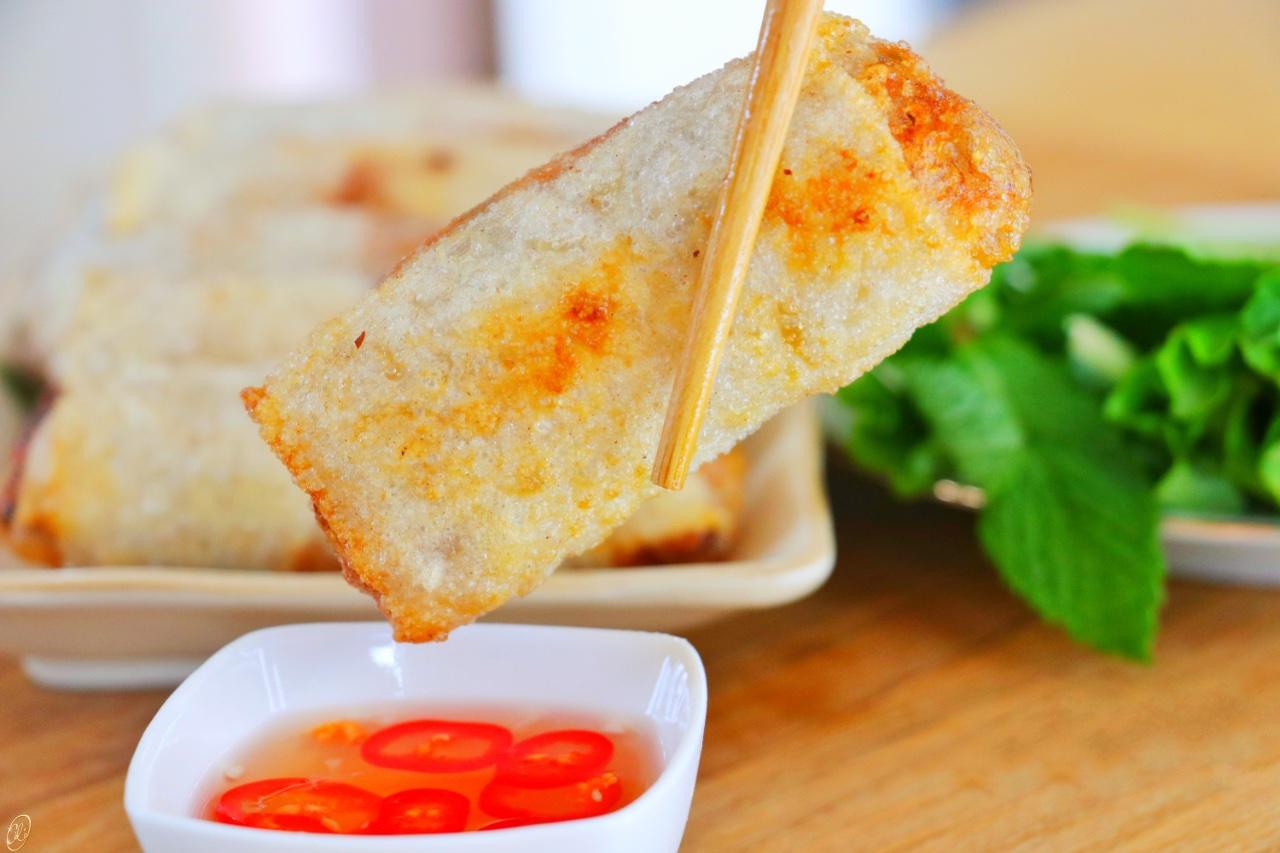
Vietnamese Fried Spring Rolls
Vietnamese Fried Spring Rolls are golden and delicately crisp, filled with a juicy, savory mixture in every bite. Wrapped in thin rice paper that fries into a beautifully light shell, they offer a satisfying crunch without feeling heavy. Dip them into nuoc cham — a sweet, tangy, garlicky fish sauce — and the contrast of hot, crispy rolls with bright, fresh flavors becomes completely irresistible.
If you’ve ever noticed that Vietnamese spring rolls feel lighter than other fried rolls, it comes down to two things: the rice paper wrapper and proper frying technique. When handled correctly, the wrapper turns delicate and crisp instead of thick or greasy.
This version combines ground pork and shrimp for depth and natural sweetness. Wood ear mushrooms add subtle texture, while glass noodles help keep the filling tender and cohesive. A careful double fry ensures a lasting crunch that stays crisp even after resting briefly.
In this recipe, you’ll learn how to prepare rice paper correctly, prevent splattering, and fry the rolls evenly for the best texture.
What Are Vietnamese Fried Spring Rolls?
Known as Chả Giò in southern Vietnam and Nem Rán in the north, these spring rolls are wrapped in rice paper rather than wheat wrappers. The filling typically includes pork, shrimp, glass noodles, mushrooms, and vegetables, and then the rolls are deep-fried until golden.
They’re often served with fresh herbs and lettuce alongside nuoc cham, creating a balanced combination of warm, crisp rolls and cool, refreshing greens.
Why Do Vietnamese Spring Rolls Use Rice Paper?
Rice has long been central to Vietnamese agriculture and daily cooking. With fertile river deltas ideal for rice cultivation, rice became the primary staple grain throughout the country.
Because rice was abundant and wheat historically less common, many Vietnamese noodles and wrappers developed from rice flour. That’s why rice paper, rice noodles, and rice sheets appear so widely in the cuisine.
For fried spring rolls, rice paper produces a thin, delicate exterior that contrasts beautifully with the flavorful filling inside. Its use reflects both practicality and culinary tradition rooted in Vietnam’s agricultural history.
How to Handle Rice Paper Properly?
Rice paper is simple to work with once you understand one key principle: control the moisture.
Instead of fully submerging it in water, lightly brush both sides until just pliable. It should still feel slightly firm when you start rolling — it will continue softening as you assemble.
If it’s oversoaked:
-
It becomes sticky and fragile
-
It tears easily
-
It can splatter during frying
-
The texture may turn chewy
If it’s slightly firm:
-
It wraps tightly around the filling
-
It seals more cleanly
-
It fries evenly
Work with one sheet at a time and roll gently but firmly. Once you get the feel for it, the process becomes very natural.
Let’s Talk Ingredients
Ground pork
Pork gives the filling richness and moisture, so the rolls stay juicy even after frying.
Shrimp
Shrimp adds sweetness and a light “bounce,” which keeps the filling from tasting heavy.
Glass noodles
These soak up extra moisture from the vegetables and help the filling stay tender and cohesive instead of watery.
Wood ear mushrooms
Finely chopped, they add that subtle crunch that Vietnamese spring rolls are known for.
Fish sauce
This is the main seasoning. It adds savory depth and that signature Vietnamese aroma.
Shallot and garlic
These bring sweetness and fragrance to the filling, especially once fried.
Rice paper
Rice paper fries up thin and crisp when it’s moistened lightly (not soaked). That delicate shell is what makes these rolls feel light.
Vinegar (in the water for brushing)
A few drops of vinegar in the brushing water can help encourage a more even golden color during frying. It also slightly reduces stickiness, so the rice paper is easier to handle. If you don’t have vinegar, you can skip it — or add a tiny pinch of sugar to the brushing water to support browning.
Cooking oil
Because these spring rolls are fried at high heat, choose a neutral oil with a high smoke point to maintain a steady temperature and ensure even browning. Avocado, grapeseed, or peanut oil all work beautifully.
Step-by-Step: Let’s Cook
Makes: 16 spring rolls
Prep time: 1 hour
Cook time: 20 minutes
Step 1: Prepare the glass noodles
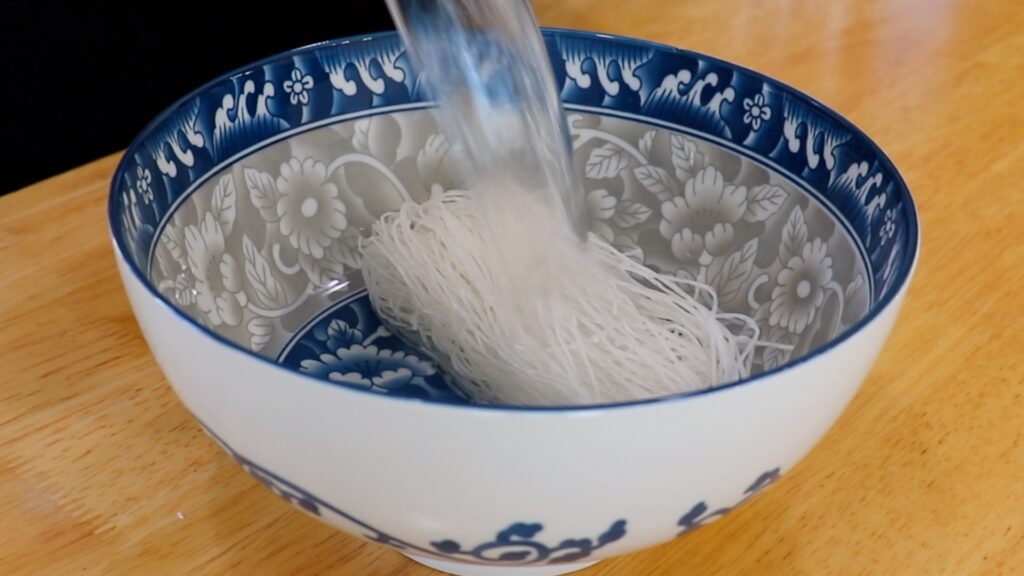
In a bowl, soak the glass noodles in warm water for 30 minutes. Drain well and cut into 1½-inch lengths.
Tip: Short noodles mix evenly and make wrapping easier.
Step 2: Make the nuoc cham
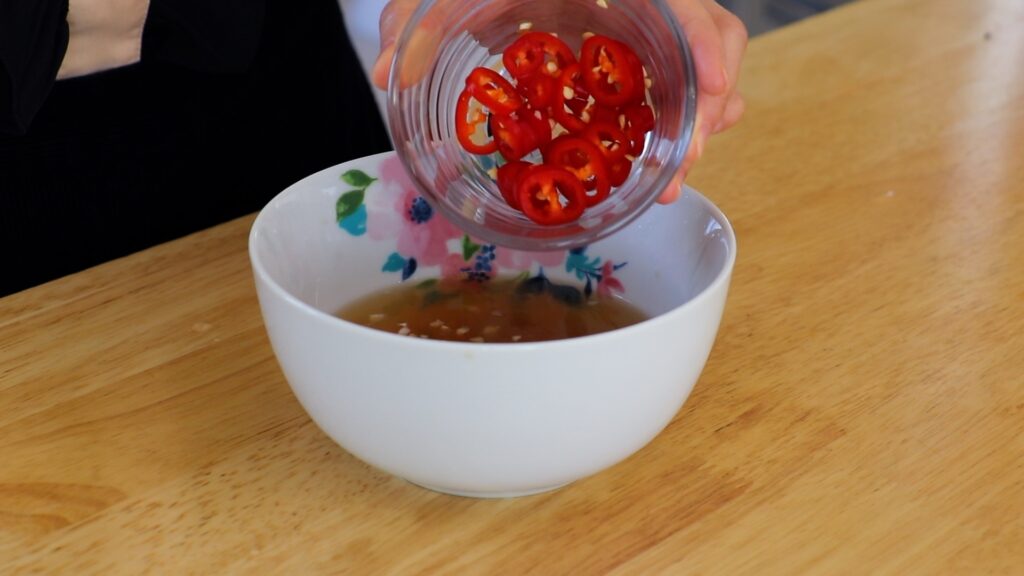
In a bowl, dissolve the sugar in hot water. Stir in the fish sauce, lime juice, garlic, and chili. Set aside.
Tip: Letting it sit for a few minutes softens the garlic and balances the flavor.
Step 3: Make the filling
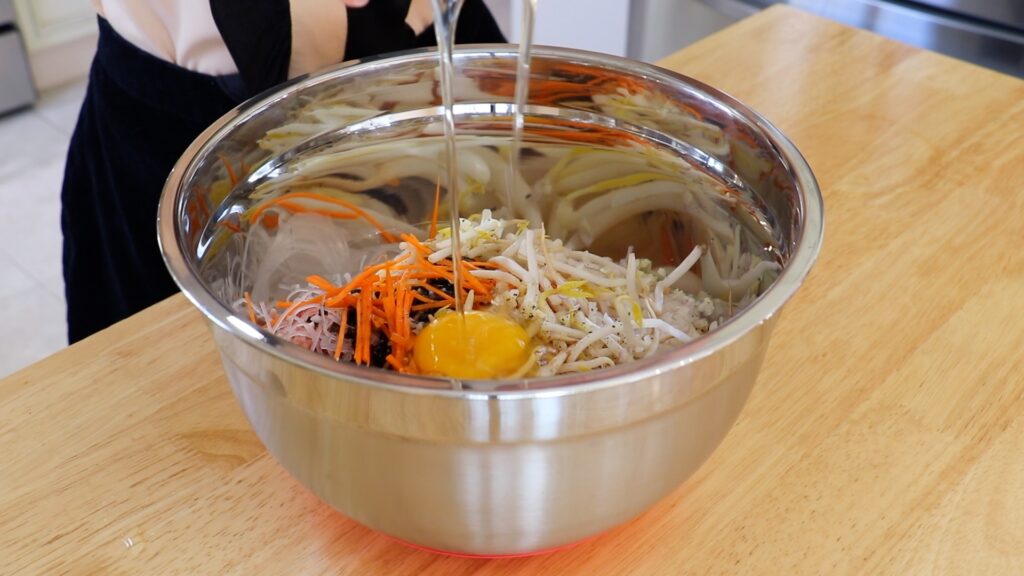
In a large bowl, combine the ground pork, shrimp, glass noodles, wood ear mushrooms, carrot, bean sprouts, shallot, garlic, salt, black pepper, fish sauce, and the egg. Mix thoroughly until evenly combined.
Tip: Mix until the filling looks cohesive so it holds together inside the roll.
Step 4: Wrap the spring rolls
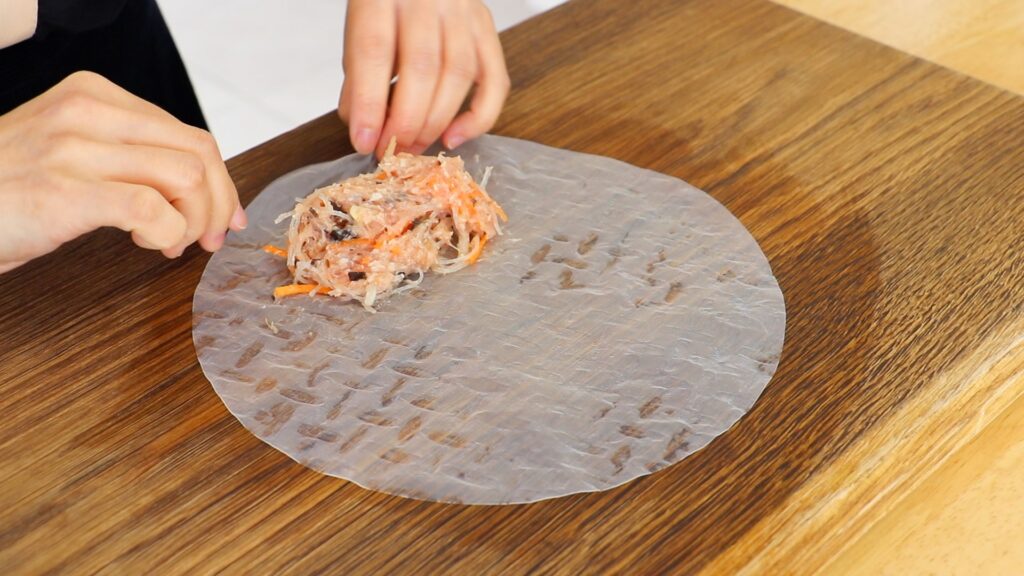
In a bowl, combine the water with a few drops of rice vinegar (or a tiny pinch of sugar if you prefer).
Lightly brush both sides of a rice paper sheet until just pliable — do not soak.
Add about 2½ tablespoons of filling near the bottom edge, fold the bottom up, fold in the sides, and roll tightly.
Tip: If the rice paper feels too soft, wait 10–15 seconds — it will firm slightly and become easier to roll.
Step 5: First fry
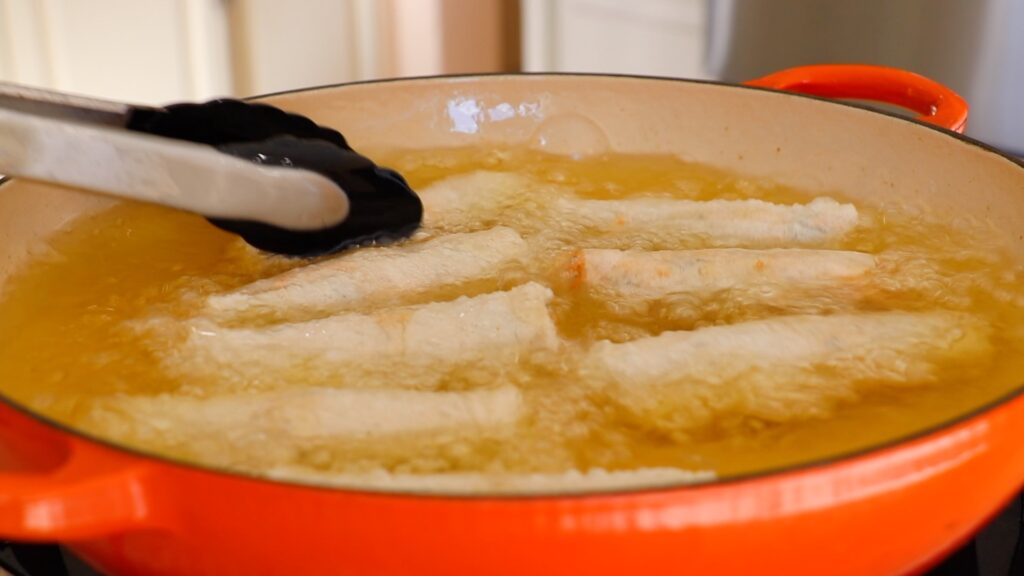
In a pan over high heat, add cooking oil (use a high-smoking-point oil) and heat to 325°F (163°C).
Fry in batches for about 5 minutes, turning as needed, until lightly golden and cooked through (160–165°F inside).
During the first minute, keep the rolls from touching — the wrappers are still delicate and can stick. Once the exterior begins to firm up, they can be closer together.
Remove and drain.
Tip: The first fry gently cooks the filling through while keeping the wrapper from browning too quickly.
Step 6: Second fry for crispiness
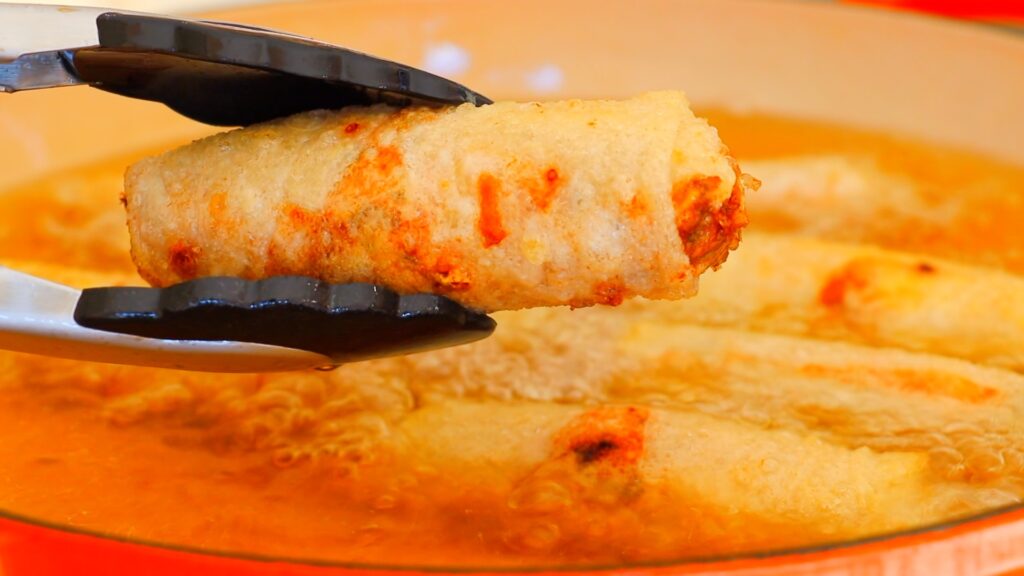
Raise the oil temperature to 350°F (177°C).
Fry again for 1–2 minutes until deeply golden and extra crisp.
Drain again and serve with nuoc cham.
Tip: The second fry drives out moisture and gives you that crackly finish.
Vietnamese Fried Spring Rolls
Vietnamese Fried Spring Rolls are crispy rice paper rolls filled with savory pork and shrimp, double-fried for maximum crunch and served with nuoc cham.
Ingredients
For the spring rolls
- 1 ounces glass noodles
- 5 tablespoons fresh wood ear mushrooms, finely chopped
- 1 pound ground pork
- 6 ounces shrimp, peeled and deveined, finely chopped
- 1 cup carrots, peeled and julienned
- 1 cup bean sprouts
- 4 tablespoons shallot, minced
- 2 cloves garlic, minced
- ¼ teaspoon salt
- ¼ teaspoon freshly ground black pepper
- 2 tablespoons fish sauce
- 1 extra-large egg
- 16 sheets rice paper
- 1½ cups water
- 4 drops rice vinegar, or a tiny pinch of sugar
- 3 cups cooking oil, high-smoking-point oil, for frying
For the nuoc cham dipping sauce
- ½ cup hot water
- 3 tablespoons sugar
- 3 tablespoons fish sauce
- 3 tablespoons lime juice
- 2 cloves garlic, minced
- 1 tablespoon finger hot pepper, sliced
Instructions
- To prepare the glass noodles, in a bowl, soak glass noodles in warm water for 30 minutes. Drain and cut into 1½-inch lengths.
- To make the nuoc cham, in a bowl, dissolve sugar in hot water. Stir in fish sauce, lime juice, garlic, and chili. Set aside.
- To make the filling, in a large bowl, combine ground pork, shrimp, glass noodles, wood ear mushrooms, carrot, bean sprouts, shallot, garlic, salt, black pepper, fish sauce, and egg. Mix thoroughly until evenly combined.
- To wrap, in a bowl, combine water with rice vinegar (or a tiny pinch of sugar). Lightly brush both sides of each rice paper sheet until just pliable. Place about 2½ tablespoons filling near the bottom edge, fold bottom over filling, fold in sides, and roll tightly to seal.
- To fry, in a pan over high heat, heat cooking oil to 325°F (163°C). Fry in batches for about 5 minutes, turning as needed, until lightly golden and internal temperature reaches 160–165°F. During the first minute, keep rolls separated to prevent sticking. Remove and drain.
- To double fry, raise oil temperature to 350°F (177°C). Fry for 1–2 minutes until deeply golden and crisp. Drain again before serving.
- Serve hot with nuoc cham.
Video
Notes
• Soak glass noodles fully: Make sure noodles are softened before cutting so they blend evenly into the filling and don’t poke through the wrapper.
• Don’t over-soak rice paper: Lightly brush until just pliable. Oversoaking makes it sticky, fragile, and more likely to splatter during frying.
• Roll firmly but gently: A snug roll prevents air pockets, which helps the spring rolls fry evenly and stay sealed.
• Keep rolls separated at first: During the first minute of frying, avoid letting them touch — the wrappers are still soft and can stick together.
• Double fry for crispiness: The first fry cooks the filling; the second fry creates that golden, crackly shell. Don’t skip it.
• Check internal temperature: The filling should reach 160–165°F to ensure the pork is fully cooked.
• Freeze properly: Place uncooked rolls in a single layer on a parchment-lined tray so they don’t touch. If they feel sticky, lightly dust with cornstarch before freezing to prevent sticking. Once solid, transfer to a freezer-safe bag. Fry straight from frozen, adding 1–2 extra minutes.
• Air-fry option: Lightly brush or spray rolls with cooking oil. Air fry at 360°F (182°C) for 16–18 minutes, turning halfway through, until golden and the internal temperature reaches 160°F. Add 3–5 extra minutes if cooking from frozen. Texture will be slightly lighter than deep-fried but still crisp.
• Protein swap: Ground chicken or turkey can replace pork. You can also omit shrimp — just adjust seasoning slightly to maintain balance.
Thanks for sharing this recipe,it will help us a lot.
Thanks for stopping by my website! Cheers and have fun cooking! 🙂
Thank you for sharing your vietnamese spring roll, already excited to try it!
Hi dear Amy, Thank you for your lovely comment! I’m glad that you enjoy this video! 🙂
I enjoyed watching your video! I learned so much! Yhank you for sharing this delicious recipe!
Hi Melody,
Thank you for your lovely comment! I’m so glad that you enjoy my videos!
I have been waiting for an easy Vietnamese spring roll recipe. Thank you. Let me ask? Can I use an air fryer on the 2nd frying instead?
Hi Eliane,
Thanks for the question! Yes, you could place them in an air fryer for the second time. However, I personally would place them in the oil for extra crispness. And since for the second time, the oil is hotter than the first time, it forces the oil to come out from the inside, so the spring rolls are crispy and not greasy. I hope this helps and best wishes!
After preparing the spring rolls can I freeze them please ?
Hi Jude,
Thanks for the question! If you like to freeze them, and cook them in the future, place them in a single layer, and cover them up with plastic wrap. When ready to cook, fry them directly, no defrosting is necessary. I hope this helps. 🙂
Thank you for sharing the recipe.
Hi Jocelyn,
Thanks so much for tuning in!
CiCi