
No products in the cart.
25-Min Mongolian Beef Recipe
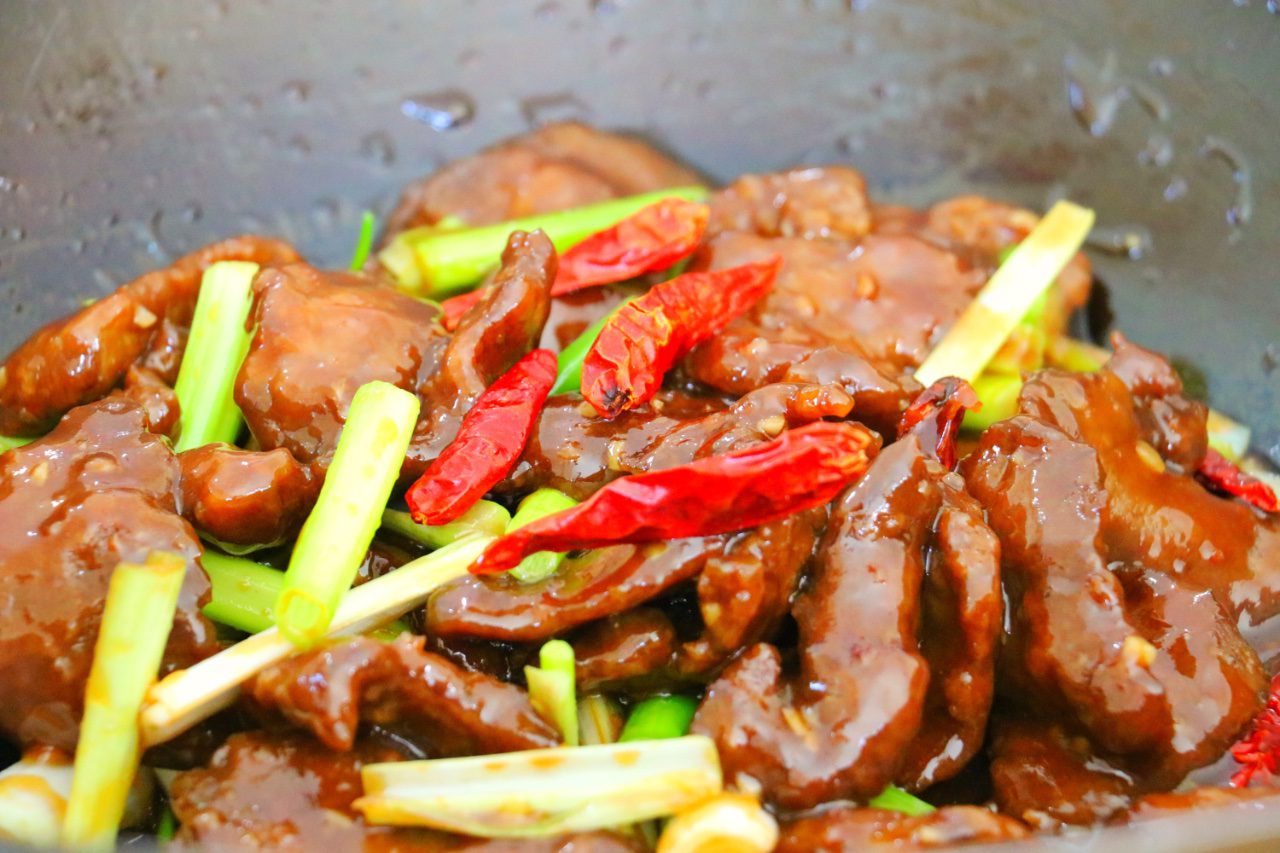
Mongolian Beef is one of the most iconic Chinese-American restaurant dishes. Crispy, tender slices of beef are coated in a glossy sauce that’s savory, slightly sweet, garlicky, and just a little spicy.
Despite the name, the dish isn’t actually from Mongolia. Instead, it’s a stir-fry that grew popular in Chinese restaurants and eventually became a takeout favorite around the world.
What makes Mongolian Beef so irresistible is the contrast of textures: lightly crisp beef, a rich sauce, and fresh scallions that bring brightness to every bite.
The good news is that this restaurant classic is surprisingly easy to make at home. With the right technique, you can recreate the same bold flavors and tender texture in about 25 minutes, making it perfect for a quick weeknight dinner.
What Is Mongolian Beef?
Mongolian Beef is a Chinese-American stir-fry made with thin slices of beef cooked in a savory soy-based sauce with garlic, scallions, and dried chilies.
The dish is known for its glossy sauce and tender beef. In many restaurant versions, the beef is lightly fried before being tossed in the sauce, which gives it a slightly crisp texture.
Although the dish is commonly found on Chinese restaurant menus, it is not part of traditional Mongolian cuisine.
Why Is It Called Mongolian Beef?
The name “Mongolian Beef” can be confusing because the dish itself is not actually Mongolian.
Many food historians believe the name was inspired by Mongolian barbecue restaurants, which became popular in Taiwan and later in North America. In those restaurants, meats were cooked quickly over very hot grills with sauces and seasonings.
When Chinese-American restaurants adopted similar stir-fry flavors, the name “Mongolian Beef” likely stuck because it sounded appealing and familiar to diners.
What Cut of Beef Is Best for Mongolian Beef?
Flank steak is one of the most commonly used cuts for Mongolian Beef.
It has strong beef flavor and becomes tender when sliced thinly against the grain. Cutting against the grain shortens the muscle fibers, making the beef easier to chew.
Other good cuts include:
• skirt steak
• flat iron steak
• sirloin steak
The most important step is slicing the beef thinly and against the grain, which helps create the tender texture associated with restaurant-style Mongolian Beef.
Why Baking Soda Tenderizes Beef
A small pinch of baking soda helps tenderize the beef by raising the pH level of the meat.
This process relaxes the muscle fibers, allowing the beef to stay soft and tender during high-heat cooking. It is a technique often used in Chinese cooking to achieve the silky texture found in many stir-fried dishes.
Because baking soda is very strong, only a tiny amount is needed.
Why Cornstarch Is Used
Cornstarch serves two important roles in Mongolian Beef.
First, it coats the beef and forms a thin protective layer during frying. This helps the meat develop a light crisp exterior while keeping the inside tender.
Second, the cornstarch coating helps the sauce cling to the beef, creating the glossy finish that makes the dish so recognizable.
How to Get Restaurant-Style Mongolian Beef
Restaurant Mongolian Beef is known for its tender meat and shiny sauce.
A few key techniques help recreate that result at home:
• slice the beef thinly against the grain
• marinate briefly to tenderize the meat
• cook the beef quickly over high heat
• thicken the sauce with a cornstarch slurry
These simple steps help produce the rich flavor and texture that make Mongolian Beef a takeout favorite.
Let’s Talk Ingredients
Flank steak
Flank steak is one of the best cuts for Mongolian Beef because it has strong beef flavor and becomes tender when sliced thinly against the grain. Cutting against the grain shortens the muscle fibers, which helps keep the beef easy to chew even after high-heat cooking.
Egg white
Egg white helps create a light coating on the beef during marination. When combined with cornstarch, it forms a protective layer that keeps the meat tender and juicy while frying.
Baking soda
A tiny pinch of baking soda helps tenderize the beef by relaxing the muscle fibers. This technique is commonly used in Chinese cooking to create the soft, velvety texture found in restaurant stir-fries.
Cornstarch
Cornstarch coats the beef and creates a thin crust when fried, giving the slices a slightly crispy exterior. It also helps the sauce cling to the beef later, creating that glossy finish.
Soy sauce and dark soy sauce
Soy sauce provides the main savory base of the sauce. Dark soy sauce adds deeper color and a subtle richness, giving Mongolian Beef its signature dark, glossy appearance.
Oyster sauce and hoisin sauce
Oyster sauce adds savory depth and umami, while hoisin sauce brings mild sweetness and complexity that rounds out the sauce.
Sugar
Sugar balances the salty soy sauce and helps the sauce caramelize slightly when it cooks, creating the sweet-savory flavor Mongolian Beef is known for.
Garlic, dried chilies, and scallions
Garlic adds aromatic depth, dried chilies bring gentle heat, and scallions add freshness and color to finish the dish.
High-smoking-point oil
Using oils such as avocado, grapeseed, or peanut oil allows the beef to cook at high heat without burning, which is essential for proper stir-frying.
Step-by-Step: Let’s Cook!
Step 1: Marinate the beef
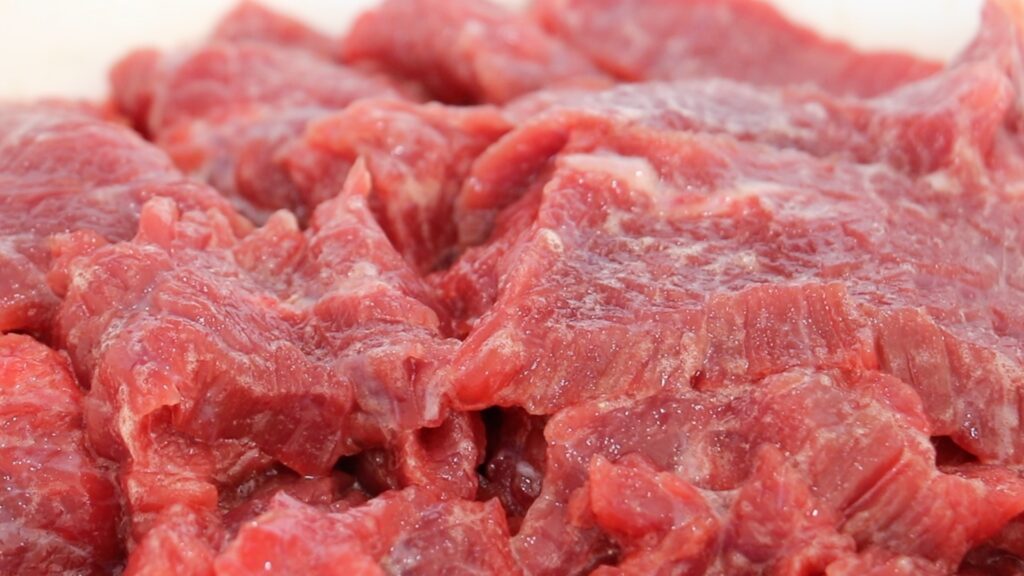
In a large bowl, whisk together the egg white, Shaoxing wine, salt, white pepper, and baking soda.
Add the sliced beef and mix well until evenly coated. Let the beef marinate while preparing the remaining ingredients.
Tip: The egg white and baking soda help tenderize the beef and give it the soft texture often found in restaurant stir-fries.
Step 2: Make the sauce
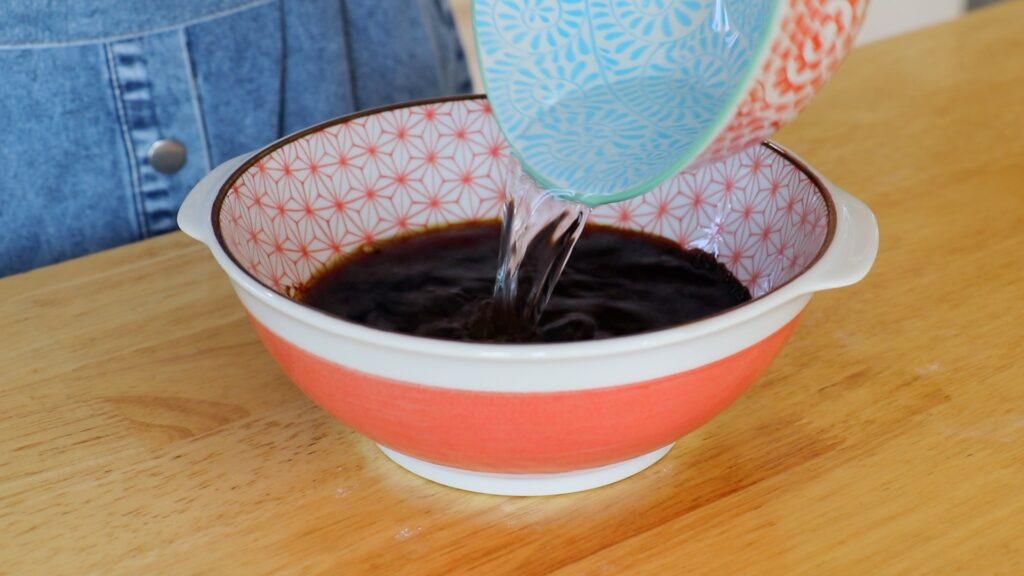
In a bowl, mix together the soy sauce, dark soy sauce, oyster sauce, hoisin sauce, sugar, and water.
In a small bowl, mix the cornstarch with the water to make a slurry. Set both aside.
Tip: Preparing the sauce ahead of time allows the stir-fry to cook quickly without stopping to measure ingredients.
Step 3: Coat the beef
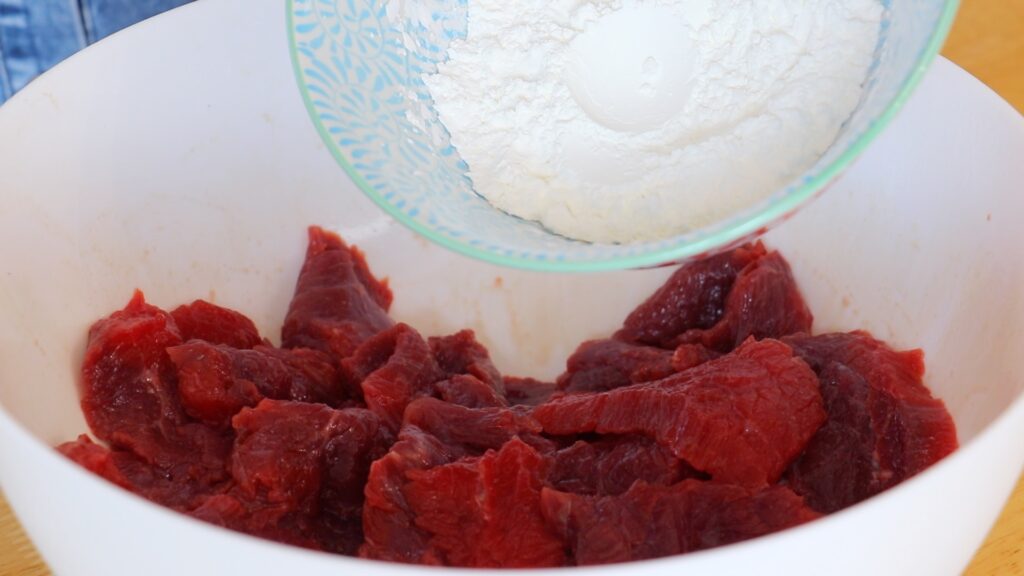
Add the cornstarch to the marinated beef and mix until the slices are evenly coated.
Tip: The cornstarch forms a light coating that helps the beef crisp during frying and allows the sauce to cling to it later.
Step 4: Fry the beef
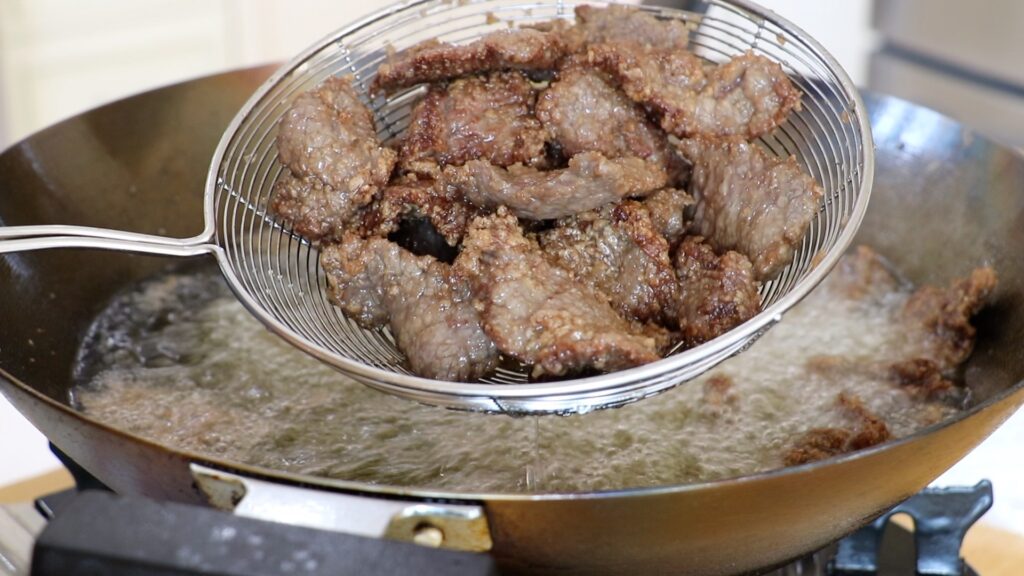
In a wok over high heat, heat the oil to about 350°F (177°C).
Add the beef in small batches and fry for about 2 minutes, until lightly crispy. Remove and drain.
Tip: Frying the beef in batches prevents the oil temperature from dropping and keeps the beef crispy.
Alternative: For a lighter version, skip the frying step. In a wok over high heat, stir-fry the beef with 2 tablespoons oil until browned and just cooked through.
Step 5: Make the Mongolian beef
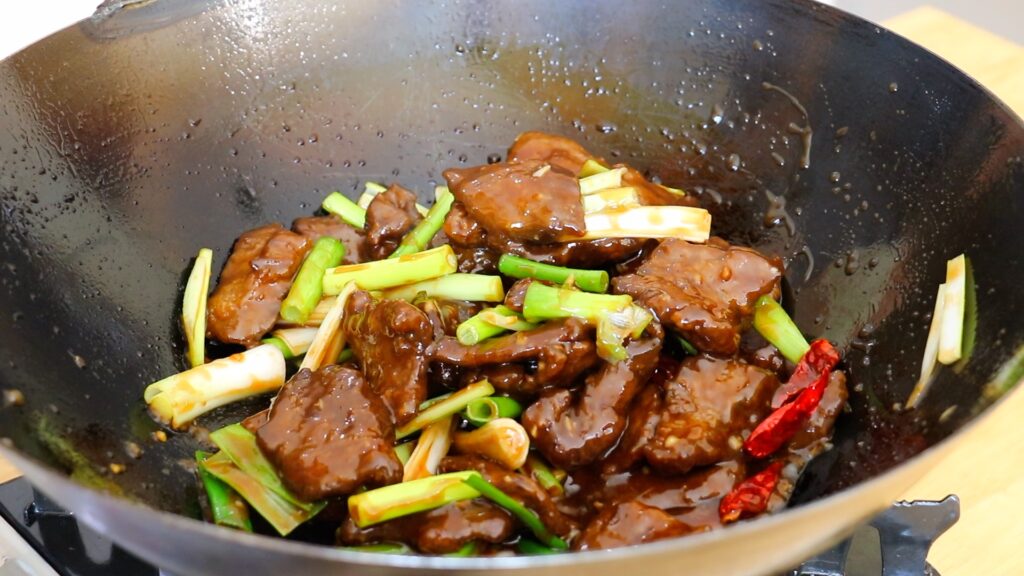
In a clean wok over high heat, add the cooking oil. Add the dried chilies and garlic and stir-fry for about 30 seconds, until fragrant.
Pour in the sauce and bring it to a simmer. Stir in the cornstarch slurry and cook until the sauce thickens.
Return the beef to the wok and toss until evenly coated. Add the scallions, stir briefly, and serve hot.
Tip: High heat helps the sauce caramelize slightly and gives the dish the bold flavor associated with restaurant Mongolian Beef.
25-Min Mongolian Beef Recipe
Mongolian Beef is a Chinese-American restaurant favorite made with tender slices of beef coated in a glossy, sweet-savory garlic sauce with scallions and dried chilies.
Ingredients
For the beef
- 1½ pounds flank steak, sliced against the grain into ¼-inch slices
- 1 large egg white
- 1 tablespoon Shaoxing wine, or other cooking wine
- Pinch of salt
- Pinch of white pepper
- Pinch of baking soda
- ½ cup cornstarch, for coating
- 4 cups cooking oil for frying (high-smoking-point oil such as avocado, grapeseed, or peanut)
For the sauce
- 1 tablespoon soy sauce
- ½ tablespoon dark soy sauce
- 1 tablespoon oyster sauce
- 1 tablespoon hoisin sauce
- 2 tablespoons sugar
- ⅔ cup water
- 2 teaspoons cornstarch, for slurry
- 2 tablespoons water, for slurry
For the stir-fry
- 2 tablespoons cooking oil, high-smoking-point oil such as avocado, grapeseed, or peanut
- 6 pieces dried red chili peppers
- 3 cloves garlic, minced
- 3 stalks scallions, cut into 1½-inch pieces
Instructions
- To marinate the beef, in a bowl, whisk together the egg white, Shaoxing wine, salt, white pepper, and baking soda. Add the sliced beef and mix well until evenly coated. Let the beef marinate while preparing the remaining ingredients.
- To prepare the sauce, in a bowl, mix together the soy sauce, dark soy sauce, oyster sauce, hoisin sauce, sugar, and water. In a small bowl, mix the cornstarch with the water to make a slurry. Set both aside.
- To coat the beef, add the cornstarch to the marinated beef and mix until the slices are evenly coated.
- To fry the beef, in a wok over high heat, heat the oil to about 350°F (177°C). Fry the beef in small batches for about 2 minutes until lightly crispy, then remove and drain.
- To make the Mongolian beef, in a clean wok over high heat, add the cooking oil. Add the dried chilies and garlic and stir-fry for about 30 seconds until fragrant. Pour in the prepared sauce and bring it to a simmer, then stir in the slurry and cook until the sauce thickens. Return the beef to the wok and toss to coat evenly. Add the scallions, stir briefly, and serve hot.
Video
Notes
Slice against the grain: Cutting the flank steak against the grain shortens the muscle fibers, which helps keep the beef tender and easy to chew after cooking.
Use a pinch of baking soda: A small pinch of baking soda helps tenderize the beef by loosening the muscle fibers. Only a tiny amount is needed to avoid affecting the flavor.
Coat the beef evenly: Mix the cornstarch thoroughly with the marinated beef so every slice is lightly coated. This coating helps the beef crisp during frying and allows the sauce to cling to it later.
Fry the beef in batches: Cooking the beef in small batches helps maintain the oil temperature and prevents the slices from sticking together, which keeps the exterior lightly crispy.
For a lighter version: Instead of deep-frying, you can stir-fry the beef in 2 tablespoons of cooking oil over high heat until browned and just cooked through. The texture will be slightly less crispy but still very flavorful.
Don’t overcook the sauce: Once the slurry is added, the sauce will thicken quickly. Stir continuously and remove from heat once it becomes glossy to avoid an overly thick sauce.
Protein swap: This same method works well with chicken, shrimp, or tofu if you prefer an alternative to beef.
I made this last night and it was delicious! I will add a little less sugar next time, but the flavor and texture of the meat was very good.
Hi Jeannie,
Thank you for the positive feedback! I’m so glad that you enjoyed the recipe. Happy cooking!
Hi from sunny South Africa, thank you for the stunning Oyster beef recipe. It was hit and my children who don’t like bell peppers at all of them. Do you perhaps have a recipe for Tai sweetcorn fritters please. Thank you Ryan
Hi Ryan,
Thank you for vising my website! I’m very happy that you enjoyed my recipe. I don’t have a corn fritter recipe yet, but I’ll keep it in mind. Best wishes and happy cooking!
This is a really good recipe for Mongolian beef! Our local Chinese restaurant serves this over rice noodles.Thats what makes it unique and gives it a delicious texture!
Hi Marsha, I’m so happy to hear that you enjoyed the Mongolian Beef recipe! I love the idea of serving it with rice noodles—that sounds absolutely delicious and is such a great way to soak up all that flavorful sauce. Happy cooking! 😀